SC dismisses Congress petition in Meenakshi Natarajan election case
Digital Desk
Supreme Court rejects Congress leader Meenakshi Natarajan's plea against Rajya Sabha nomination cancellation, says judicial intervention violates constitutional scheme for elections.
Bench rejects petition challenging Rajya Sabha nomination cancellation, says constitutional scheme bars interference once electoral process begins
The Supreme Court on Friday dismissed the petition filed by Congress leader Meenakshi Natarajan challenging the cancellation of her Rajya Sabha nomination from Madhya Pradesh, observing that judicial intervention in such matters would run contrary to the constitutional framework governing elections.
A bench comprising Justice P.K. Mishra heard arguments from senior advocates on both sides before concluding that the court's jurisdiction under Article 32 cannot be invoked in disputes arising during the ongoing election process.
Legal remedy barred
Former Attorney General Mukul Rohatgi, appearing for the contesting candidate, argued that the right to contest an election is statutory, not fundamental—a principle established in the Jyoti Basu case and reaffirmed in subsequent rulings.
Since no fundamental right stands violated, Rohatgi contended, a petition under Article 32 is not maintainable. Citing Article 329, he said courts cannot intervene under Articles 32 or 226 once the election process has begun and until results are declared. Any election-related grievance, he stressed, must be pursued through an election petition after the process completes.
Singhvi's intervention argument
Senior Advocate Abhishek Manu Singhvi, representing Natarajan, pushed back forcefully. He argued that while challenges to rejected nominations typically follow the election petition route, the Supreme Court can directly intervene in cases involving clear legal error.
Justice Mishra pressed Singhvi for precedents supporting such intervention after nomination rejection. Singhvi cited the Mohinder Singh Gill and Ashok Kumar cases, acknowledging the key question remained whether this case qualified under that exception.
The core legal error, Singhvi maintained, was that the returning officer had acted as if all legal requirements had been met when only a complaint existed—no cognisance, no chargesheet, no framed charges.
'Not a contest of perfect candidates'
Singhvi argued that excluding a candidate in this manner would limit voters' choices and raise questions about electoral fairness. "Elections are not meant to be contests only between 'perfect' candidates," he said. "Neither the Constitution nor reality supports that view."
He told the court that good governance requires elections to proceed smoothly and according to law, adding that the case was not dependent on the election result since the issue involved was much larger.
Overnight developments
Singhvi drew the court's attention to actions taken while the matter was pending before the Supreme Court. The election result was declared the previous night despite the court being scheduled to hear the case.
"This is the Supreme Court," Singhvi said. "When the court is seized of a dispute, its jurisdiction cannot be defeated by creating a fait accompli." He argued that actions taken overnight to render the hearing meaningless undermined the rule of law.
Political fallout
The Congress party had fielded Natarajan for the third Rajya Sabha seat from Madhya Pradesh and claimed it had sufficient numbers to support her candidature. However, her nomination was rejected on June 9 after the BJP alleged she had failed to disclose a case registered against her.
A day earlier, BJP candidates Rajnish Agrawal, Tarun Chugh and Mahesh Kewat were elected unopposed to all three Rajya Sabha seats from the state.
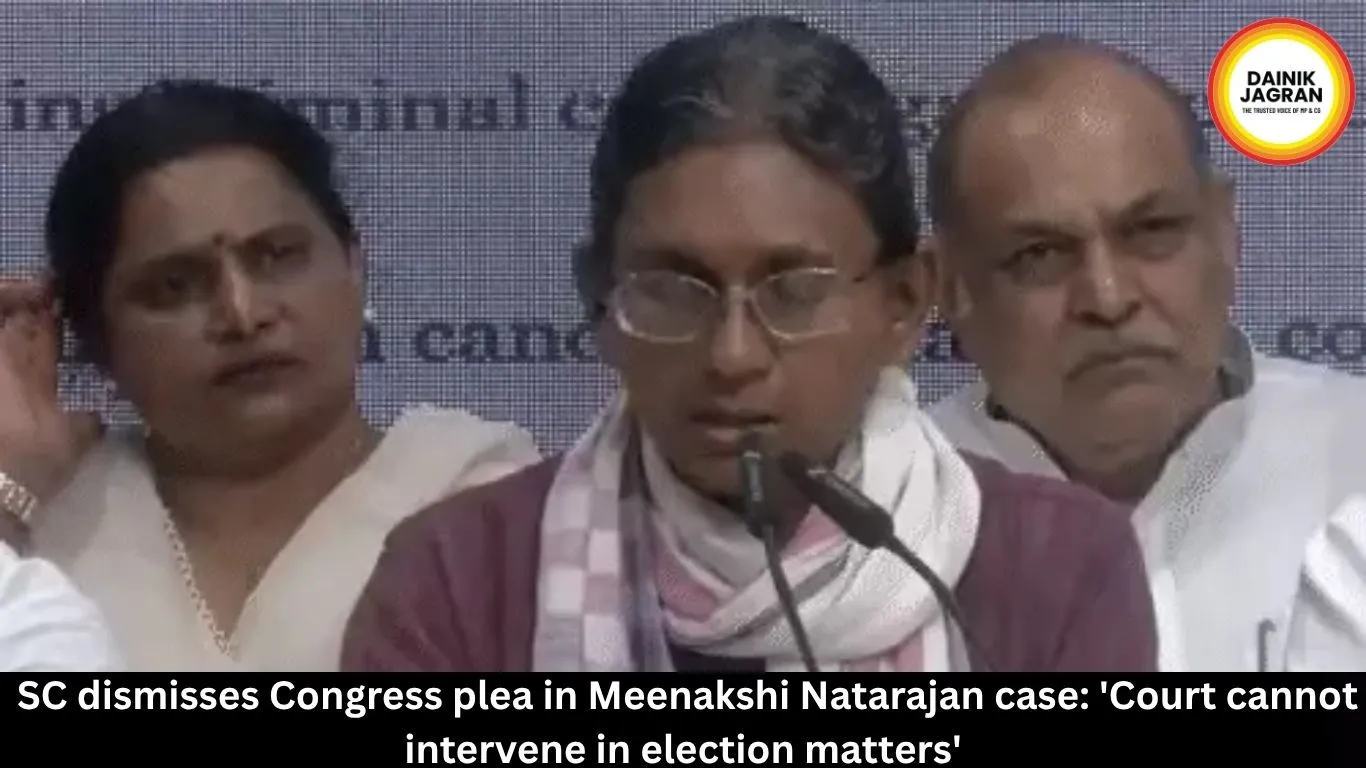
Speaking at a Delhi press conference, Madhya Pradesh Congress chief Jitu Patwari termed the nomination cancellation unprecedented and questioned whether the country was moving towards autocracy. He claimed Congress needed 58 MLAs to win and had support from other legislators, while the BJP was short by 10 MLAs.
What lies ahead
With the Supreme Court declining to intervene, legal experts suggest Natarajan's options are now limited to filing an election petition under the Representation of the People Act—a remedy that can only be pursued after the completion of the electoral process. The ruling reaffirms the judiciary's consistent position of maintaining distance from election disputes until the process reaches its natural conclusion.

--------
๐จ Beat the News Rush โ Join Now!
Get breaking alerts, hot exclusives, and game-changing stories instantly on your phone. No delays, no fluff โ just the edge you need. โก
Tap to join:ย
๐ข WhatsApp Channel: Dainik Jagran MP CG
Crave more?
๐ Facebook: Dainik Jagran MP CG English
๐ ง Twitter (X): Dainik Jagran MP CG
๐ Instagram: Dainik Jagran MP CG
Share the fire โ keep your crew ahead! ๐๏ธ๐ฅ
SC dismisses Congress petition in Meenakshi Natarajan election case
Digital Desk
Bench rejects petition challenging Rajya Sabha nomination cancellation, says constitutional scheme bars interference once electoral process begins
The Supreme Court on Friday dismissed the petition filed by Congress leader Meenakshi Natarajan challenging the cancellation of her Rajya Sabha nomination from Madhya Pradesh, observing that judicial intervention in such matters would run contrary to the constitutional framework governing elections.
A bench comprising Justice P.K. Mishra heard arguments from senior advocates on both sides before concluding that the court's jurisdiction under Article 32 cannot be invoked in disputes arising during the ongoing election process.
Legal remedy barred
Former Attorney General Mukul Rohatgi, appearing for the contesting candidate, argued that the right to contest an election is statutory, not fundamental—a principle established in the Jyoti Basu case and reaffirmed in subsequent rulings.
Since no fundamental right stands violated, Rohatgi contended, a petition under Article 32 is not maintainable. Citing Article 329, he said courts cannot intervene under Articles 32 or 226 once the election process has begun and until results are declared. Any election-related grievance, he stressed, must be pursued through an election petition after the process completes.
Singhvi's intervention argument
Senior Advocate Abhishek Manu Singhvi, representing Natarajan, pushed back forcefully. He argued that while challenges to rejected nominations typically follow the election petition route, the Supreme Court can directly intervene in cases involving clear legal error.
Justice Mishra pressed Singhvi for precedents supporting such intervention after nomination rejection. Singhvi cited the Mohinder Singh Gill and Ashok Kumar cases, acknowledging the key question remained whether this case qualified under that exception.
The core legal error, Singhvi maintained, was that the returning officer had acted as if all legal requirements had been met when only a complaint existed—no cognisance, no chargesheet, no framed charges.
'Not a contest of perfect candidates'
Singhvi argued that excluding a candidate in this manner would limit voters' choices and raise questions about electoral fairness. "Elections are not meant to be contests only between 'perfect' candidates," he said. "Neither the Constitution nor reality supports that view."
He told the court that good governance requires elections to proceed smoothly and according to law, adding that the case was not dependent on the election result since the issue involved was much larger.
Overnight developments
Singhvi drew the court's attention to actions taken while the matter was pending before the Supreme Court. The election result was declared the previous night despite the court being scheduled to hear the case.
"This is the Supreme Court," Singhvi said. "When the court is seized of a dispute, its jurisdiction cannot be defeated by creating a fait accompli." He argued that actions taken overnight to render the hearing meaningless undermined the rule of law.
Political fallout
The Congress party had fielded Natarajan for the third Rajya Sabha seat from Madhya Pradesh and claimed it had sufficient numbers to support her candidature. However, her nomination was rejected on June 9 after the BJP alleged she had failed to disclose a case registered against her.
A day earlier, BJP candidates Rajnish Agrawal, Tarun Chugh and Mahesh Kewat were elected unopposed to all three Rajya Sabha seats from the state.
Speaking at a Delhi press conference, Madhya Pradesh Congress chief Jitu Patwari termed the nomination cancellation unprecedented and questioned whether the country was moving towards autocracy. He claimed Congress needed 58 MLAs to win and had support from other legislators, while the BJP was short by 10 MLAs.
What lies ahead
With the Supreme Court declining to intervene, legal experts suggest Natarajan's options are now limited to filing an election petition under the Representation of the People Act—a remedy that can only be pursued after the completion of the electoral process. The ruling reaffirms the judiciary's consistent position of maintaining distance from election disputes until the process reaches its natural conclusion.