Supreme Court Allows Friday Prayers Near Dhar Bhojshala, Declines to Stay High Court Verdict
Digital Desk
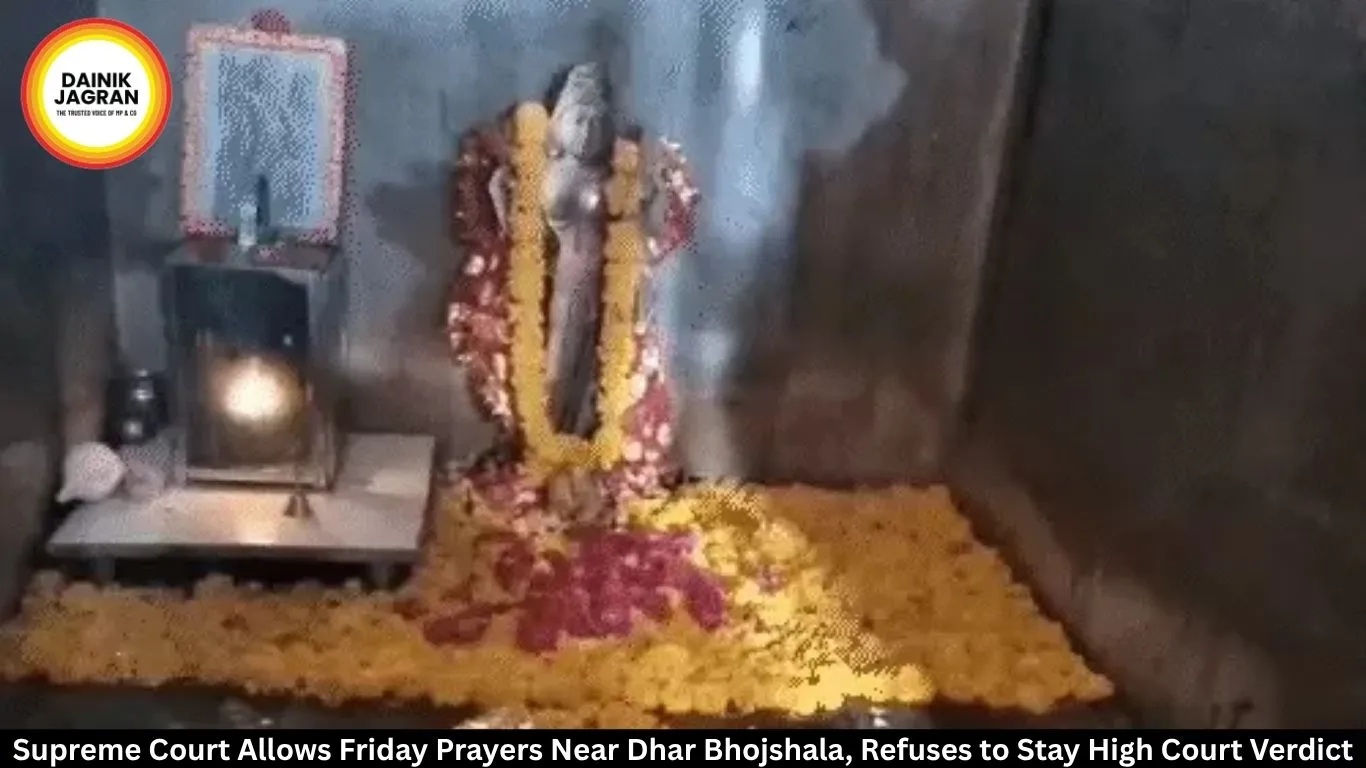
The Supreme Court refused to stay the Madhya Pradesh High Court's Bhojshala verdict but directed the state to arrange Friday prayers at a nearby location and barred ASI from making structural changes without court approval.
The Supreme Court on Tuesday declined to stay the Madhya Pradesh High Court's judgment in the long-running Bhojshala-Kamal Maula complex dispute in Dhar, but issued interim directions to ensure Friday prayers for the Muslim community at a location adjacent to the protected monument.
Hearing petitions filed by the Muslim side challenging the High Court's May 15 verdict, a Bench comprising Chief Justice Surya Kant, Justice Joymalya Bagchi, and Justice V. Mohan refused to grant interim relief by restoring the earlier worship arrangement. However, the court directed the Madhya Pradesh government to identify an open space adjoining the Bhojshala complex where members of the Muslim community can offer Friday prayers between 1 pm and 3 pm.
The apex court also directed the Archaeological Survey of India (ASI) not to undertake any structural alteration or modification inside the Bhojshala complex without obtaining prior permission from the court.
Notice Issued on Muslim Petitions
The Supreme Court issued notices to all respondents after the Muslim petitioners challenged the High Court's ruling, which had recognised the Bhojshala complex as a temple dedicated to Goddess Saraswati and prohibited the offering of namaz inside the premises.
The Bench declined to suspend the operation of the High Court's order at this stage, indicating that the matter would require detailed examination during the final hearing. The case is expected to be listed again in about three weeks.
Muslim Side Challenges Change in Religious Practice
Appearing for the petitioners, senior advocate Huzaifa Ahmadi argued that the High Court's judgment had altered a long-standing religious arrangement under which Muslims were permitted to offer Friday prayers while Hindus conducted worship on designated days.
He contended that the community had effectively lost access to the site following the High Court's order and questioned the conclusions drawn from the ASI survey report.
Senior advocate Abhishek Manu Singhvi also submitted that the High Court's verdict was inconsistent with the provisions and spirit of the Places of Worship (Special Provisions) Act, 1991. He argued that historical government records reflected the continuation of Friday prayers at the site over several years and that altering the existing practice raised significant legal questions.
Centre Defends Administrative Handling
Representing the Centre, Solicitor General Tushar Mehta informed the court that the High Court's judgment had been implemented peacefully and that the state administration had successfully maintained law and order after the decision.
He told the Bench that no major disturbance had been reported following the implementation of the High Court's directions.
ASI Barred From Structural Changes
Accepting a request made during the hearing, the Supreme Court ordered the ASI not to make any structural changes to the protected monument without prior judicial approval. The direction is intended to preserve the existing condition of the disputed site until the legal issues are finally decided.
Background of the Dispute
On May 15, 2026, the Madhya Pradesh High Court ruled that the Bhojshala-Kamal Maula complex is a temple dedicated to Goddess Saraswati, relying on the ASI survey report and historical material placed before it. The court prohibited the offering of namaz within the premises while allowing Hindu worship.
The Muslim parties subsequently approached the Supreme Court, arguing that the High Court had disrupted a long-standing arrangement that had governed religious practices at the site for years.
With notices now issued and interim directions in place, the Supreme Court will examine the ASI findings, historical records, constitutional provisions and statutory issues in detail during the next phase of the proceedings. The outcome is expected to have wider implications for disputes involving religious heritage sites across the country.

--------
🚨 Beat the News Rush – Join Now!
Get breaking alerts, hot exclusives, and game-changing stories instantly on your phone. No delays, no fluff – just the edge you need. ⚡
Tap to join:
🟢 WhatsApp Channel: Dainik Jagran MP CG
Crave more?
🅕 Facebook: Dainik Jagran MP CG English
🅧 Twitter (X): Dainik Jagran MP CG
🅘 Instagram: Dainik Jagran MP CG
Share the fire – keep your crew ahead! 🗞️🔥
Supreme Court Allows Friday Prayers Near Dhar Bhojshala, Declines to Stay High Court Verdict
Digital Desk
The Supreme Court on Tuesday declined to stay the Madhya Pradesh High Court's judgment in the long-running Bhojshala-Kamal Maula complex dispute in Dhar, but issued interim directions to ensure Friday prayers for the Muslim community at a location adjacent to the protected monument.
Hearing petitions filed by the Muslim side challenging the High Court's May 15 verdict, a Bench comprising Chief Justice Surya Kant, Justice Joymalya Bagchi, and Justice V. Mohan refused to grant interim relief by restoring the earlier worship arrangement. However, the court directed the Madhya Pradesh government to identify an open space adjoining the Bhojshala complex where members of the Muslim community can offer Friday prayers between 1 pm and 3 pm.
The apex court also directed the Archaeological Survey of India (ASI) not to undertake any structural alteration or modification inside the Bhojshala complex without obtaining prior permission from the court.
Notice Issued on Muslim Petitions
The Supreme Court issued notices to all respondents after the Muslim petitioners challenged the High Court's ruling, which had recognised the Bhojshala complex as a temple dedicated to Goddess Saraswati and prohibited the offering of namaz inside the premises.
The Bench declined to suspend the operation of the High Court's order at this stage, indicating that the matter would require detailed examination during the final hearing. The case is expected to be listed again in about three weeks.
Muslim Side Challenges Change in Religious Practice
Appearing for the petitioners, senior advocate Huzaifa Ahmadi argued that the High Court's judgment had altered a long-standing religious arrangement under which Muslims were permitted to offer Friday prayers while Hindus conducted worship on designated days.
He contended that the community had effectively lost access to the site following the High Court's order and questioned the conclusions drawn from the ASI survey report.
Senior advocate Abhishek Manu Singhvi also submitted that the High Court's verdict was inconsistent with the provisions and spirit of the Places of Worship (Special Provisions) Act, 1991. He argued that historical government records reflected the continuation of Friday prayers at the site over several years and that altering the existing practice raised significant legal questions.
Centre Defends Administrative Handling
Representing the Centre, Solicitor General Tushar Mehta informed the court that the High Court's judgment had been implemented peacefully and that the state administration had successfully maintained law and order after the decision.
He told the Bench that no major disturbance had been reported following the implementation of the High Court's directions.
ASI Barred From Structural Changes
Accepting a request made during the hearing, the Supreme Court ordered the ASI not to make any structural changes to the protected monument without prior judicial approval. The direction is intended to preserve the existing condition of the disputed site until the legal issues are finally decided.
Background of the Dispute
On May 15, 2026, the Madhya Pradesh High Court ruled that the Bhojshala-Kamal Maula complex is a temple dedicated to Goddess Saraswati, relying on the ASI survey report and historical material placed before it. The court prohibited the offering of namaz within the premises while allowing Hindu worship.
The Muslim parties subsequently approached the Supreme Court, arguing that the High Court had disrupted a long-standing arrangement that had governed religious practices at the site for years.
With notices now issued and interim directions in place, the Supreme Court will examine the ASI findings, historical records, constitutional provisions and statutory issues in detail during the next phase of the proceedings. The outcome is expected to have wider implications for disputes involving religious heritage sites across the country.