

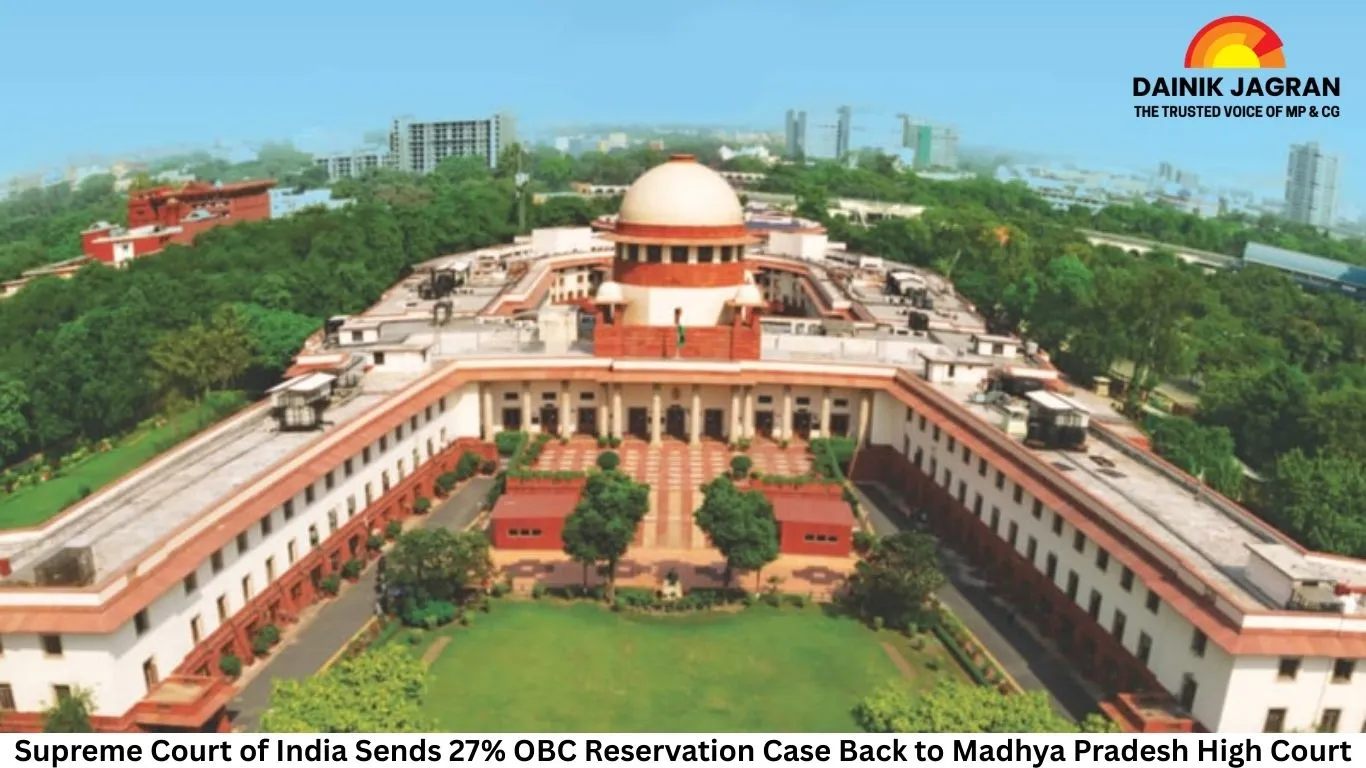
Supreme Court of India Sends 27% OBC Reservation Case Back to Madhya Pradesh High Court, Sets Two-Month Deadline
Digital Desk
In Jabalpur, a major legal development has emerged in the long-pending dispute over 27% reservation for Other Backward Classes (OBC) in Madhya Pradesh. The Supreme Court of India has sent all petitions related to the matter back to the Madhya Pradesh High Court and declared all previous interim orders ineffective.
The apex court clarified that examining the constitutional validity of OBC reservation would be more appropriate at the High Court level. It directed the High Court to complete hearings and deliver a final verdict within two months.
Supreme Court Expresses Concern Over Delay
During the hearing, the court expressed dissatisfaction with the role of the Government of Madhya Pradesh, observing that unnecessary delays had prevented recruitment processes from being completed and left the reservation situation unclear. On this basis, the court limited its intervention and remitted the matter back to the High Court.
Dispute Originated From 2019 Decision
The controversy began in 2019 when the state government decided to increase OBC reservation from 14% to 27%. Preparations were initiated to implement the provision in government recruitments, but multiple petitions were soon filed in the High Court challenging the move.
Petitioners argued that raising OBC reservation would push total reservation in the state well beyond the 50% cap, allegedly contradicting earlier Supreme Court rulings.
87–13 Formula as Interim Arrangement
Under interim High Court orders, recruitment was carried out for 87% of posts, while the remaining 13% were kept on hold pending the final decision on OBC reservation. The state government later approached the Supreme Court against this arrangement.
All Eyes Now on High Court Verdict
Following the latest Supreme Court order, the entire matter once again rests with the High Court. With a two-month deadline set, candidates, government authorities, and recruitment agencies are now awaiting the final ruling.
--------
🚨 Beat the News Rush – Join Now!
Get breaking alerts, hot exclusives, and game-changing stories instantly on your phone. No delays, no fluff – just the edge you need. ⚡
Tap to join:
🟢 WhatsApp Channel: Dainik Jagran MP CG
Crave more?
🅕 Facebook: Dainik Jagran MP CG English
🅧 Twitter (X): Dainik Jagran MP CG
🅘 Instagram: Dainik Jagran MP CG
Share the fire – keep your crew ahead! 🗞️🔥
Supreme Court of India Sends 27% OBC Reservation Case Back to Madhya Pradesh High Court, Sets Two-Month Deadline
Digital Desk
The apex court clarified that examining the constitutional validity of OBC reservation would be more appropriate at the High Court level. It directed the High Court to complete hearings and deliver a final verdict within two months.
Supreme Court Expresses Concern Over Delay
During the hearing, the court expressed dissatisfaction with the role of the Government of Madhya Pradesh, observing that unnecessary delays had prevented recruitment processes from being completed and left the reservation situation unclear. On this basis, the court limited its intervention and remitted the matter back to the High Court.
Dispute Originated From 2019 Decision
The controversy began in 2019 when the state government decided to increase OBC reservation from 14% to 27%. Preparations were initiated to implement the provision in government recruitments, but multiple petitions were soon filed in the High Court challenging the move.
Petitioners argued that raising OBC reservation would push total reservation in the state well beyond the 50% cap, allegedly contradicting earlier Supreme Court rulings.
87–13 Formula as Interim Arrangement
Under interim High Court orders, recruitment was carried out for 87% of posts, while the remaining 13% were kept on hold pending the final decision on OBC reservation. The state government later approached the Supreme Court against this arrangement.
All Eyes Now on High Court Verdict
Following the latest Supreme Court order, the entire matter once again rests with the High Court. With a two-month deadline set, candidates, government authorities, and recruitment agencies are now awaiting the final ruling.


