

Supreme Court Orders Against Illegal Chambal Sand Mining – States Face Action

Digital Desk

Supreme Court Orders Against Illegal Chambal Sand Mining – States Face Action

SC directs forest staff recruitment, vehicle seizure, and surveillance in Chambal Sanctuary. Rajasthan faces severe criticism for compliance failure; MP and UP warned over inadequate enforcement measures.


Court orders immediate recruitment of forest staff; warns Rajasthan, MP, UP over compliance failures

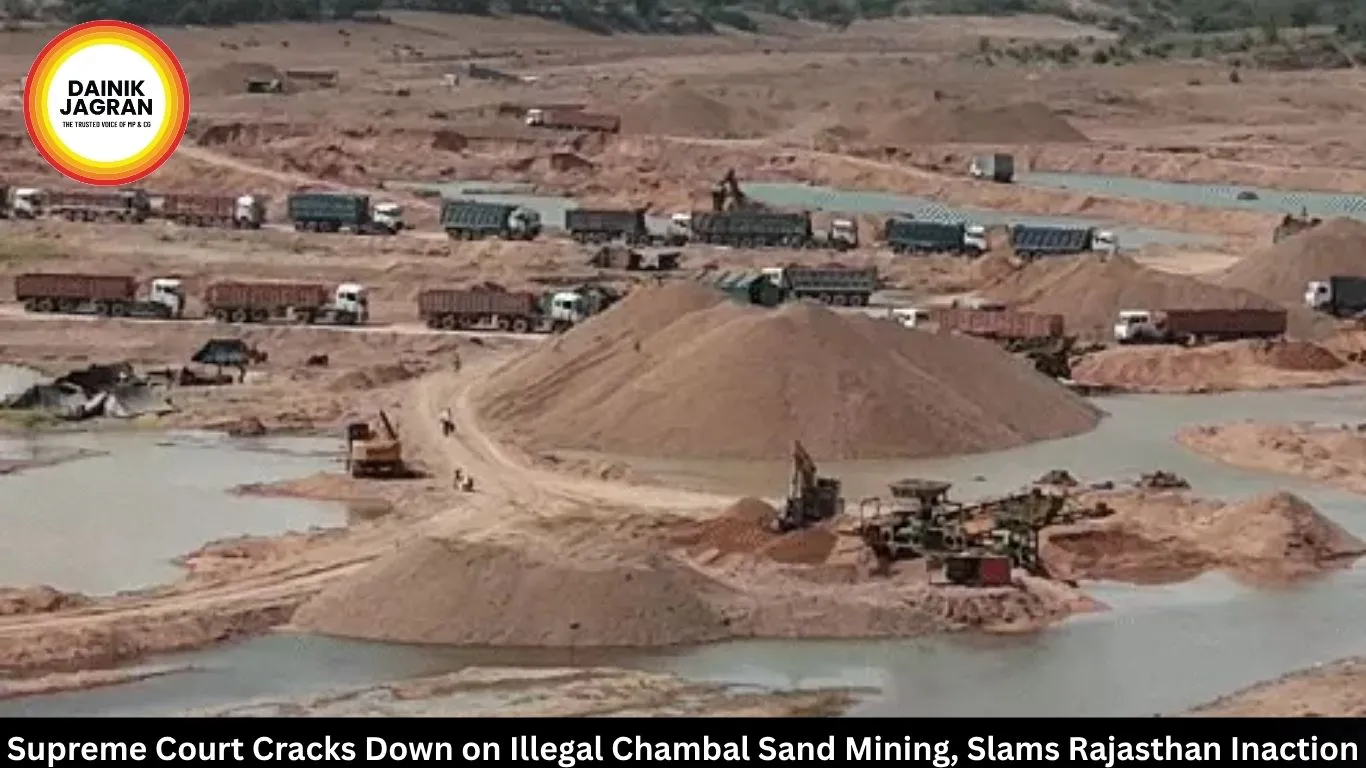
The Supreme Court issued stern orders on May 26 to combat persistent illegal sand mining in the Chambal Sanctuary, expressing deep displeasure with administrative lapses across three states. Justice Sandip Mehta's bench criticised Rajasthan's "extremely poor" compliance record and called the remedial actions in Madhya Pradesh and Uttar Pradesh insufficient. The court warned that unauthorised mining continues unchecked, signalling systemic negligence by state authorities responsible for environmental protection.

Rajasthan's Compliance Failure

Rajasthan faced the bench's harshest scrutiny. The state has largely ignored court orders issued on April 2 and April 17, the judgment noted. Critical surveillance infrastructure—CCTV systems, GPS tracking, and monitoring networks—remain in nascent stages despite months of court direction. Justice Mehta highlighted that several key decisions were taken only after explicit court intervention, exposing administrative apathy. The bench flagged that CCTV and surveillance systems are now projected to take 18 to 36 months for completion, an unacceptable timeline given the ecological urgency.

MP's Half-Measures Under Fire

Madhya Pradesh claimed partial progress, with authorities reporting 1,641 vehicle challans issued in Moraena district for unregistered vehicles. The court rejected this as insufficient. Merely issuing fines without seizure of unregistered and unplated vehicles, prosecuting owners, or pursuing the masterminds behind mining operations fails to address the root problem. The bench underscored that token penalties do little to deter organised mining networks operating in the sanctuary.

Focus on the Registered Vehicles Problem

Unregistered and numberless vehicles moving openly through mining zones directly enable illegal extraction, the court found. Operators rely on untraceable transport to evacuate sand without accountability. The bench issued stringent directives for vehicle seizure, blacklisting of owners, and criminal prosecution—measures the states have so far avoided. Without tackling this logistics network, illegal mining will persist regardless of other interventions.

Critical Shortage of Ground Staff

A significant gap emerged: all three states face severe shortages of forest guards and field personnel. The court stressed that technology—CCTV, GPS systems, surveillance drones—cannot function effectively without adequate human presence on the ground. Immediate acceleration of recruitment processes was mandated. Without frontline staff, monitoring infrastructure becomes symbolic rather than operational.

NH-44 Bridge at Risk

The court highlighted acute danger to the Moraena-Dholpur National Highway 44 bridge. Mining activity near this vital infrastructure threatens structural integrity. The bench directed the National Highways Authority of India (NHAI) to install CCTV systems around the bridge, enforce regular surveillance, and coordinate with local administration to impose a complete mining ban within 1 km upstream and 0.5 km downstream of the crossing.

Specific Directives to All Three States

The bench issued a comprehensive order demanding:

Immediate Actions: Complete forest guard and field staff recruitment without delay. Enforce rigorous action against unregistered and unplated vehicles through seizure and prosecution, not fines alone. Accelerate CCTV, GPS tracking, and joint inter-state patrol operations. Establish alternative livelihood schemes for local communities dependent on mining activities.

Compliance: Submit fresh affidavits detailing progress at the next hearing. The court retained the matter under continuous monitoring, indicating regular review hearings will follow.

Going Beyond Field Operatives

A separate observation drew attention to enforcement strategy. The court noted that actions typically stop at apprehending truck drivers and labourers, while the larger mining network remains untouched. Authorities must pursue the organisers, financiers, and kingpins orchestrating unauthorised extraction. Without dismantling these layers, field-level crackdowns remain ineffective against an entrenched shadow economy.

Sanctuary's Ecological Stakes

The Chambal Sanctuary harbours rare gharial populations and fragile riparian ecosystems. Unregulated mining destroys breeding habitats, destabilises riverbanks, and disrupts breeding cycles. The court underscored that environmental protection cannot be postponed indefinitely by administrative delays or half-measures. The order signals the judiciary's readiness to intervene more directly if compliance continues to lag.


--------

🚨 Beat the News Rush – Join Now!

Get breaking alerts, hot exclusives, and game-changing stories instantly on your phone. No delays, no fluff – just the edge you need. ⚡

Tap to join: 

🟢 WhatsApp Channel: Dainik Jagran MP CG

Crave more?

🅕 Facebook: Dainik Jagran MP CG English

🅧 Twitter (X): Dainik Jagran MP CG

🅘 Instagram: Dainik Jagran MP CG

Share the fire – keep your crew ahead! 🗞️🔥

english.dainikjagranmpcg.com
26 May 2026 By Abhishek Joshi

Supreme Court Orders Against Illegal Chambal Sand Mining – States Face Action

Digital Desk

Court orders immediate recruitment of forest staff; warns Rajasthan, MP, UP over compliance failures

The Supreme Court issued stern orders on May 26 to combat persistent illegal sand mining in the Chambal Sanctuary, expressing deep displeasure with administrative lapses across three states. Justice Sandip Mehta's bench criticised Rajasthan's "extremely poor" compliance record and called the remedial actions in Madhya Pradesh and Uttar Pradesh insufficient. The court warned that unauthorised mining continues unchecked, signalling systemic negligence by state authorities responsible for environmental protection.

Rajasthan's Compliance Failure

Rajasthan faced the bench's harshest scrutiny. The state has largely ignored court orders issued on April 2 and April 17, the judgment noted. Critical surveillance infrastructure—CCTV systems, GPS tracking, and monitoring networks—remain in nascent stages despite months of court direction. Justice Mehta highlighted that several key decisions were taken only after explicit court intervention, exposing administrative apathy. The bench flagged that CCTV and surveillance systems are now projected to take 18 to 36 months for completion, an unacceptable timeline given the ecological urgency.

MP's Half-Measures Under Fire

Madhya Pradesh claimed partial progress, with authorities reporting 1,641 vehicle challans issued in Moraena district for unregistered vehicles. The court rejected this as insufficient. Merely issuing fines without seizure of unregistered and unplated vehicles, prosecuting owners, or pursuing the masterminds behind mining operations fails to address the root problem. The bench underscored that token penalties do little to deter organised mining networks operating in the sanctuary.

Focus on the Registered Vehicles Problem

Unregistered and numberless vehicles moving openly through mining zones directly enable illegal extraction, the court found. Operators rely on untraceable transport to evacuate sand without accountability. The bench issued stringent directives for vehicle seizure, blacklisting of owners, and criminal prosecution—measures the states have so far avoided. Without tackling this logistics network, illegal mining will persist regardless of other interventions.

Critical Shortage of Ground Staff

A significant gap emerged: all three states face severe shortages of forest guards and field personnel. The court stressed that technology—CCTV, GPS systems, surveillance drones—cannot function effectively without adequate human presence on the ground. Immediate acceleration of recruitment processes was mandated. Without frontline staff, monitoring infrastructure becomes symbolic rather than operational.

NH-44 Bridge at Risk

The court highlighted acute danger to the Moraena-Dholpur National Highway 44 bridge. Mining activity near this vital infrastructure threatens structural integrity. The bench directed the National Highways Authority of India (NHAI) to install CCTV systems around the bridge, enforce regular surveillance, and coordinate with local administration to impose a complete mining ban within 1 km upstream and 0.5 km downstream of the crossing.

Specific Directives to All Three States

The bench issued a comprehensive order demanding:

Immediate Actions: Complete forest guard and field staff recruitment without delay. Enforce rigorous action against unregistered and unplated vehicles through seizure and prosecution, not fines alone. Accelerate CCTV, GPS tracking, and joint inter-state patrol operations. Establish alternative livelihood schemes for local communities dependent on mining activities.

Compliance: Submit fresh affidavits detailing progress at the next hearing. The court retained the matter under continuous monitoring, indicating regular review hearings will follow.

Going Beyond Field Operatives

A separate observation drew attention to enforcement strategy. The court noted that actions typically stop at apprehending truck drivers and labourers, while the larger mining network remains untouched. Authorities must pursue the organisers, financiers, and kingpins orchestrating unauthorised extraction. Without dismantling these layers, field-level crackdowns remain ineffective against an entrenched shadow economy.

Sanctuary's Ecological Stakes

The Chambal Sanctuary harbours rare gharial populations and fragile riparian ecosystems. Unregulated mining destroys breeding habitats, destabilises riverbanks, and disrupts breeding cycles. The court underscored that environmental protection cannot be postponed indefinitely by administrative delays or half-measures. The order signals the judiciary's readiness to intervene more directly if compliance continues to lag.


https://english.dainikjagranmpcg.com/states/madhya-pradesh/supreme-court-orders-against-illegal-chambal-sand-mining-%E2%80%93-states/article-19278

Related Posts

Latest News


