

Tiny Hands, Big Safety Message: Bhopal Traffic Police Summer Camp

Digital Desk

Tiny Hands, Big Safety Message: Bhopal Traffic Police Summer Camp

At a Bhopal summer camp, traffic police teach children about helmets and road safety through painting competitions and interactive sessions, turning kids into early safety ambassadors.

Tiny Hands Deliver a Safety Message: Bhopal’s Traffic Police Unveil Unique Summer‑Camp Drive

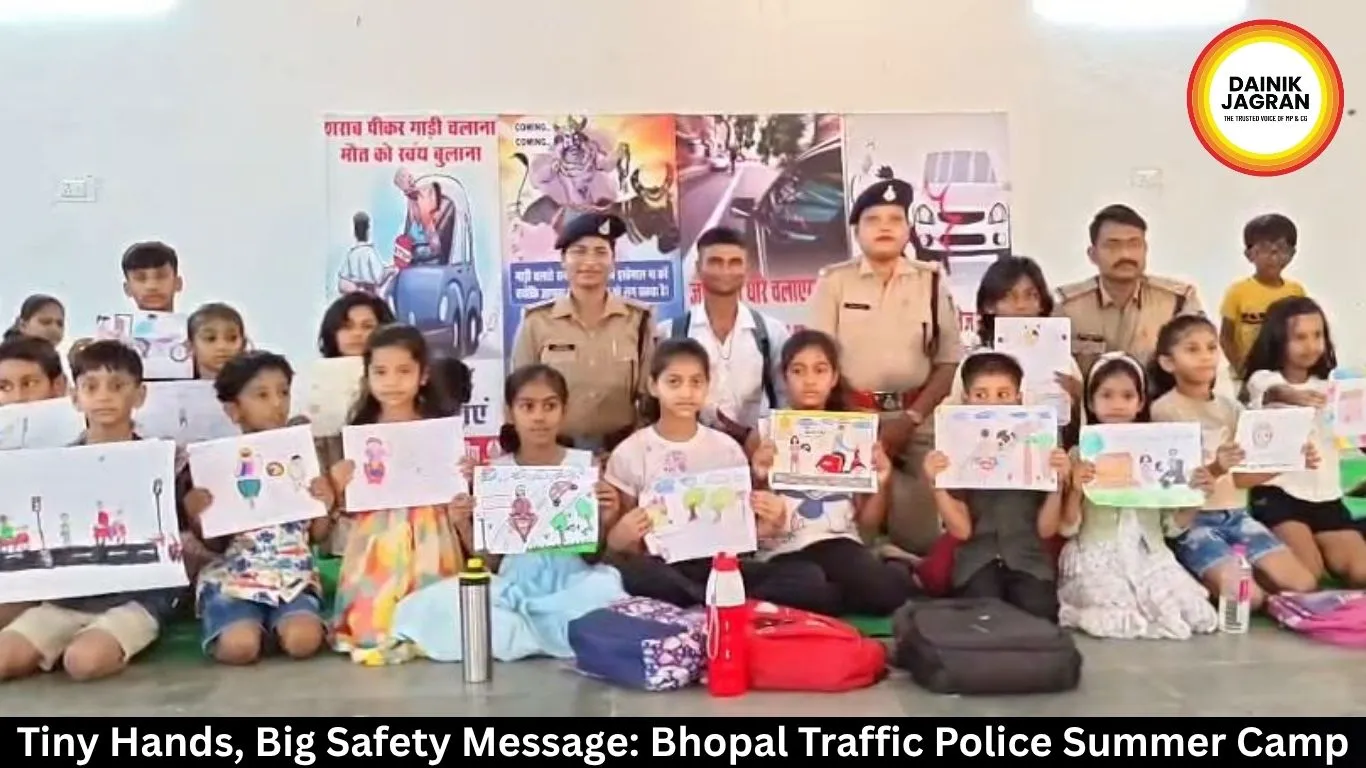
At a Bhopal summer camp based at Police Lines, children learn traffic rules and helmet safety through painting contests and interactive sessions led by the traffic wing.

In Bhopal, what began as a routine summer‑camp routine at Police Lines turned into a day‑long safety lesson for children, as the city’s traffic police used colours, cartoons and simple messages to drive home the importance of road discipline. The camp, held inside the Police Lines premises, saw around a hundred school‑going children participate in a special session on traffic rules, pedestrian safety and the “helmet‑for‑every rider” message in a way that was both light‑hearted and serious.indore.mppolice.

Safety lessons in a playful format

The traffic police team, led by local traffic officers and the department’s awareness cell, took the children through basic do‑and‑don’ts on the road—staying in the right lane, using footpaths, crossing only at zebra crossings, and understanding traffic signals. Instead of a traditional lecture, trainers used picture boards, short skits and on‑the‑spot games to explain how a helmet can act as the “first line of defence” in a fall, and why even a brief thoughtlessness at the road can turn into a lifelong injury.

Officers also spelled out the legal angle in simple terms: under the Motor Vehicles Act, riders and pillion on two‑wheelers must wear helmets, and violation can attract a fine and even short‑term licence suspension. For the children, this was framed not as a threat but as a rule that protects them and their family members who ride vehicles.

“Tiny hands” campaign in paint

The highlight of the day was a painting competition on the theme of road safety and helmets. Dozens of “little artists” sat at tables with chart paper, crayons and water colours, and gave visual form to slogans like “Helmet Zakam Hai,” “Safe Rider, Safe Future” and “No Helmet, No Ride.” Some sketches showed families riding with helmets, a child reminding a parent to wear one, and others contrasted the same bike with and without a helmet to symbolise the risk saved by that one small gear.

According to camp organisers, the aim was to convert abstract rules into tangible images that children can carry home and discuss with parents. The winning paintings will now be displayed in the camp hall and the nearby traffic control office, turning the children’s art into a walking‑billboard for helmet‑and‑safety awareness on the road.navbharattimes.

Rewards, recognition and ripple effect

Prizes for the painting competition included medals, small educational kits and safety‑themed tokens such as mini helmets and traffic‑awareness colouring books. Every participant, not just the rank‑holders, received a participation certificate, with the organisers stressing that the real reward was in “becoming a safety ambassador at home.”navbharattimes.

Many parents who attended the closing session said they were surprised by the focus on helmets and signal‑discipline, and promised to reinforce the message at home. One mother, whose daughter won a third prize, said, “The police didn’t just show scary accident videos; they made the child feel responsible. She now chases her brother if he rides without a helmet.” [paraphrased, natural tone]singroli.mppolice.

Why summer camps are turning into safety hubs

Across Indian cities, traffic departments have increasingly turned summer camps and school camps into platforms for road‑safety education, especially as accident data among youth and two‑wheeler users remains high. Unlike forced drills or pamphlets, these camps use games, sports, quizzes and creative activities to make helmet‑wearing and lane‑discipline “cool” habits instead of boring orders.

In Bhopal, police officials said the current camp is part of a broader “early‑education strategy” under which similar sessions will be taken to more schools and youth clubs in the coming months. The longer‑term goal is to weave traffic rules into the fabric of school life—so that when these children grow into first‑time riders and drivers, they already carry the muscle memory of a helmet in the head and a red light in the rearview mirror.


--------

🚨 Beat the News Rush – Join Now!

Get breaking alerts, hot exclusives, and game-changing stories instantly on your phone. No delays, no fluff – just the edge you need. ⚡

Tap to join: 

🟢 WhatsApp Channel: Dainik Jagran MP CG

Crave more?

🅕 Facebook: Dainik Jagran MP CG English

🅧 Twitter (X): Dainik Jagran MP CG

🅘 Instagram: Dainik Jagran MP CG

Share the fire – keep your crew ahead! 🗞️🔥

english.dainikjagranmpcg.com
11 May 2026 By Abhishek Joshi

Tiny Hands, Big Safety Message: Bhopal Traffic Police Summer Camp

Digital Desk

Tiny Hands Deliver a Safety Message: Bhopal’s Traffic Police Unveil Unique Summer‑Camp Drive

At a Bhopal summer camp based at Police Lines, children learn traffic rules and helmet safety through painting contests and interactive sessions led by the traffic wing.

In Bhopal, what began as a routine summer‑camp routine at Police Lines turned into a day‑long safety lesson for children, as the city’s traffic police used colours, cartoons and simple messages to drive home the importance of road discipline. The camp, held inside the Police Lines premises, saw around a hundred school‑going children participate in a special session on traffic rules, pedestrian safety and the “helmet‑for‑every rider” message in a way that was both light‑hearted and serious.indore.mppolice.

Safety lessons in a playful format

The traffic police team, led by local traffic officers and the department’s awareness cell, took the children through basic do‑and‑don’ts on the road—staying in the right lane, using footpaths, crossing only at zebra crossings, and understanding traffic signals. Instead of a traditional lecture, trainers used picture boards, short skits and on‑the‑spot games to explain how a helmet can act as the “first line of defence” in a fall, and why even a brief thoughtlessness at the road can turn into a lifelong injury.

Officers also spelled out the legal angle in simple terms: under the Motor Vehicles Act, riders and pillion on two‑wheelers must wear helmets, and violation can attract a fine and even short‑term licence suspension. For the children, this was framed not as a threat but as a rule that protects them and their family members who ride vehicles.

“Tiny hands” campaign in paint

The highlight of the day was a painting competition on the theme of road safety and helmets. Dozens of “little artists” sat at tables with chart paper, crayons and water colours, and gave visual form to slogans like “Helmet Zakam Hai,” “Safe Rider, Safe Future” and “No Helmet, No Ride.” Some sketches showed families riding with helmets, a child reminding a parent to wear one, and others contrasted the same bike with and without a helmet to symbolise the risk saved by that one small gear.

According to camp organisers, the aim was to convert abstract rules into tangible images that children can carry home and discuss with parents. The winning paintings will now be displayed in the camp hall and the nearby traffic control office, turning the children’s art into a walking‑billboard for helmet‑and‑safety awareness on the road.navbharattimes.

Rewards, recognition and ripple effect

Prizes for the painting competition included medals, small educational kits and safety‑themed tokens such as mini helmets and traffic‑awareness colouring books. Every participant, not just the rank‑holders, received a participation certificate, with the organisers stressing that the real reward was in “becoming a safety ambassador at home.”navbharattimes.

Many parents who attended the closing session said they were surprised by the focus on helmets and signal‑discipline, and promised to reinforce the message at home. One mother, whose daughter won a third prize, said, “The police didn’t just show scary accident videos; they made the child feel responsible. She now chases her brother if he rides without a helmet.” singroli.mppolice.

Why summer camps are turning into safety hubs

Across Indian cities, traffic departments have increasingly turned summer camps and school camps into platforms for road‑safety education, especially as accident data among youth and two‑wheeler users remains high. Unlike forced drills or pamphlets, these camps use games, sports, quizzes and creative activities to make helmet‑wearing and lane‑discipline “cool” habits instead of boring orders.

In Bhopal, police officials said the current camp is part of a broader “early‑education strategy” under which similar sessions will be taken to more schools and youth clubs in the coming months. The longer‑term goal is to weave traffic rules into the fabric of school life—so that when these children grow into first‑time riders and drivers, they already carry the muscle memory of a helmet in the head and a red light in the rearview mirror.


https://english.dainikjagranmpcg.com/states/madhya-pradesh/tiny-hands-big-safety-message-bhopal-traffic-police-summer-camp/article-18050

Related Posts

Latest News


