Ujjain Mahakaleshwar Temple Bhasma Aarti Performed
Digital Desk
Hundreds of devotees gathered for the Mahakaleshwar Temple Bhasma Aarti in Ujjain on Sunday morning, featuring the divine 'Raja Swaroop' ritual decoration.
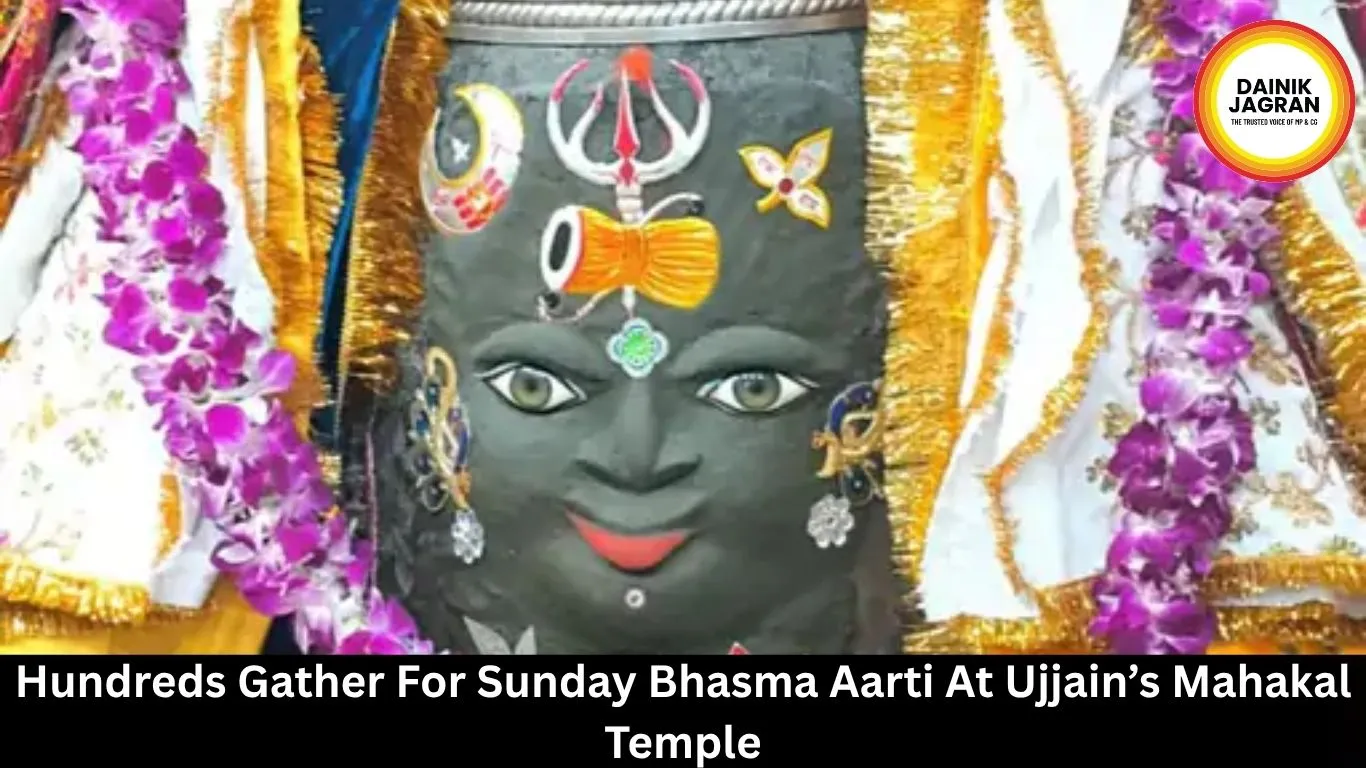
The deity was adorned in the traditional 'Raja Swaroop' during the early morning Mahakaleshwar Temple Bhasma Aarti.
The world-famous Mahakaleshwar Temple in Ujjain witnessed a massive surge of devotees early Sunday morning as the traditional Mahakaleshwar Temple Bhasma Aarti was performed with customary religious fervor. The gates of the ancient shrine opened at the designated hour of 4:00 AM, marking the commencement of a series of elaborate rituals that form the core of the temple’s daily spiritual calendar.
Dawn rituals begin early
As soon as the sanctum sanctorum (Garbhagriha) was opened, the temple priests and pundits initiated the morning prayers by purifying the arena and worshiping all the presiding deities installed within the inner precinct. This was followed by a grand 'Jalabhishek'—the ceremonial pouring of holy water over the sacred Jyotirlinga. The atmosphere inside the temple premises reverberated with Vedic chants and the ringing of bells as hundreds of devotees, who had lined up since midnight, watched the proceedings.
Grand panchamrit abhishek performed
The deity then received the traditional 'Panchamrit Abhishek', a sacred bath utilizing five distinct elements. Priests poured milk, curd, clarified butter (ghee), honey/sugar, and freshly extracted fruit juices over the Shiva lingam. Temple officials noted that the Sunday turnout was particularly high, requiring extensive crowd management measures along the entry corridors to ensure a smooth flow of pilgrims seeking early morning blessings.
Special Raja Swaroop shringar
Following the holy bath, the Jyotirlinga was prepared for the defining segment of the morning—the 'Raja Swaroop Shringar' (royal decoration). For this special Sunday alignment, priests meticulously adorned the deity using a combination of bhang, sandalwood paste (chandan), and bilvapatra. Symbolizing the cosmic attributes of Lord Shiva, a trishul (trident), tripund (three horizontal lines of ash), and a damru (hand drum) were artfully placed as part of the divine attire.
Holy ash ritual concludes
The ritual advanced with the offering of 'Hari Om' water, followed by the spectacular Kapoor (camphor) Aarti. In line with centuries-old traditions, the Jyotirlinga was briefly covered with a pristine cloth before the actual application of the sacred ash. The holy ash was formally executed by representatives of the Maha Nirvani Akhada, who hold the traditional right to offer the substance to the deity.
According to local beliefs held by millions of devotees, the application of the holy ash marks the precise moment when Lord Shiva transitions from his formless, unmanifested state (Nirakar) into a tangible, manifest form (Saakar) to grant audience to his followers on earth.
Devotees witness silver adornments
Once the ash ritual concluded, the deity was further embellished with precious metal ornaments. A silver Sheshnag crown, a silver mundmala (garland of skulls), and intricate rudraksha beads were placed on the icon, interspersed with fragrant garlands of fresh mogra and roses. The final morning offering, comprising a variety of seasonal fruits and traditional sweets (mithai), was presented as bhog.
Tight security around complex
Local authorities and temple administrative staff confirmed that security remained tight throughout the early hours to manage the heavy influx of visitors arriving from different parts of Madhya Pradesh and neighboring states. Given the weekend rush, additional volunteers were deployed inside the hall.
The management ensured that the live telecast of the Mahakaleshwar Temple Bhasma Aarti was seamlessly broadcast across local screens for those unable to enter the core area. The day's events concluded with the distribution of prasad among the gathering as regular darshan lines resumed for the rest of the Sunday layout.

--------
🚨 Beat the News Rush – Join Now!
Get breaking alerts, hot exclusives, and game-changing stories instantly on your phone. No delays, no fluff – just the edge you need. ⚡
Tap to join:
🟢 WhatsApp Channel: Dainik Jagran MP CG
Crave more?
🅕 Facebook: Dainik Jagran MP CG English
🅧 Twitter (X): Dainik Jagran MP CG
🅘 Instagram: Dainik Jagran MP CG
Share the fire – keep your crew ahead! 🗞️🔥
Ujjain Mahakaleshwar Temple Bhasma Aarti Performed
Digital Desk
The deity was adorned in the traditional 'Raja Swaroop' during the early morning Mahakaleshwar Temple Bhasma Aarti.
The world-famous Mahakaleshwar Temple in Ujjain witnessed a massive surge of devotees early Sunday morning as the traditional Mahakaleshwar Temple Bhasma Aarti was performed with customary religious fervor. The gates of the ancient shrine opened at the designated hour of 4:00 AM, marking the commencement of a series of elaborate rituals that form the core of the temple’s daily spiritual calendar.
Dawn rituals begin early
As soon as the sanctum sanctorum (Garbhagriha) was opened, the temple priests and pundits initiated the morning prayers by purifying the arena and worshiping all the presiding deities installed within the inner precinct. This was followed by a grand 'Jalabhishek'—the ceremonial pouring of holy water over the sacred Jyotirlinga. The atmosphere inside the temple premises reverberated with Vedic chants and the ringing of bells as hundreds of devotees, who had lined up since midnight, watched the proceedings.
Grand panchamrit abhishek performed
The deity then received the traditional 'Panchamrit Abhishek', a sacred bath utilizing five distinct elements. Priests poured milk, curd, clarified butter (ghee), honey/sugar, and freshly extracted fruit juices over the Shiva lingam. Temple officials noted that the Sunday turnout was particularly high, requiring extensive crowd management measures along the entry corridors to ensure a smooth flow of pilgrims seeking early morning blessings.
Special Raja Swaroop shringar
Following the holy bath, the Jyotirlinga was prepared for the defining segment of the morning—the 'Raja Swaroop Shringar' (royal decoration). For this special Sunday alignment, priests meticulously adorned the deity using a combination of bhang, sandalwood paste (chandan), and bilvapatra. Symbolizing the cosmic attributes of Lord Shiva, a trishul (trident), tripund (three horizontal lines of ash), and a damru (hand drum) were artfully placed as part of the divine attire.
Holy ash ritual concludes
The ritual advanced with the offering of 'Hari Om' water, followed by the spectacular Kapoor (camphor) Aarti. In line with centuries-old traditions, the Jyotirlinga was briefly covered with a pristine cloth before the actual application of the sacred ash. The holy ash was formally executed by representatives of the Maha Nirvani Akhada, who hold the traditional right to offer the substance to the deity.
According to local beliefs held by millions of devotees, the application of the holy ash marks the precise moment when Lord Shiva transitions from his formless, unmanifested state (Nirakar) into a tangible, manifest form (Saakar) to grant audience to his followers on earth.
Devotees witness silver adornments
Once the ash ritual concluded, the deity was further embellished with precious metal ornaments. A silver Sheshnag crown, a silver mundmala (garland of skulls), and intricate rudraksha beads were placed on the icon, interspersed with fragrant garlands of fresh mogra and roses. The final morning offering, comprising a variety of seasonal fruits and traditional sweets (mithai), was presented as bhog.
Tight security around complex
Local authorities and temple administrative staff confirmed that security remained tight throughout the early hours to manage the heavy influx of visitors arriving from different parts of Madhya Pradesh and neighboring states. Given the weekend rush, additional volunteers were deployed inside the hall.
The management ensured that the live telecast of the Mahakaleshwar Temple Bhasma Aarti was seamlessly broadcast across local screens for those unable to enter the core area. The day's events concluded with the distribution of prasad among the gathering as regular darshan lines resumed for the rest of the Sunday layout.