Farmers End 4-Day Hunger Strike in Rewa After Assurance
Digital Desk
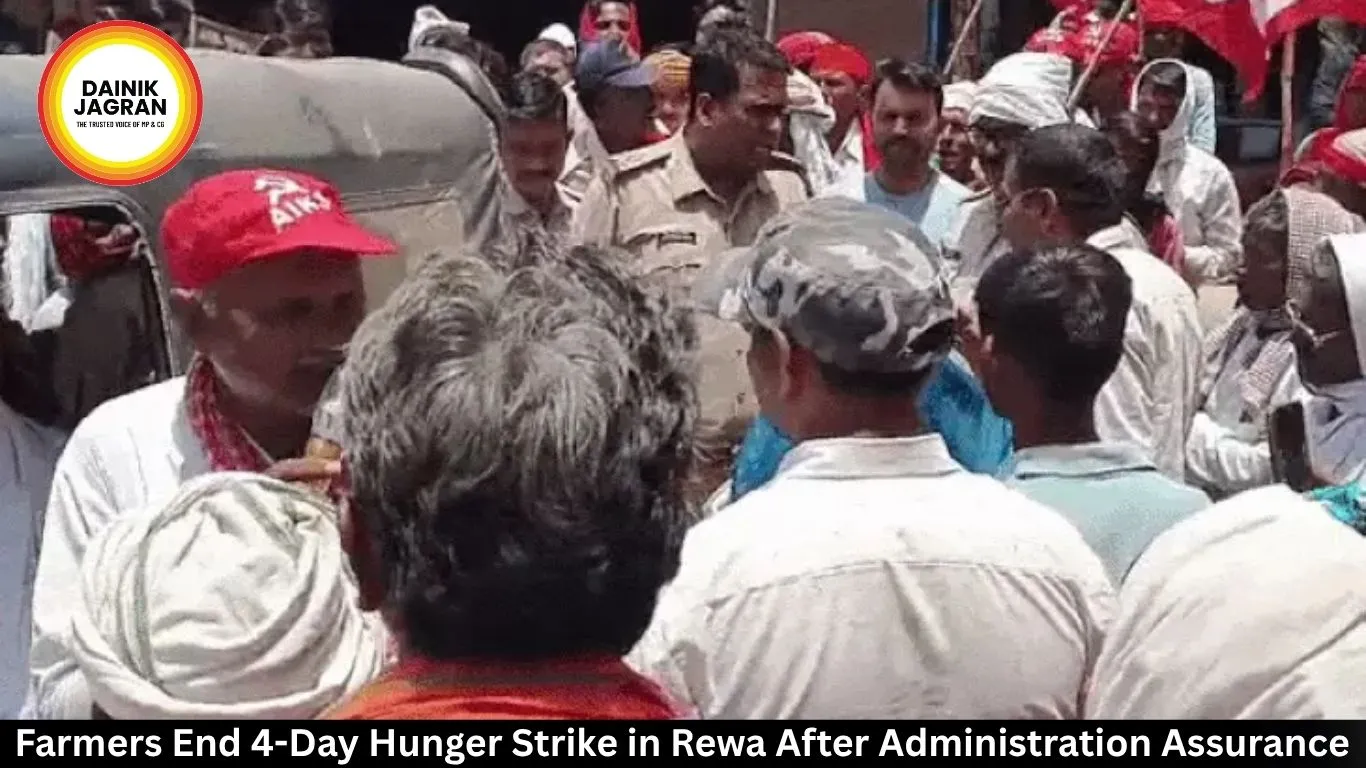
Farmers in Rewa’s Ataraia area ended their four-day hunger strike on Sunday after the administration promised action on demands for better electricity, roads, and water supply within 15 days.
Farmers associated with the Madhya Pradesh Kisan Sabha called off their four-day hunger strike on Sunday following assurances from local administration to address long-pending civic issues. The protest, which had disrupted normal life in parts of the area, ended after tehsildar-level talks.
The demonstrators, mostly from villages under Jawa tehsil, had been demanding basic infrastructure improvements including better electricity supply, road repairs, and reliable drinking water. Officials confirmed that the administration has been given 15 days to initiate action on these grievances.
Protest Disrupts Traffic
On the fourth day, protesters gathered at Ataraia market and blocked the Rewa-Dabhaura road for nearly an hour, affecting vehicular movement. They later moved to the local power distribution centre premises, where they raised slogans highlighting their demands. The situation remained tense until Ataraia police station in-charge intervened and persuaded the group to maintain calm.
Tehsildar Rajendra Shukla reached the spot, heard the farmers’ concerns in detail, and requested time to resolve the issues. After discussions, the protesters agreed to end the stir. Shukla and other officials offered juice to the fasting farmers and women, formally concluding the demonstration.
Key Demands Raised
The farmers had listed several pressing problems affecting daily life in the region. These included repair of dilapidated village roads, regular and adequate drinking water supply, improvement in power supply with a curb on unannounced outages, timely and full distribution of ration from fair price shops, immediate repair of defunct handpumps, and resolution of pending land rights cases.
They also sought proper implementation of government welfare schemes for farmers. Representatives of the Kisan Sabha said repeated complaints to the administration over a long period had yielded little response, forcing them to resort to the hunger strike.
Women Warn of Future Action
Women who participated actively in the protest expressed cautious optimism after the talks. They stated that the administration has sought 15 days for redressal. “If our problems are not solved within this period, we will be compelled to launch an indefinite hunger strike again at the tehsil office premises,” one of the women told reporters.
The protesters, who included both men and women from surrounding villages, had been sitting on dharna for four consecutive days, drawing attention to the poor state of basic amenities in the area.
Background of the Agitation
The Jawa tehsil unit of Madhya Pradesh Kisan Sabha had organised the protest under its banner to highlight multiple civic and agricultural issues. Sources familiar with the matter said the grievances were not new and had been raised in earlier meetings with officials, but concrete action remained pending.
Local residents welcomed the temporary resolution but remained watchful. Many depend on agriculture and daily wage work, and poor infrastructure directly impacts their livelihood and access to essential services.
Assurance and Next Steps
Tehsildar Rajendra Shukla assured the group that necessary steps would be initiated within the given timeframe. Officials are expected to assess the ground situation regarding roads, electricity, water supply, and handpump repairs in the coming days.
The development comes amid growing demands from rural areas of Madhya Pradesh for better delivery of basic services. Similar small-scale protests have been reported in other districts over comparable issues in recent months.
Farmers’ leaders said they would monitor progress closely and keep channels of communication open with the administration. The peaceful end of the protest was seen as a positive sign, though the coming weeks will determine whether the assurances translate into visible improvements on the ground.
--------
🚨 Beat the News Rush – Join Now!
Get breaking alerts, hot exclusives, and game-changing stories instantly on your phone. No delays, no fluff – just the edge you need. ⚡
Tap to join:
🟢 WhatsApp Channel: Dainik Jagran MP CG
Crave more?
🅕 Facebook: Dainik Jagran MP CG English
🅧 Twitter (X): Dainik Jagran MP CG
🅘 Instagram: Dainik Jagran MP CG
Share the fire – keep your crew ahead! 🗞️🔥
Farmers End 4-Day Hunger Strike in Rewa After Assurance
Digital Desk
Farmers associated with the Madhya Pradesh Kisan Sabha called off their four-day hunger strike on Sunday following assurances from local administration to address long-pending civic issues. The protest, which had disrupted normal life in parts of the area, ended after tehsildar-level talks.
The demonstrators, mostly from villages under Jawa tehsil, had been demanding basic infrastructure improvements including better electricity supply, road repairs, and reliable drinking water. Officials confirmed that the administration has been given 15 days to initiate action on these grievances.
Protest Disrupts Traffic
On the fourth day, protesters gathered at Ataraia market and blocked the Rewa-Dabhaura road for nearly an hour, affecting vehicular movement. They later moved to the local power distribution centre premises, where they raised slogans highlighting their demands. The situation remained tense until Ataraia police station in-charge intervened and persuaded the group to maintain calm.
Tehsildar Rajendra Shukla reached the spot, heard the farmers’ concerns in detail, and requested time to resolve the issues. After discussions, the protesters agreed to end the stir. Shukla and other officials offered juice to the fasting farmers and women, formally concluding the demonstration.
Key Demands Raised
The farmers had listed several pressing problems affecting daily life in the region. These included repair of dilapidated village roads, regular and adequate drinking water supply, improvement in power supply with a curb on unannounced outages, timely and full distribution of ration from fair price shops, immediate repair of defunct handpumps, and resolution of pending land rights cases.
They also sought proper implementation of government welfare schemes for farmers. Representatives of the Kisan Sabha said repeated complaints to the administration over a long period had yielded little response, forcing them to resort to the hunger strike.
Women Warn of Future Action
Women who participated actively in the protest expressed cautious optimism after the talks. They stated that the administration has sought 15 days for redressal. “If our problems are not solved within this period, we will be compelled to launch an indefinite hunger strike again at the tehsil office premises,” one of the women told reporters.
The protesters, who included both men and women from surrounding villages, had been sitting on dharna for four consecutive days, drawing attention to the poor state of basic amenities in the area.
Background of the Agitation
The Jawa tehsil unit of Madhya Pradesh Kisan Sabha had organised the protest under its banner to highlight multiple civic and agricultural issues. Sources familiar with the matter said the grievances were not new and had been raised in earlier meetings with officials, but concrete action remained pending.
Local residents welcomed the temporary resolution but remained watchful. Many depend on agriculture and daily wage work, and poor infrastructure directly impacts their livelihood and access to essential services.
Assurance and Next Steps
Tehsildar Rajendra Shukla assured the group that necessary steps would be initiated within the given timeframe. Officials are expected to assess the ground situation regarding roads, electricity, water supply, and handpump repairs in the coming days.
The development comes amid growing demands from rural areas of Madhya Pradesh for better delivery of basic services. Similar small-scale protests have been reported in other districts over comparable issues in recent months.
Farmers’ leaders said they would monitor progress closely and keep channels of communication open with the administration. The peaceful end of the protest was seen as a positive sign, though the coming weeks will determine whether the assurances translate into visible improvements on the ground.