


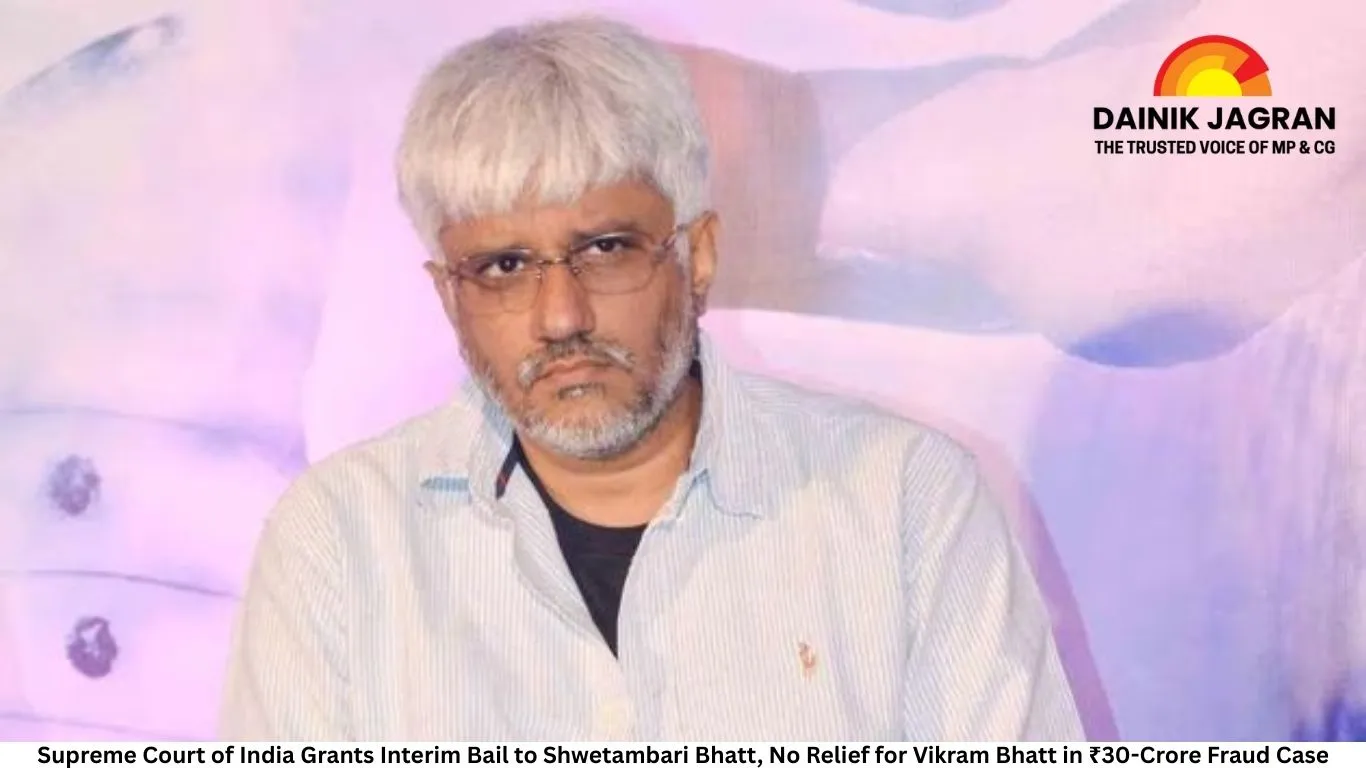
Supreme Court of India Grants Interim Bail to Shwetambari Bhatt, No Relief for Vikram Bhatt in ₹30-Crore Fraud Case
Digital Desk
Senior advocate Mukul Rohatgi appeared for Vikram Bhatt, while counsel representing complainant Ajay Murdia opposed the plea. The bench allowed temporary relief to Shwetambari, enabling her release once bail bonds are processed in the trial court, but found insufficient grounds at this stage to extend the same benefit to Bhatt.
According to case records, the complaint alleges that funds were solicited on the promise of producing a biographical film and multiple commercial projects. Investigators claim that financial transactions totaling several crores were routed through accounts linked to associates and staff connected to the proposed productions. The allegations are yet to be tested at trial, and the accused have denied wrongdoing.
The case originated from an FIR filed in Udaipur on November 17, in which Murdia, owner of the Indira Group of Companies, accused eight individuals, including the filmmaker and his wife, of cheating and criminal conspiracy. Police say the complainant was introduced to the project by Dinesh Kataria, who allegedly arranged a meeting in Mumbai where investment proposals were discussed.
A team from the Udaipur Police arrested the couple in Mumbai in December and brought them to Rajasthan for questioning. Authorities allege that payments were made in stages after assurances of high returns from film releases, though investigators contend that promised projects did not materialise as described.
Defence lawyers argue that the dispute is contractual and financial rather than criminal, maintaining that investment risks were clearly communicated. Prosecutors, however, insist the case involves deliberate misrepresentation intended to induce large transfers of money.
Legal observers note that interim bail does not reflect a judgment on guilt but is granted on limited considerations such as custody duration, cooperation, and individual circumstances. The upcoming hearing is expected to address arguments on evidence, financial trails, and the role of each accused.
Until then, Vikram Bhatt remains without bail protection, while Shwetambari’s release will depend on completion of formalities in the lower court.
.jpg)




