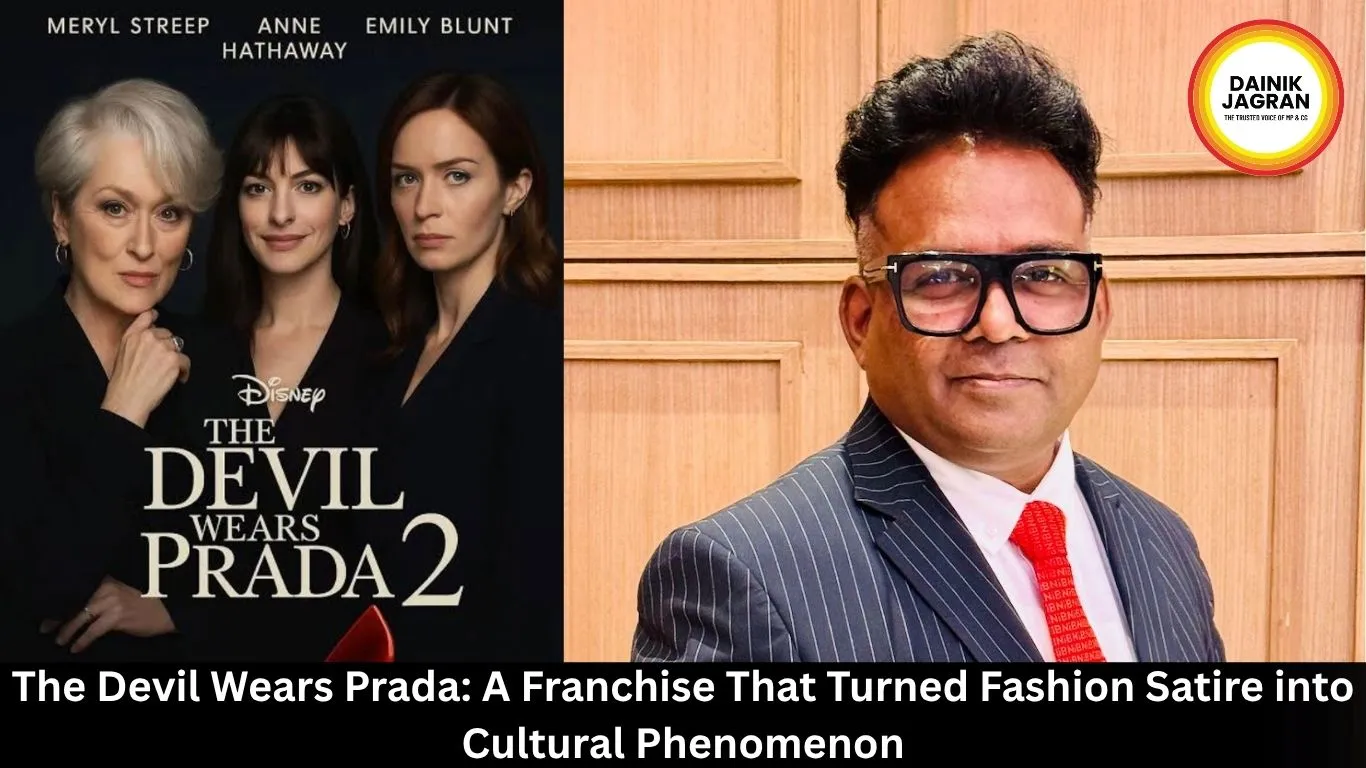
The Devil Wears Prada: A Franchise That Turned Fashion Satire into Cultural Phenomenon

Girish Wankhede, Movie Business Analyst

The Devil Wears Prada: A Franchise That Turned Fashion Satire into Cultural Phenomenon

The Devil Wears Prada first arrived in 2006 as a sharp-witted comedy-drama that few expected to leave such a lasting mark on popular culture. Directed by David Frankel and based on Lauren Weisberger’s novel, the film starred Meryl Streep as the formidable Runway magazine editor Miranda Priestly and Anne Hathaway as the idealistic young assistant Andy Sachs, with memorable supporting performances from Emily Blunt and Stanley Tucci. Its iconic cerulean sweater monologue brilliantly exposed how fashion shapes culture, while quotable lines and stylish satire turned it into a cultural touchstone.

The movie cleverly skewered workplace ambition, hustle culture, consumerism, and the challenges women face in balancing success with authenticity. It found a particularly strong following in queer communities for its celebration of style and identity, and even two decades later it continues to fuel discussions about corporate toxicity, millennial burnout, and the illusion of choice in a branded world.

Made on a modest budget of approximately 40 million dollars, the original film grossed 326.6 million dollars worldwide, with 124.7 million dollars coming from North America and 201.8 million dollars from international markets. In India, however, it remained a niche release, earning roughly 1.4 to 1.5 crore rupees at the time, reflecting the limited mainstream appeal of fashion comedies in the market back then.

Exactly twenty years later, on May 1, 2026, The Devil Wears Prada 2 reunited the core cast amid the transformed realities of the media and fashion industries. The sequel updates the satire to address the decline of print media, digital disruption, the influence of tech billionaires, and shifting generational attitudes toward work and ambition. It blends nostalgia with fresh relevance, exploring Gen Z’s rejection of burnout culture, nepo-kid dynamics and the ongoing tension between creativity and corporate greed, all while retaining the glossy escapism and sharp humor that defined the original. Through clever callbacks, Lady Gaga’s cameo and a buzzy soundtrack, the film has reignited conversations about female mentorship, work-life balance, and what ambition truly means in a post-pandemic era.

By May 19, 2026, after roughly three weekends in release, the sequel has delivered impressive box office numbers. It opened to a massive 233.6 million dollars worldwide, including 77 million dollars domestically in the United States and 156.6 million dollars from international markets, marking one of the strongest launches of 2026 and the highest opening for a traditional comedy in over a decade. As of mid-May, it has accumulated approximately 177.7 million dollars in the US and North America, with the global total reaching around 547 to 548 million dollars, already surpassing the lifetime earnings of the first film and establishing itself as one of the year’s standout performers against a 100 million dollar budget.

In India, the film has carved out a respectable run that stands out among Hollywood comedies. It opened to a solid 5.5 crore rupees including paid previews, one of the stronger Hollywood openers of the year, and steadily climbed toward the 30 crore rupees gross range by mid-May. What went right in India was a thoughtful combination of factors that aligned perfectly with local audience tastes. Nostalgia played a major role, as the original had gained cult status through television reruns and streaming platforms, drawing urban multiplex crowds eager to see Streep, Hathaway, and Blunt return. The film’s themes of ambition, digital disruption, and work culture resonated strongly with fashion-conscious professionals and younger viewers in cities like Mumbai, Delhi, and Bangalore. 

Crucially, its marketing transformed the release into a genuine cultural event through high-fashion brand collaborations, witty social media campaigns featuring the cast, red-carpet buzz, and immersive promotions that generated sustained visibility. This smart approach, paired with the film’s accessible wit and timely relevance, helped it achieve healthy weekday holds and genuine word-of-mouth support rather than relying solely on opening day hype.

Across both installments, the franchise has succeeded by treating every element; storytelling, casting continuity, cultural commentary, and marketing, as a seamless extension of its core identity. The original proved that women-centric stories with intelligence and glamour could dominate globally without heavy spectacle, while the sequel amplified this formula with masterful nostalgia and innovative visibility strategies that turned the film into a must-see cultural moment. In India, this blend of aspirational escapism, star power, and relevant themes has helped the sequel perform strongly among urban audiences, signaling a growing appetite for quality Hollywood comedies. Two decades apart, the Devil Wears Prada series demonstrates that sharp wit, stylish satire, and culturally attuned execution can still outshine pure spectacle, reaffirming the enduring power of thoughtful storytelling in a fragmented entertainment landscape.

--------

🚨 Beat the News Rush – Join Now!

Get breaking alerts, hot exclusives, and game-changing stories instantly on your phone. No delays, no fluff – just the edge you need. ⚡

Tap to join: 

🟢 WhatsApp Channel: Dainik Jagran MP CG

Crave more?

🅕 Facebook: Dainik Jagran MP CG English

🅧 Twitter (X): Dainik Jagran MP CG

🅘 Instagram: Dainik Jagran MP CG

Share the fire – keep your crew ahead! 🗞️🔥

english.dainikjagranmpcg.com
20 May 2026 By Abhishek Joshi

The Devil Wears Prada: A Franchise That Turned Fashion Satire into Cultural Phenomenon

Girish Wankhede, Movie Business Analyst

The movie cleverly skewered workplace ambition, hustle culture, consumerism, and the challenges women face in balancing success with authenticity. It found a particularly strong following in queer communities for its celebration of style and identity, and even two decades later it continues to fuel discussions about corporate toxicity, millennial burnout, and the illusion of choice in a branded world.

Made on a modest budget of approximately 40 million dollars, the original film grossed 326.6 million dollars worldwide, with 124.7 million dollars coming from North America and 201.8 million dollars from international markets. In India, however, it remained a niche release, earning roughly 1.4 to 1.5 crore rupees at the time, reflecting the limited mainstream appeal of fashion comedies in the market back then.

Exactly twenty years later, on May 1, 2026, The Devil Wears Prada 2 reunited the core cast amid the transformed realities of the media and fashion industries. The sequel updates the satire to address the decline of print media, digital disruption, the influence of tech billionaires, and shifting generational attitudes toward work and ambition. It blends nostalgia with fresh relevance, exploring Gen Z’s rejection of burnout culture, nepo-kid dynamics and the ongoing tension between creativity and corporate greed, all while retaining the glossy escapism and sharp humor that defined the original. Through clever callbacks, Lady Gaga’s cameo and a buzzy soundtrack, the film has reignited conversations about female mentorship, work-life balance, and what ambition truly means in a post-pandemic era.

By May 19, 2026, after roughly three weekends in release, the sequel has delivered impressive box office numbers. It opened to a massive 233.6 million dollars worldwide, including 77 million dollars domestically in the United States and 156.6 million dollars from international markets, marking one of the strongest launches of 2026 and the highest opening for a traditional comedy in over a decade. As of mid-May, it has accumulated approximately 177.7 million dollars in the US and North America, with the global total reaching around 547 to 548 million dollars, already surpassing the lifetime earnings of the first film and establishing itself as one of the year’s standout performers against a 100 million dollar budget.

In India, the film has carved out a respectable run that stands out among Hollywood comedies. It opened to a solid 5.5 crore rupees including paid previews, one of the stronger Hollywood openers of the year, and steadily climbed toward the 30 crore rupees gross range by mid-May. What went right in India was a thoughtful combination of factors that aligned perfectly with local audience tastes. Nostalgia played a major role, as the original had gained cult status through television reruns and streaming platforms, drawing urban multiplex crowds eager to see Streep, Hathaway, and Blunt return. The film’s themes of ambition, digital disruption, and work culture resonated strongly with fashion-conscious professionals and younger viewers in cities like Mumbai, Delhi, and Bangalore. 

Crucially, its marketing transformed the release into a genuine cultural event through high-fashion brand collaborations, witty social media campaigns featuring the cast, red-carpet buzz, and immersive promotions that generated sustained visibility. This smart approach, paired with the film’s accessible wit and timely relevance, helped it achieve healthy weekday holds and genuine word-of-mouth support rather than relying solely on opening day hype.

Across both installments, the franchise has succeeded by treating every element; storytelling, casting continuity, cultural commentary, and marketing, as a seamless extension of its core identity. The original proved that women-centric stories with intelligence and glamour could dominate globally without heavy spectacle, while the sequel amplified this formula with masterful nostalgia and innovative visibility strategies that turned the film into a must-see cultural moment. In India, this blend of aspirational escapism, star power, and relevant themes has helped the sequel perform strongly among urban audiences, signaling a growing appetite for quality Hollywood comedies. Two decades apart, the Devil Wears Prada series demonstrates that sharp wit, stylish satire, and culturally attuned execution can still outshine pure spectacle, reaffirming the enduring power of thoughtful storytelling in a fragmented entertainment landscape.

https://english.dainikjagranmpcg.com/bollywood/the-devil-wears-prada-a-franchise-that-turned-fashion-satire/article-18854
Tags:

Latest News