Uttar Da Puttar Review: Annu Kapoor Anchors a Satirical Comedy That Questions Blind Faith in Vastu

Digital desk

Uttar Da Puttar Review: Annu Kapoor Anchors a Satirical Comedy That Questions Blind Faith in Vastu

Can the direction of a house really determine the direction of a person's life? That question sits at the heart of Uttar Da Puttar, a comedy-drama that blends humour with social commentary while taking a sharp look at blind faith in Vastu Shastra.

Directed by Ravinder Siwach, the 1-hour-43-minute film doesn't position itself as a serious social drama. Instead, it wraps its message inside a family entertainer that uses satire, emotional moments and relatable situations to challenge long-held beliefs. While the screenplay loses momentum in places, the performances—particularly that of Annu Kapoor—keep the narrative engaging until the end.

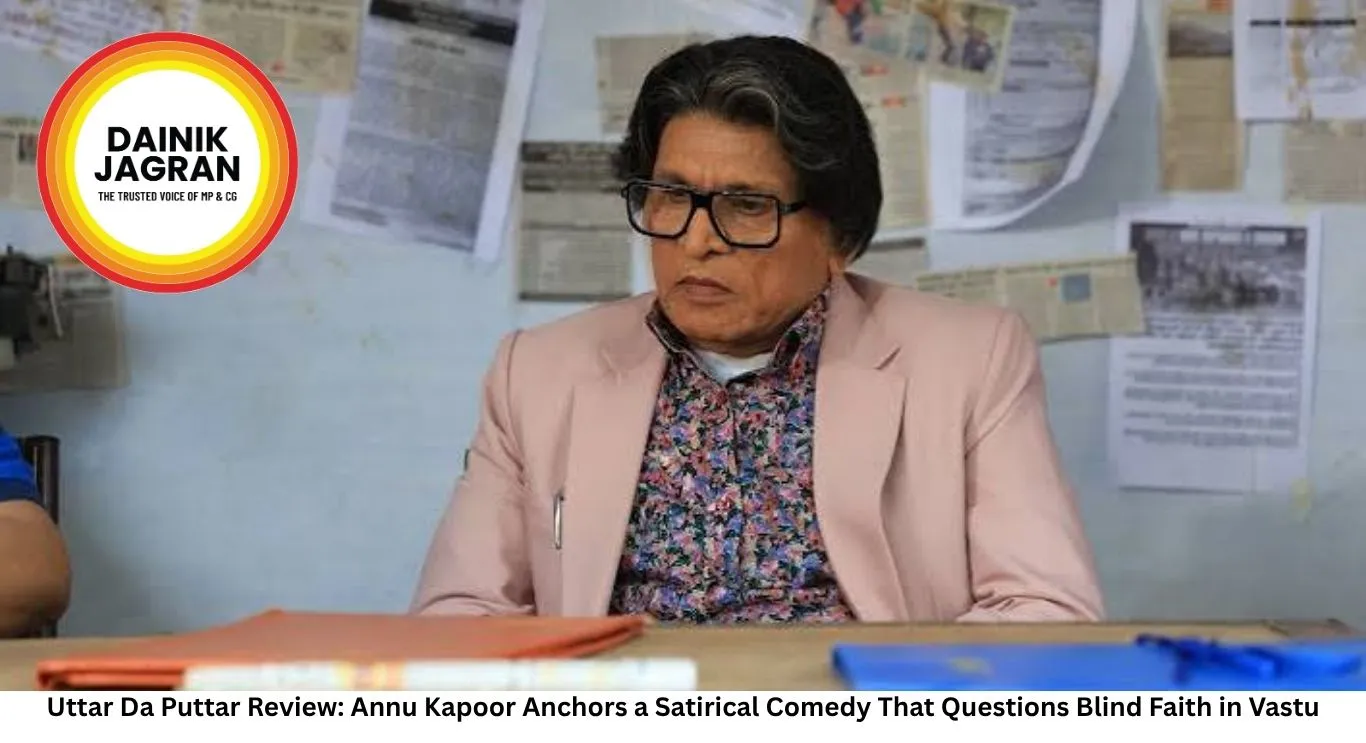
The story revolves around Sai Ram Tuteja, played by Annu Kapoor, a physics professor who believes unquestioningly in Vastu despite spending his life teaching science. His biggest dream is to build a house that faces the north direction, convinced that only such a home can bring prosperity and happiness.

His obsession with finding the "perfect" plot forces him and his family to continue living in rented accommodation for years. When he finally acquires the ideal piece of land, the journey towards building his dream home becomes increasingly complicated as one setback follows another.

The narrative takes a stronger turn after the interval, when circumstances begin forcing Tuteja to question whether success truly depends on directions or on personal decisions, hard work and relationships. His student Gyan Chand, popularly known as GC and played by Sumit Gulati, becomes one of the most important influences in that transformation.

Rather than mocking faith itself, the film raises questions about blind dependence on superstition. Its satirical treatment often recalls the flavour of classic middle-class comedies without directly imitating them.

Annu Kapoor delivers the film's strongest performance. He makes Sai Ram Tuteja believable through a combination of comic timing, emotional restraint and natural dialogue delivery. His performance ensures that even the weaker portions of the screenplay remain watchable.

Sumit Gulati provides solid support, particularly during the second half where his character becomes central to the emotional progression of the story. Rukhsar Rehman performs confidently as Ginni, while Rajendra Sethi leaves an impression despite limited screen time. Supporting actors Brijendra Kala, Pawan Malhotra, Ishtiyak Khan and Nitin Arora contribute effectively to the film's comic rhythm.

Director Ravinder Siwach deserves credit for choosing a socially relevant subject without turning the film into a lecture. His storytelling remains accessible to family audiences, balancing entertainment with a meaningful message. However, a tighter screenplay could have significantly improved the overall experience, especially during the first half where several scenes feel stretched.

One casting choice, however, appears slightly distracting. Naseer Abdullah, who plays Ginni's father, appears noticeably younger than Annu Kapoor, making the father-in-law dynamic less convincing on screen.

Technically, the film remains competent. The cinematography supports the grounded tone of the narrative, while the production design effectively reflects middle-class family life. The editing is functional but could have been sharper to maintain a more consistent pace.

The music blends comfortably into the narrative without becoming a major highlight. While the songs suit the situations in which they appear, none emerge as memorable standalone tracks. The background score, however, supports the emotional and comic moments effectively.

Ultimately, Uttar Da Puttar succeeds because of its central idea rather than its surprises. It reminds audiences that while traditions and beliefs may offer comfort, real change often comes through personal choices instead of fixed directions on a compass.

For viewers looking for a light-hearted family entertainer that combines comedy with a thoughtful social message, the film offers enough substance to justify a watch.

Rating: 3/5

--------

๐Ÿšจ Beat the News Rush โ€“ Join Now!

Get breaking alerts, hot exclusives, and game-changing stories instantly on your phone. No delays, no fluff โ€“ just the edge you need. โšก

Tap to join:ย 

๐ŸŸข WhatsApp Channel: Dainik Jagran MP CG

Crave more?

๐Ÿ…• Facebook: Dainik Jagran MP CG English

๐Ÿ…ง Twitter (X): Dainik Jagran MP CG

๐Ÿ…˜ Instagram: Dainik Jagran MP CG

Share the fire โ€“ keep your crew ahead! ๐Ÿ—ž๏ธ๐Ÿ”ฅ

english.dainikjagranmpcg.com
24 Jul 2026 By Priyanshu.Jha

Uttar Da Puttar Review: Annu Kapoor Anchors a Satirical Comedy That Questions Blind Faith in Vastu

Digital desk

Directed by Ravinder Siwach, the 1-hour-43-minute film doesn't position itself as a serious social drama. Instead, it wraps its message inside a family entertainer that uses satire, emotional moments and relatable situations to challenge long-held beliefs. While the screenplay loses momentum in places, the performances—particularly that of Annu Kapoor—keep the narrative engaging until the end.

The story revolves around Sai Ram Tuteja, played by Annu Kapoor, a physics professor who believes unquestioningly in Vastu despite spending his life teaching science. His biggest dream is to build a house that faces the north direction, convinced that only such a home can bring prosperity and happiness.

His obsession with finding the "perfect" plot forces him and his family to continue living in rented accommodation for years. When he finally acquires the ideal piece of land, the journey towards building his dream home becomes increasingly complicated as one setback follows another.

The narrative takes a stronger turn after the interval, when circumstances begin forcing Tuteja to question whether success truly depends on directions or on personal decisions, hard work and relationships. His student Gyan Chand, popularly known as GC and played by Sumit Gulati, becomes one of the most important influences in that transformation.

Rather than mocking faith itself, the film raises questions about blind dependence on superstition. Its satirical treatment often recalls the flavour of classic middle-class comedies without directly imitating them.

Annu Kapoor delivers the film's strongest performance. He makes Sai Ram Tuteja believable through a combination of comic timing, emotional restraint and natural dialogue delivery. His performance ensures that even the weaker portions of the screenplay remain watchable.

Sumit Gulati provides solid support, particularly during the second half where his character becomes central to the emotional progression of the story. Rukhsar Rehman performs confidently as Ginni, while Rajendra Sethi leaves an impression despite limited screen time. Supporting actors Brijendra Kala, Pawan Malhotra, Ishtiyak Khan and Nitin Arora contribute effectively to the film's comic rhythm.

Director Ravinder Siwach deserves credit for choosing a socially relevant subject without turning the film into a lecture. His storytelling remains accessible to family audiences, balancing entertainment with a meaningful message. However, a tighter screenplay could have significantly improved the overall experience, especially during the first half where several scenes feel stretched.

One casting choice, however, appears slightly distracting. Naseer Abdullah, who plays Ginni's father, appears noticeably younger than Annu Kapoor, making the father-in-law dynamic less convincing on screen.

Technically, the film remains competent. The cinematography supports the grounded tone of the narrative, while the production design effectively reflects middle-class family life. The editing is functional but could have been sharper to maintain a more consistent pace.

The music blends comfortably into the narrative without becoming a major highlight. While the songs suit the situations in which they appear, none emerge as memorable standalone tracks. The background score, however, supports the emotional and comic moments effectively.

Ultimately, Uttar Da Puttar succeeds because of its central idea rather than its surprises. It reminds audiences that while traditions and beliefs may offer comfort, real change often comes through personal choices instead of fixed directions on a compass.

For viewers looking for a light-hearted family entertainer that combines comedy with a thoughtful social message, the film offers enough substance to justify a watch.

Rating: 3/5
https://english.dainikjagranmpcg.com/bollywood/uttar-da-puttar-review-annu-kapoor-anchors-a-satirical-comedy/article-23427

Trending News