


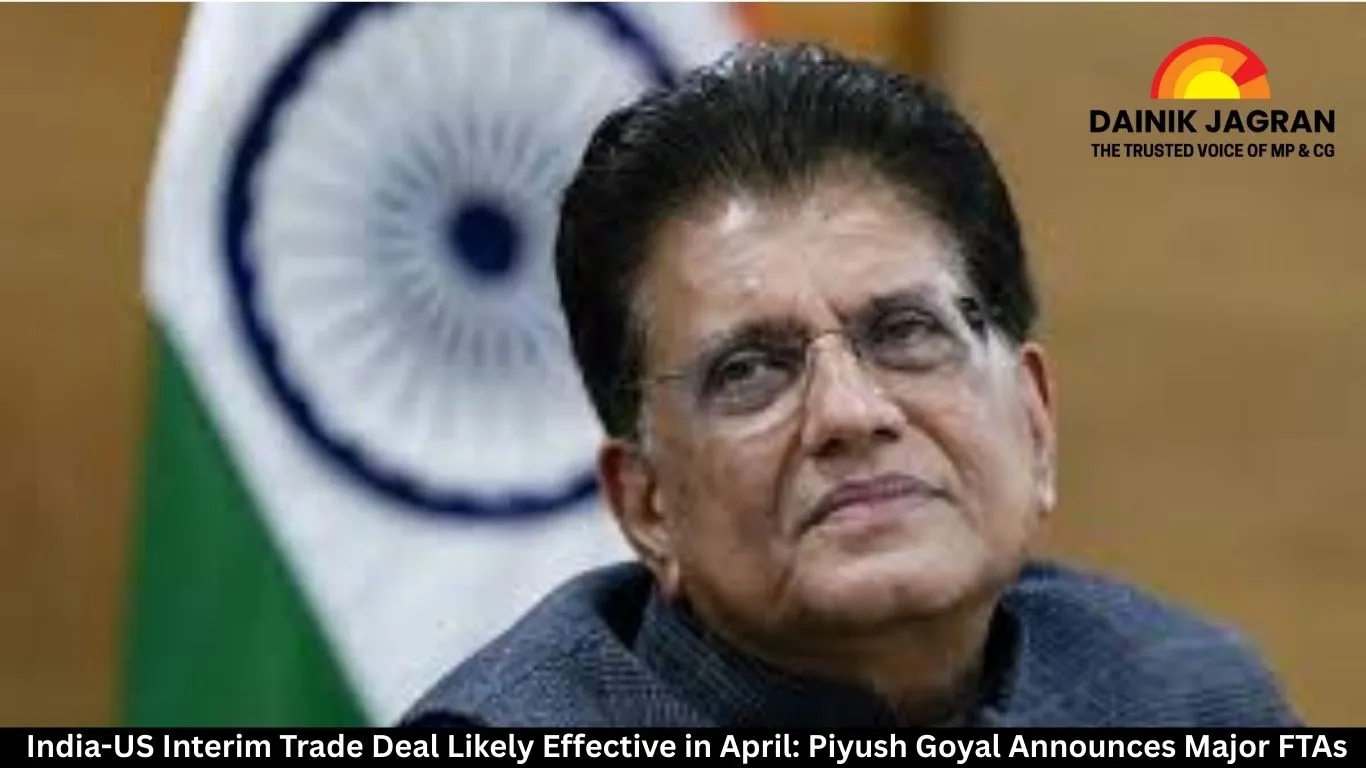
India-US Interim Trade Deal Likely Effective in April: Piyush Goyal Announces Major FTAs
Digital Desk
In a significant boost to India's global trade ambitions, Commerce and Industry Minister Piyush Goyal announced on February 20, 2026, that an interim trade deal between India and the US is poised for signing in March and could become effective by April. This development comes amid rising geopolitical tensions and a push for stronger economic partnerships, making it timely as nations seek to diversify supply chains post-pandemic.
The announcement underscores India's proactive stance in international trade, especially with key partners like the US, UK, Oman, and New Zealand. As global inflation eases and trade volumes rebound, such agreements could enhance India's export competitiveness and attract foreign investment.
Key Timeline and Negotiations
Goyal shared that a three-day meeting starting February 23 in the US will finalize the legal text for the India-US interim trade deal. Earlier this month, a joint statement confirmed the framework, highlighting commitments to boost bilateral trade.
Additionally, FTAs with the UK and Oman are expected to roll out in April, while the New Zealand pact may follow in September. These timelines align with India's strategy to expand market access, particularly in services and goods, amid ongoing global trade talks.
Revisions in the Agreement Framework
The White House recently updated its fact sheet on the India-US trade deal, introducing notable changes. A key shift involves digital services taxation. The initial version claimed India would remove its digital taxes, but the revised document focuses on negotiating robust bilateral digital trade rules to address discriminatory practices.
India has already phased out its equalisation levy on digital services like online advertising from April 2025. However, taxes under Significant Economic Presence (SEP) rules remain for overseas firms meeting revenue thresholds. This adjustment reflects a balanced approach, avoiding immediate concessions while paving the way for future digital cooperation.
On technology trade, the deal emphasizes increasing exchanges in GPUs and data center equipment. Both nations will discuss standards and conformity assessments to simplify compliance, potentially benefiting tech firms in India.
Agricultural and Trade Volume Insights
Agriculture remains a focal point, with the US exporting $2.25 billion in food and agricultural products to India in 2024, led by tree nuts like almonds ($1.12 billion). In return, India's exports to the US hit $6.2 billion, including marine products and spices.
The revised agreement removes specific mentions of "certain pulses" for tariff reductions, now covering a broader range: dried distillers' grains, red sorghum, tree nuts, fruits, soybean oil, wine, and spirits. India plans phased tariff cuts over up to 10 years to protect domestic farmers, addressing concerns from local producers.
Expert perspectives, such as from trade analysts at the USDA, suggest this could stabilize prices and open new markets. "These adjustments safeguard Indian agriculture while expanding US access," notes a simulated expert from the Federation of Indian Export Organisations.
Why This Matters Now
In the context of current trends like the India AI Summit and rising tech collaborations, this trade deal enhances economic resilience. It aligns with PM Modi's vision of India as a global trade hub, potentially creating jobs in export sectors.
For businesses, actionable takeaways include preparing for lower tariffs on US goods—importers should review supply chains. Farmers can explore export opportunities in spices and dairy, while tech firms gear up for digital rule negotiations.
Overall, these FTAs signal India's maturing trade diplomacy, fostering growth in a volatile world economy. As negotiations progress, stakeholders await further details on implementation.




.jpg)




