


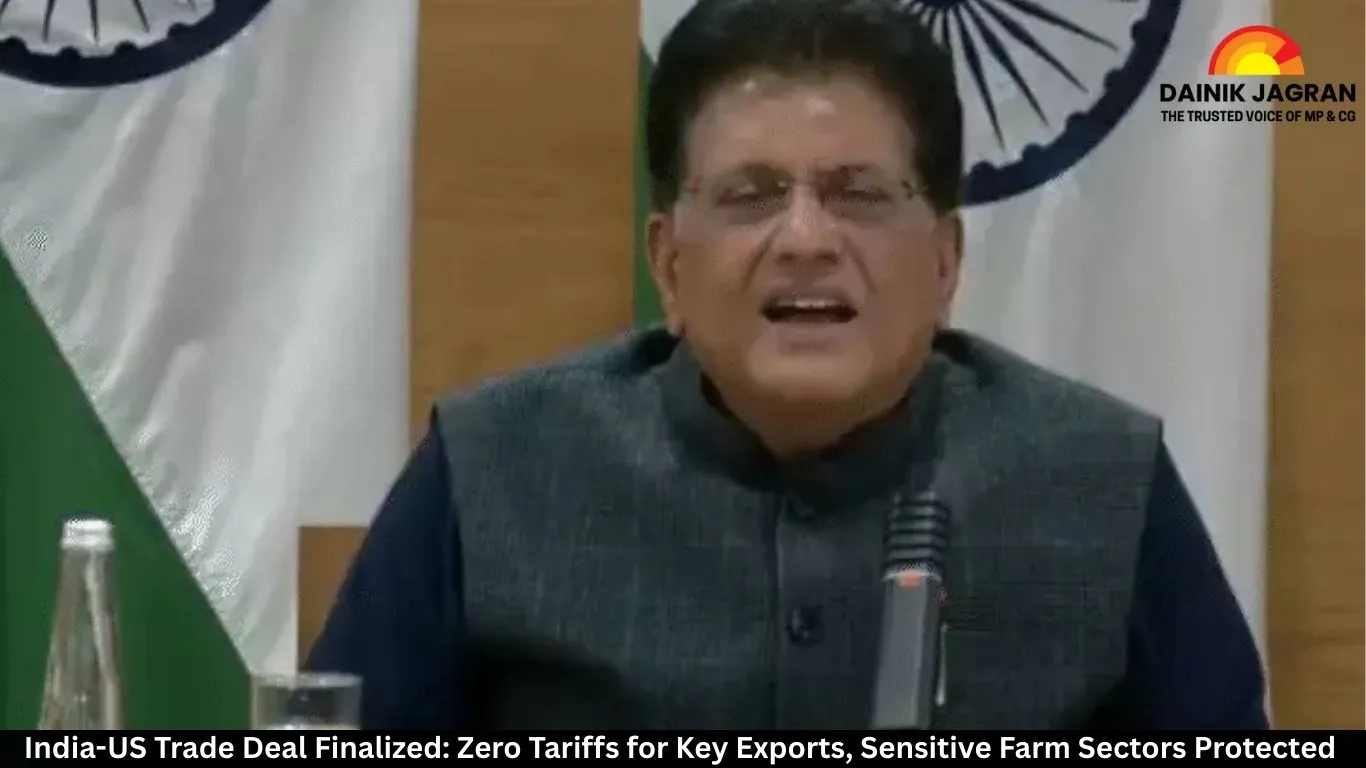
India-US Trade Deal Finalized: Zero Tariffs for Key Exports, Sensitive Farm Sectors Protected
Digital Desk
India and the United States have announced a breakthrough interim trade agreement, significantly lowering barriers for billions of dollars in commerce while safeguarding India's politically sensitive agricultural and dairy sectors. Announced on February 7, 2026, the framework marks a historic reset in bilateral ties after nearly a year of negotiations.
Commerce Minister Piyush Goyal hailed the pact as "fair, equitable and balanced," emphasizing it unlocks a $30 trillion market for Indian exporters without harming domestic farmers. The core of the deal sees the U.S. reducing its reciprocal tariff on a wide range of Indian goods from 50% to a uniform 18%, a rate lower than those imposed on competitors like China, Vietnam, and Bangladesh.
What India Gains: Zero-Tariff Access for Major Exports
A significant win for India is the commitment to zero tariffs on several high-value exports once the interim agreement is fully concluded. This provision is poised to boost India's flagship "Make in India" initiative.
Key sectors granted duty-free access include:
Gems and Jewellery: A major export sector receiving a direct competitive boost.
Pharmaceuticals: Generic drugs and pharma products, representing a $13 billion export market, will face no U.S. duties.
Engineering & Parts: Aircraft parts and certain auto components will benefit from zero tariffs and exemptions from U.S. national security (Section 232) tariffs.
Agricultural Products: Several farm goods, including tea, coffee, spices, coconut oil, and fruits like mangoes, bananas, and avocados, will enter the U.S. market at zero duty.
Comparison of Key Deal Outcomes
| Zero-Tariff Indian Exports to U.S. | Protected Indian Sectors (No U.S. Access) | U.S. Gains in Indian Market |
| Gems & Diamonds | Dairy (milk, ghee, cheese) | Tree Nuts (almonds, walnuts) |
| Generic Pharmaceuticals | Staple Grains (wheat, rice, millets) | Soybean Oil |
| Aircraft Parts | Poultry & Meat | Fresh & Processed Fruits (e.g., apples) |
| Select Agri-products (tea, spices, mango) | Vegetables & Pulses | Wine & Spirits |
What India Protected: A "Red Line" on Farm and Dairy
The government's central political message is the protection of sensitive domestic sectors. Minister Goyal asserted that "all sensitive items have been kept out of the deal".
Dairy is 100% Shielded: The entire dairy sector—including milk, butter, ghee, cheese, and paneer—remains completely protected with no tariff concessions granted to the U.S..
Staple Crops Safeguarded: Key staples vital for food security and farmer livelihoods, such as wheat, rice, maize, millets, and sugarcane, have been kept out of the agreement.
No GM Imports: The deal explicitly prohibits the entry of genetically modified (GM) food products from the U.S. into India.
What India Conceded: Targeted Market Opening
In return, India agreed to reduce or eliminate tariffs on specific U.S. products that officials state do not threaten domestic producers. These include:
Industrial Inputs: Tariffs lowered on machinery, certain chemicals, and high-tech items like GPUs and data center equipment.
Select Agri-Imports: Concessions on products like Distillers Dried Grains (DDGS) for animal feed, soybean oil, and tree nuts (almonds, walnuts).
Wine and Spirits: Tariffs on American alcohols will be reduced, potentially lowering retail prices.
Analysis: A Strategic Pivot in Global Trade
This interim deal is more than a tariff adjustment; it's a strategic realignment. For the U.S., it secures better access to a massive consumer market and strengthens economic ties with a key Indo-Pacific partner. For India, the benefits are multifaceted:
Competitive Advantage: An 18% U.S. tariff undercuts rates on Chinese (35%), Vietnamese (20%), and Bangladeshi (20%) goods, helping India regain market share in textiles, apparel, and leather goods.
Supply Chain Integration: Preferential access for aircraft parts and auto components aligns with India's goal of becoming a global manufacturing hub.
Path to a Larger Deal: This framework is explicitly a stepping stone toward a more comprehensive Bilateral Trade Agreement (BTA), with negotiations set to continue.
The announcement has sparked a political debate, with opposition parties expressing concern over the impact on farmers. However, industry bodies have largely welcomed the deal for providing stability and market access. As both nations move to implement this framework, its success will be measured by its ability to boost export-led job growth in India while insulating the agrarian economy—a balancing act at the heart of this landmark agreement.

.jpg)




