AI Won't Cause Job Crisis, Says OpenAI's Sam Altman

Digital Desk

AI Won't Cause Job Crisis, Says OpenAI's Sam Altman

OpenAI CEO Sam Altman shifts stance on AI employment fears, revealing that white-collar jobs proved resilient. Learn why human interaction remains irreplaceable.


OpenAI chief shifts stance on employment fears, says white-collar jobs proved resilient

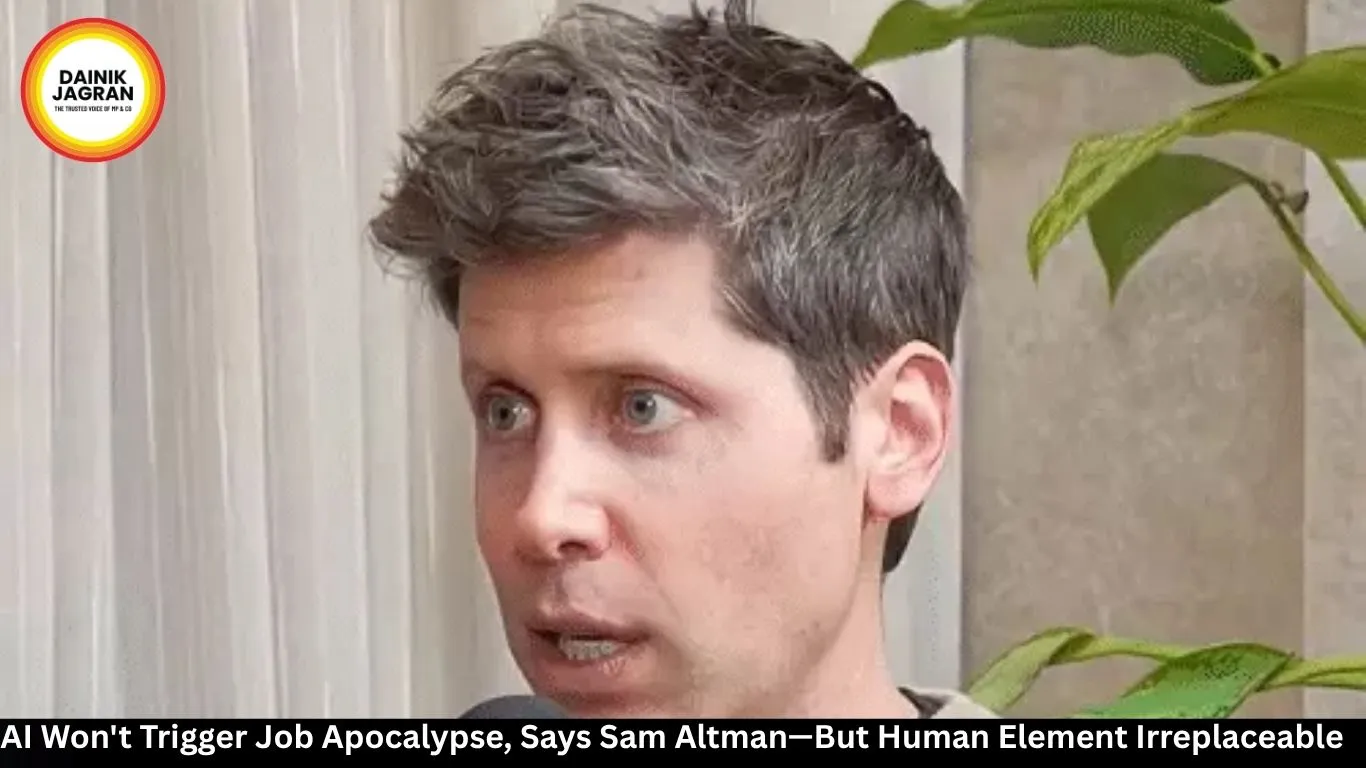
Sam Altman is eating his words—at least partly. The OpenAI CEO acknowledged in Sydney this week that his earlier anxieties about artificial intelligence wiping out swathes of white-collar jobs haven't materialized, contradicting predictions he'd made when ChatGPT launched in late 2022.

Speaking at a Commonwealth Bank of Australia conference, Altman told CBA Chief Executive Matt Comyn that he remains "happy to be proven wrong" on the employment front. The admission marks a subtle but significant pivot from his previous warnings about AI's potential to reshape the job market.

The Prediction That Didn't Happen

When OpenAI first deployed ChatGPT, internal technical forecasts proved largely accurate. The social and economic fallout, however, landed differently than anticipated. Altman had specifically worried that entry-level white-collar positions—the traditional gateway for junior professionals—would vanish by now. They haven't.

"I thought we'd see a lot more job displacement already," Altman said, acknowledging the miscalculation. The realization prompted reflection on why his worst-case scenario failed to materialize. Rather than doubling down on doom-saying, he's adjusted his thinking.

The shift reflects what's happening across corporate America. Yes, major institutions—HSBC, Amazon, Standard Chartered, and the CBA itself—have announced AI-driven workforce reductions. But these cuts haven't cascaded into the mass redundancy wave some predicted. The job market, it seems, has proven more durable than the doomsayers expected.

The Human Irreplaceability Factor

Altman's updated view hinges on a realization: certain elements of work cannot and should not be automated, no matter how capable AI becomes. He gave a personal example that crystallized this insight.

Early on, Altman experimented with deploying AI to handle his Slack and email correspondence. His assistant would sign responses: "This is Sam's AI." The feedback was immediate and telling. People care about genuine human interaction.

"Interacting with humans takes up a massive part of my job," Altman said. "I cannot imagine handing that over to AI, nor do I think I should." That acknowledgment extends beyond his inbox. Employment, in his view, fundamentally depends on relationships and trust that machines cannot manufacture.

A Changing Landscape, Not a Crisis

The OpenAI chief stopped short of dismissing AI's impact on work entirely. The job landscape will shift, he conceded—perhaps dramatically. But wholesale displacement appears less likely than wholesale transformation. How work gets done will evolve; whether humans disappear from it remains an open question.

This nuance matters because it separates credible concerns from panic. Companies are already restructuring around AI capabilities. Teams are reorganizing. Some roles are vanishing, others emerging. That's disruption, not apocalypse.

Altman's comments arrive as OpenAI prepares for a potential public offering within weeks, according to Reuters reporting. The company is reportedly targeting a $1 trillion valuation and seeking to raise at least $60 billion. The timing is notable—a more confident narrative about AI's coexistence with human employment may help positioning ahead of the IPO.

What Comes Next

Altman declined to offer specific employment figures or timelines. His prior framing of AI risk as "important to talk about" at the time now reads as precautionary rather than predictive. The risk may still emerge, he allowed, but the evidence so far suggests the path diverges from crisis.

The broader tech industry remains split. Some executives continue warning of disruption; others, like Altman, are quietly recalibrating expectations. The reality is probably messier than either camp initially imagined: selective job losses in some sectors, surprising resilience in others, and the continued value of human judgment in fields nobody predicted would remain human-dependent.

For now, the jobs apocalypse—that feared scenario where AI automation triggers systemic economic collapse—remains theoretical rather than imminent.

 

--------

🚨 Beat the News Rush – Join Now!

Get breaking alerts, hot exclusives, and game-changing stories instantly on your phone. No delays, no fluff – just the edge you need. ⚡

Tap to join: 

🟢 WhatsApp Channel: Dainik Jagran MP CG

Crave more?

🅕 Facebook: Dainik Jagran MP CG English

🅧 Twitter (X): Dainik Jagran MP CG

🅘 Instagram: Dainik Jagran MP CG

Share the fire – keep your crew ahead! 🗞️🔥

english.dainikjagranmpcg.com
27 May 2026 By Abhishek Joshi

AI Won't Cause Job Crisis, Says OpenAI's Sam Altman

Digital Desk

OpenAI chief shifts stance on employment fears, says white-collar jobs proved resilient

Sam Altman is eating his words—at least partly. The OpenAI CEO acknowledged in Sydney this week that his earlier anxieties about artificial intelligence wiping out swathes of white-collar jobs haven't materialized, contradicting predictions he'd made when ChatGPT launched in late 2022.

Speaking at a Commonwealth Bank of Australia conference, Altman told CBA Chief Executive Matt Comyn that he remains "happy to be proven wrong" on the employment front. The admission marks a subtle but significant pivot from his previous warnings about AI's potential to reshape the job market.

The Prediction That Didn't Happen

When OpenAI first deployed ChatGPT, internal technical forecasts proved largely accurate. The social and economic fallout, however, landed differently than anticipated. Altman had specifically worried that entry-level white-collar positions—the traditional gateway for junior professionals—would vanish by now. They haven't.

"I thought we'd see a lot more job displacement already," Altman said, acknowledging the miscalculation. The realization prompted reflection on why his worst-case scenario failed to materialize. Rather than doubling down on doom-saying, he's adjusted his thinking.

The shift reflects what's happening across corporate America. Yes, major institutions—HSBC, Amazon, Standard Chartered, and the CBA itself—have announced AI-driven workforce reductions. But these cuts haven't cascaded into the mass redundancy wave some predicted. The job market, it seems, has proven more durable than the doomsayers expected.

The Human Irreplaceability Factor

Altman's updated view hinges on a realization: certain elements of work cannot and should not be automated, no matter how capable AI becomes. He gave a personal example that crystallized this insight.

Early on, Altman experimented with deploying AI to handle his Slack and email correspondence. His assistant would sign responses: "This is Sam's AI." The feedback was immediate and telling. People care about genuine human interaction.

"Interacting with humans takes up a massive part of my job," Altman said. "I cannot imagine handing that over to AI, nor do I think I should." That acknowledgment extends beyond his inbox. Employment, in his view, fundamentally depends on relationships and trust that machines cannot manufacture.

A Changing Landscape, Not a Crisis

The OpenAI chief stopped short of dismissing AI's impact on work entirely. The job landscape will shift, he conceded—perhaps dramatically. But wholesale displacement appears less likely than wholesale transformation. How work gets done will evolve; whether humans disappear from it remains an open question.

This nuance matters because it separates credible concerns from panic. Companies are already restructuring around AI capabilities. Teams are reorganizing. Some roles are vanishing, others emerging. That's disruption, not apocalypse.

Altman's comments arrive as OpenAI prepares for a potential public offering within weeks, according to Reuters reporting. The company is reportedly targeting a $1 trillion valuation and seeking to raise at least $60 billion. The timing is notable—a more confident narrative about AI's coexistence with human employment may help positioning ahead of the IPO.

What Comes Next

Altman declined to offer specific employment figures or timelines. His prior framing of AI risk as "important to talk about" at the time now reads as precautionary rather than predictive. The risk may still emerge, he allowed, but the evidence so far suggests the path diverges from crisis.

The broader tech industry remains split. Some executives continue warning of disruption; others, like Altman, are quietly recalibrating expectations. The reality is probably messier than either camp initially imagined: selective job losses in some sectors, surprising resilience in others, and the continued value of human judgment in fields nobody predicted would remain human-dependent.

For now, the jobs apocalypse—that feared scenario where AI automation triggers systemic economic collapse—remains theoretical rather than imminent.
 

https://english.dainikjagranmpcg.com/business/ai-wont-cause-job-crisis-says-openais-sam-altman/article-19298

Related Posts

Latest News