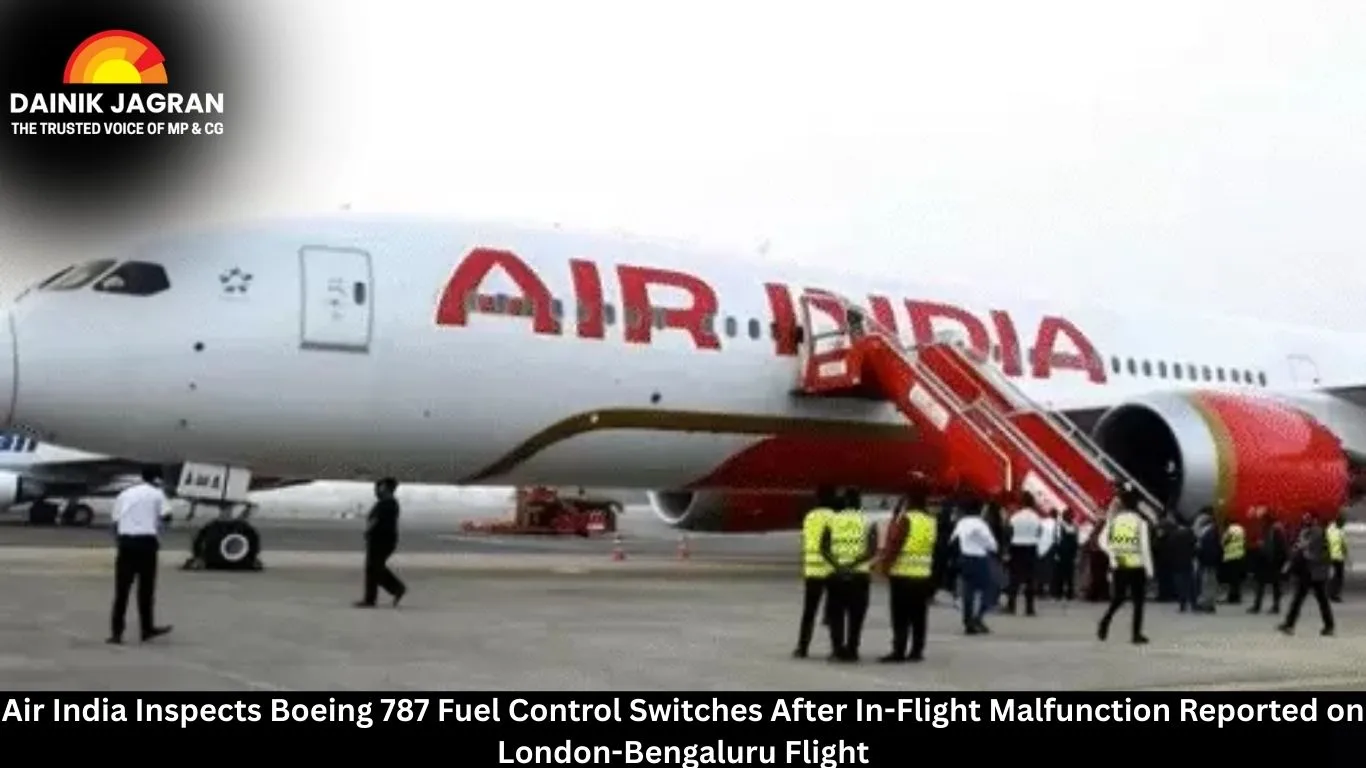
Air India Inspects Boeing 787 Fuel Control Switches After In-Flight Malfunction Reported on London-Bengaluru Flight
Digital Desk
Air India Launches Fleet-Wide Checks on Boeing 787s After Fuel Switch Malfunction Reported Mid-Flight
In a swift response to a concerning in-flight report, Air India has initiated immediate inspections of the fuel control switches across its fleet of Boeing 787 Dreamliners. The action comes after a pilot operating a flight from London Heathrow to Bengaluru on February 2 reported a malfunction with the critical switch, which had become locked in position.
The Tata Group-owned carrier, which operates approximately 33 Boeing 787 aircraft, has confirmed that inspections on half of the fleet have already been completed without finding further issues. However, checks on the remaining planes are ongoing as a precautionary measure. The airline has also escalated the matter to Boeing for a priority technical evaluation.
Precautionary Measures and Pilot Alert
The directive for inspections was communicated to pilots via an email from Senior Vice President Manish Uppal. The internal memo stated that a "fleet-wide re-inspection of the fuel control switch latch is being carried out as a precaution." An engineering team has been dispatched to collaborate with Boeing, and until a formal response is received, the additional inspections will continue.
Air India has reiterated its standard safety protocol, instructing all crew members to promptly report any defects observed during operations and to ensure all mandatory pre-flight procedures are thoroughly completed before accepting an aircraft.
The Triggering Incident: London to Bengaluru
The urgent review was triggered by an event on Monday. A pilot reported a problem with a fuel control switch on a Boeing 787, specifically noting that the switch had locked. The aircraft involved had departed London on Sunday and arrived in Bengaluru on Monday morning. Following the pilot’s report, the specific aircraft has been grounded for a detailed engineering examination.
Heightened Vigilance After the Ahmedabad Tragedy
The focus on the fuel control switch is particularly acute due to its connection to a past tragedy. A preliminary investigation into the fatal crash of a Boeing 787-8 in Ahmedabad last June, which claimed 260 lives, indicated the aircraft's fuel supply was cut off shortly after takeoff. While the final investigation is still underway, the link to the fuel system prompted Air India to conduct inspections of these switches last year as well. The latest incident has renewed vigilance around this specific component.
Understanding the Critical Fuel Control Switch
For passengers wondering about the significance, here’s a simple breakdown:
Function: The fuel control switches are located in the cockpit and manage the fuel supply to the engines. They are vital for starting (Run position) or stopping (Cutoff position) engine fuel flow.
Operation: Each engine has its own switch. A Boeing 787, with two engines, has two switches. They are designed with a detent lock mechanism and require a deliberate three-step action to operate—making them difficult to trigger accidentally.
Safety Role: They are a fundamental part of engine control and shutdown procedures, directly linked to aircraft thrust and safety.
While initial inspections have not revealed a widespread fault, Air India’s proactive stance highlights the ever-present emphasis on safety in aviation. The combination of a recent in-flight report and the shadow of the Ahmedabad investigation has created a compelling need for thorough verification. As the checks continue and Boeing assesses the findings, travelers can be assured that the issue is being treated with utmost seriousness, underscoring the industry's layered safety protocols designed to catch and rectify potential concerns before they escalate.