

The boycott was communicated to the ICC shortly before the match, following consultations between the PCB and Pakistan’s federal authorities. While the PCB maintained that the decision was taken in the interest of player safety and national interest, the ICC said the tournament schedule and security arrangements had been finalised well in advance and were agreed upon by all participating boards.
Official reasoning from Pakistan
According to PCB officials, the decision stemmed from what they described as “unresolved concerns” over security guarantees, travel protocols and the broader political environment. Although no specific threat advisory was made public, officials said the assessment was based on intelligence inputs and the prevailing regional situation.
A senior PCB official, speaking on condition of anonymity, said the board was under “immense pressure” from multiple quarters. “Cricket does not operate in isolation. When national security and public sentiment are involved, the board cannot ignore those realities,” the official said.
Pakistan’s interim sports ministry also issued a brief statement, reiterating that the government respects international sporting commitments but cannot overlook domestic concerns and security assessments when national representation is involved.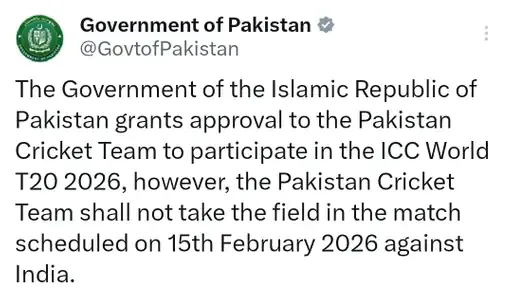
Political backdrop and domestic pressure
The boycott cannot be viewed in isolation from the broader political relationship between India and Pakistan, which has remained strained for years. Diplomatic ties have been minimal, trade remains restricted, and people-to-people exchanges have significantly reduced. In recent weeks, political rhetoric in both countries has sharpened, feeding public sentiment that often spills over into sporting decisions.
In Pakistan, several political groups and commentators openly called for avoiding sporting engagement with India, arguing that cricket matches should not normalise relations in the absence of diplomatic progress. Television debates and social media campaigns amplified this pressure, placing the PCB in a politically sensitive position.
Analysts note that cricket administrators in Pakistan have historically operated within tight political constraints, particularly when it comes to India-related decisions. “The PCB’s autonomy is limited when national security and foreign policy narratives come into play,” said a Lahore-based sports analyst.
ICC and India’s response
The ICC acknowledged Pakistan’s communication but expressed disappointment over the development. In a statement, the governing body reiterated that all matches were scheduled at neutral venues with robust, ICC-approved security arrangements.
“The ICC remains committed to ensuring the safety of all players and officials. We regret that this match could not take place as planned,” the statement said, adding that tournament regulations regarding points, penalties and obligations would apply.
Indian cricket officials said their team was ready to play and had complied with all tournament requirements. A senior Board of Control for Cricket in India (BCCI) official described the boycott as “unfortunate,” emphasising that global tournaments are meant to transcend bilateral disputes.
Impact on the tournament
The India–Pakistan clash is widely regarded as the biggest commercial draw in world cricket, often attracting hundreds of millions of viewers and generating substantial broadcast and sponsorship revenue. Its absence dealt a blow to broadcasters and fans, many of whom had waited years for another World Cup encounter between the two rivals.
Under ICC rules, Pakistan faces the possibility of forfeiting match points and incurring financial penalties. The exact consequences are expected to be clarified after the ICC’s internal review. Tournament officials are also assessing the broader implications for scheduling, competitive balance and fan engagement.
Historical context
India and Pakistan have not played bilateral cricket since 2012, meeting only in ICC and Asia Cup tournaments. Even these encounters have frequently been surrounded by controversy, security debates and political statements. Over the years, several proposed series have been cancelled or postponed due to diplomatic tensions, reinforcing the perception that cricket between the two nations remains hostage to geopolitics.
Former players from both sides expressed disappointment. While some sympathised with security concerns, others warned that repeated boycotts risk undermining the credibility of global events. “Fans lose, cricket loses,” said a former international cricketer, adding that neutral venues were designed precisely to avoid such impasses.
What lies ahead
The boycott has reignited debate within international cricket about contingency planning and the limits of neutrality. Some experts argue that the ICC may need clearer protocols to deal with politically sensitive fixtures, while others caution against setting precedents that could encourage future withdrawals.
For now, the episode adds another chapter to a rivalry defined as much by absence as by competition. As the T20 World Cup continues, questions linger over whether cricket can realistically remain insulated from politics when two nuclear-armed neighbours with a turbulent history share the same field—even on neutral ground.

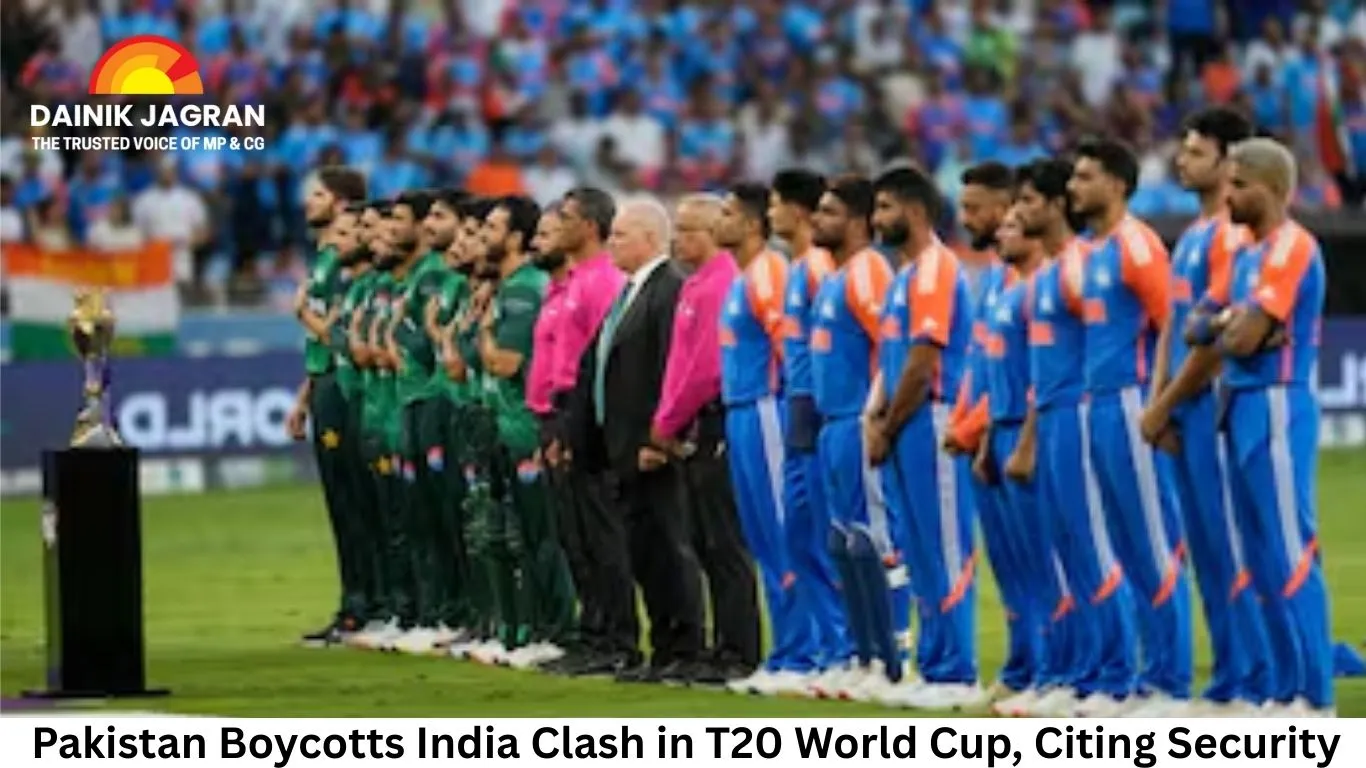
Pakistan Boycotts India Clash in T20 World Cup, Citing Security, Political Pressure and Unresolved Diplomatic Issues
Digital Desk
The boycott was communicated to the ICC shortly before the match, following consultations between the PCB and Pakistan’s federal authorities. While the PCB maintained that the decision was taken in the interest of player safety and national interest, the ICC said the tournament schedule and security arrangements had been finalised well in advance and were agreed upon by all participating boards.
Official reasoning from Pakistan
According to PCB officials, the decision stemmed from what they described as “unresolved concerns” over security guarantees, travel protocols and the broader political environment. Although no specific threat advisory was made public, officials said the assessment was based on intelligence inputs and the prevailing regional situation.
A senior PCB official, speaking on condition of anonymity, said the board was under “immense pressure” from multiple quarters. “Cricket does not operate in isolation. When national security and public sentiment are involved, the board cannot ignore those realities,” the official said.
Pakistan’s interim sports ministry also issued a brief statement, reiterating that the government respects international sporting commitments but cannot overlook domestic concerns and security assessments when national representation is involved.
Political backdrop and domestic pressure
The boycott cannot be viewed in isolation from the broader political relationship between India and Pakistan, which has remained strained for years. Diplomatic ties have been minimal, trade remains restricted, and people-to-people exchanges have significantly reduced. In recent weeks, political rhetoric in both countries has sharpened, feeding public sentiment that often spills over into sporting decisions.
In Pakistan, several political groups and commentators openly called for avoiding sporting engagement with India, arguing that cricket matches should not normalise relations in the absence of diplomatic progress. Television debates and social media campaigns amplified this pressure, placing the PCB in a politically sensitive position.
Analysts note that cricket administrators in Pakistan have historically operated within tight political constraints, particularly when it comes to India-related decisions. “The PCB’s autonomy is limited when national security and foreign policy narratives come into play,” said a Lahore-based sports analyst.
ICC and India’s response
The ICC acknowledged Pakistan’s communication but expressed disappointment over the development. In a statement, the governing body reiterated that all matches were scheduled at neutral venues with robust, ICC-approved security arrangements.
“The ICC remains committed to ensuring the safety of all players and officials. We regret that this match could not take place as planned,” the statement said, adding that tournament regulations regarding points, penalties and obligations would apply.
Indian cricket officials said their team was ready to play and had complied with all tournament requirements. A senior Board of Control for Cricket in India (BCCI) official described the boycott as “unfortunate,” emphasising that global tournaments are meant to transcend bilateral disputes.
Impact on the tournament
The India–Pakistan clash is widely regarded as the biggest commercial draw in world cricket, often attracting hundreds of millions of viewers and generating substantial broadcast and sponsorship revenue. Its absence dealt a blow to broadcasters and fans, many of whom had waited years for another World Cup encounter between the two rivals.
Under ICC rules, Pakistan faces the possibility of forfeiting match points and incurring financial penalties. The exact consequences are expected to be clarified after the ICC’s internal review. Tournament officials are also assessing the broader implications for scheduling, competitive balance and fan engagement.
Historical context
India and Pakistan have not played bilateral cricket since 2012, meeting only in ICC and Asia Cup tournaments. Even these encounters have frequently been surrounded by controversy, security debates and political statements. Over the years, several proposed series have been cancelled or postponed due to diplomatic tensions, reinforcing the perception that cricket between the two nations remains hostage to geopolitics.
Former players from both sides expressed disappointment. While some sympathised with security concerns, others warned that repeated boycotts risk undermining the credibility of global events. “Fans lose, cricket loses,” said a former international cricketer, adding that neutral venues were designed precisely to avoid such impasses.
What lies ahead
The boycott has reignited debate within international cricket about contingency planning and the limits of neutrality. Some experts argue that the ICC may need clearer protocols to deal with politically sensitive fixtures, while others caution against setting precedents that could encourage future withdrawals.
For now, the episode adds another chapter to a rivalry defined as much by absence as by competition. As the T20 World Cup continues, questions linger over whether cricket can realistically remain insulated from politics when two nuclear-armed neighbours with a turbulent history share the same field—even on neutral ground.
.jpg)




