


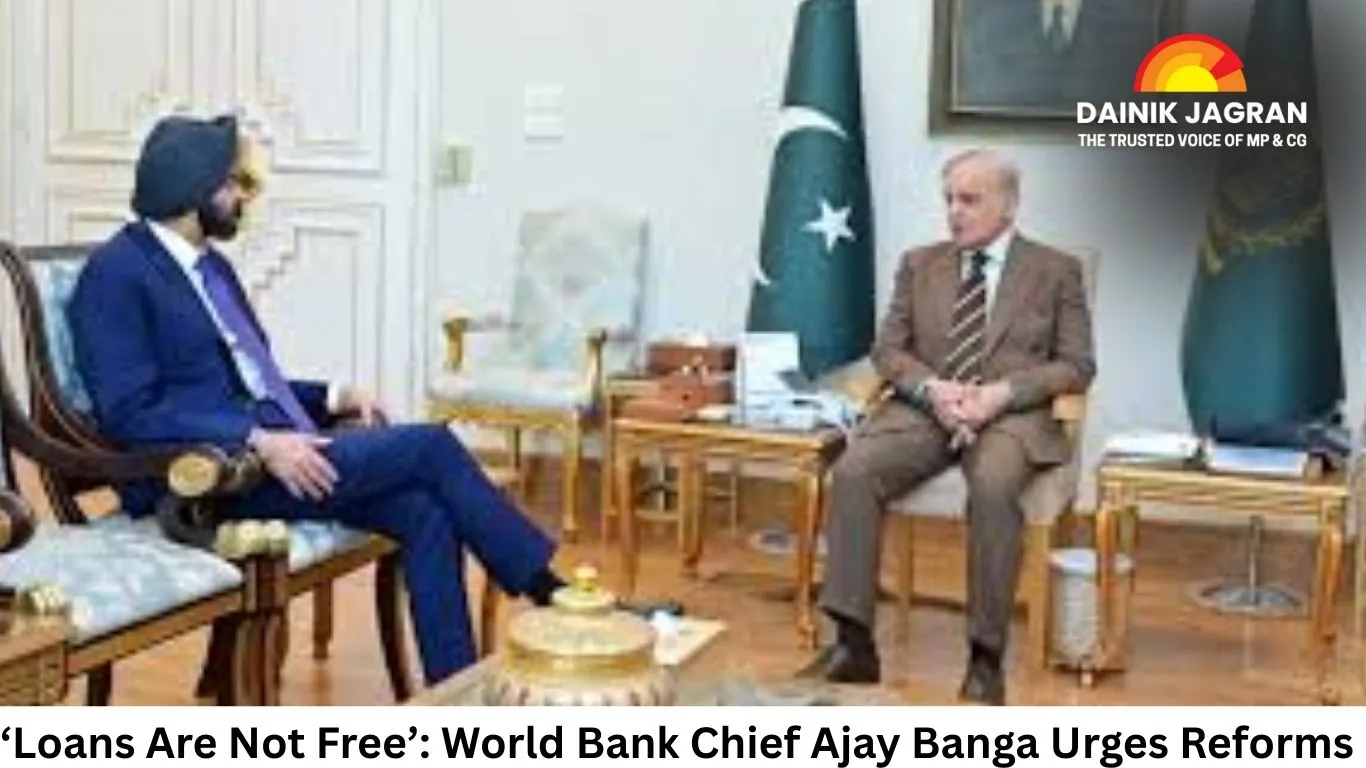
‘Loans Are Not Free’: World Bank Chief Ajay Banga Urges Reforms, Flags Digital Governance Model to Pakistan
Digital Desk
At the centre of the discussions was a proposed Country Partnership Framework under which Pakistan could receive up to $20 billion over the next 10 years, subject to strict compliance on governance, taxation and institutional reforms. Banga made it clear that future lending would depend on measurable progress rather than promises.
“Loans are not free money,” Banga told Pakistani ministers, according to officials familiar with the discussions. He cautioned that Pakistan’s prolonged dependence on external borrowing had weakened accountability and stressed the need to curb corruption, tax evasion and administrative inefficiencies.
Banga warned that without visible reforms, Pakistan could face increasing difficulty accessing international credit. He underlined the importance of improving transparency, strengthening institutions and creating a stable policy environment to attract foreign direct investment instead of relying heavily on debt.
While discussing tax reforms, Banga made an indirect reference to India’s experience with Aadhaar-linked systems and digital payments, noting how technology-driven governance had helped curb tax evasion and reduce leakages. Though India was not named, the reference was widely interpreted as a suggestion for Pakistan to digitise its tax and payments ecosystem to widen the tax base and improve revenue collection.
The World Bank chief also raised concerns over Pakistan’s loss-making energy sector, making it clear that Bank funds would not be used to bail out utilities that fail to control electricity theft or improve bill recovery. He urged the government to rationalise subsidies and undertake long-pending power sector reforms, warning that financial support would remain limited without corrective action.
Climate resilience was another key theme of the meetings. Banga linked future lending to Pakistan’s ability to integrate climate adaptation into development planning, noting that failure to build resilient infrastructure would make long-term financing increasingly challenging.
Beyond official engagements, Banga participated in cultural and religious visits, including paying respects at Gurdwara Panja Sahib, where he partook in langar. He is also scheduled to visit his ancestral village in Punjab’s Khushab district, marking the first such visit by his family since the 1947 Partition.
Pakistani media offered mixed reactions to the visit, with some outlets describing Banga as a firm but necessary reform advocate. As Pakistan navigates economic pressure and fiscal constraints, the World Bank’s message signals that future support will be closely tied to governance outcomes.
.jpg)




