Char Dham Yatra Opens: ₹7,500 Crore Economic Engine Powers Uttarakhand

Digital Desk

Char Dham Yatra Opens: ₹7,500 Crore Economic Engine Powers Uttarakhand

Char Dham Yatra 2026 officially begins as Kedarnath temple opens. The pilgrimage generates ₹7,500 crore annually for Uttarakhand.

CHAR DHAM YATRA: UTTARAKHAND'S ₹7,500 CR ECONOMIC ENGINE ROARS TO LIFE

Kedarnath Temple Opens Gates as Pilgrimage Season Begins; Expected to Drive Massive Revenue for State

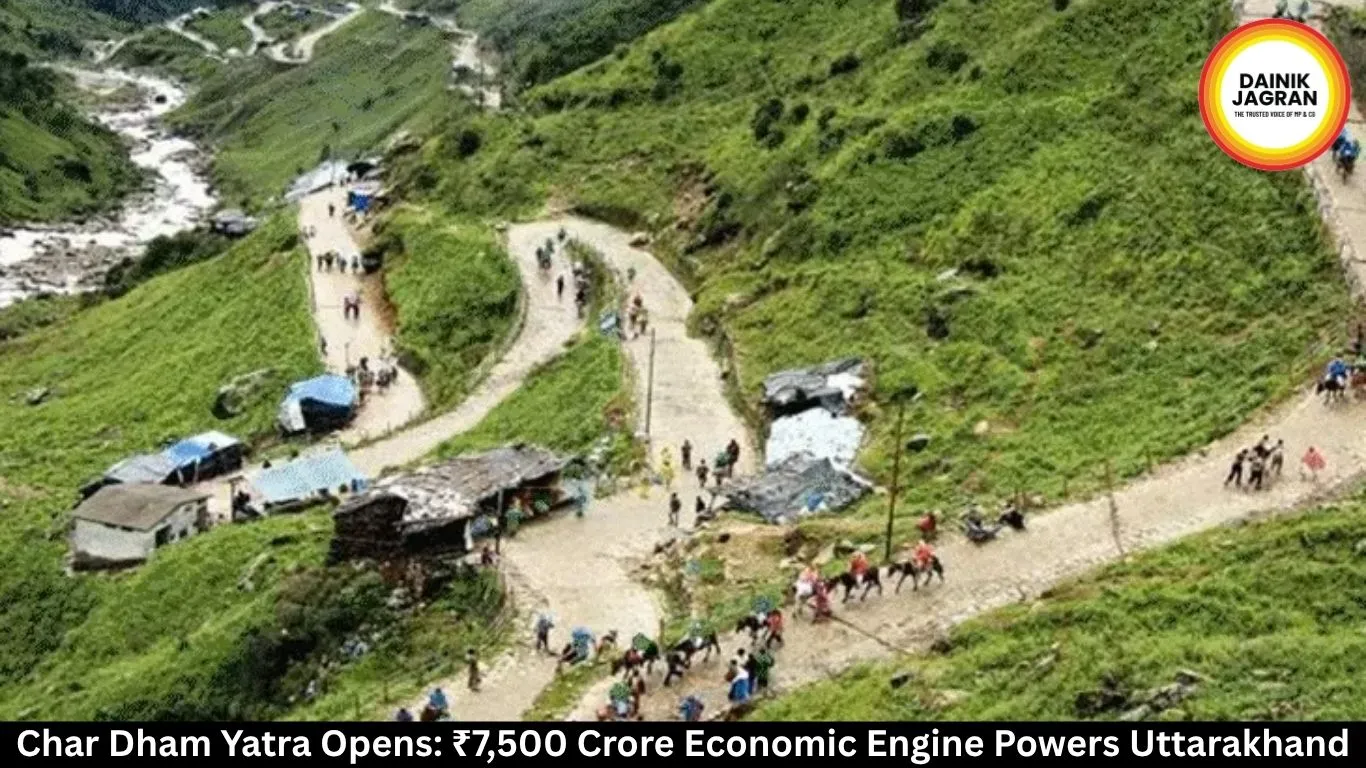
Uttarakhand's most significant annual pilgrimage season has officially commenced, with the Char Dham Yatra generating an estimated ₹7,500 crore for the state's economy each year. On Wednesday, the sacred Kedarnath temple opened its doors to devotees, marking a crucial milestone in the four-shrine circuit that has become the state's financial lifeline.

The yatra began on Akshaya Tritiya (19 April, 2026), with officials from the Uttarakhand Tourism Development Board already tracking nearly 20 lakh pilgrim registrations. Last year's figures exceeded 51 lakh registrations, indicating the scale of economic activity expected this season across ticket sales, transportation, accommodation, and local services.

The Four Sacred Shrines Begin Sacred Season

The Char Dham circuit comprises four revered temples spread across the Himalayan terrain. Gangotri and Yamunotri opened their gates on 19 April, welcoming the first wave of devotees seeking spiritual solace. Kedarnath followed suit on 22 April, while Badrinath Dham will commence operations on 23 April. The Hemkund Sahib shrine, another prominent pilgrimage site, will open on 23 May.

This staggered opening schedule ensures steady pilgrim flow throughout the season, distributing pressure across infrastructure and hospitality services in the state.

Revenue Generation: How ₹7,500 Crores Flow Through Uttarakhand's Economy

According to a 2024 study jointly conducted by West Bengal's Adamas University and Vidyanagar College, the Char Dham Yatra generates substantial revenue across multiple streams. Ticket sales at offline and online counters form the primary revenue source, followed by transportation services including helicopter operations, horse-mule services, and alternative modes of transit.

Accommodation services—encompassing hotels, guest houses, and lodging facilities—contribute significantly to the revenue pool. Additionally, local businesses capitalizing on pilgrim requirements for food, souvenirs, and ancillary services generate considerable economic activity at each shrine location.

The cumulative impact is remarkable. In 2025, Uttarakhand's Gross Domestic Product stood at ₹3.81 lakh crore. The government's projected revenue receipt for 2026-27 was ₹67,525 crore. The Char Dham Yatra alone contributes nearly 12% on average to the state's annual coffers—a figure underscoring its critical importance to the regional economy.

Multiplier Effect Across Tourism and Hospitality Sectors

The yatra's economic impact extends far beyond direct ticket revenues. Temple trusts, local businesses, and state agencies form an interconnected ecosystem benefiting from the annual pilgrimage surge. Hotels report full bookings during peak season. Transportation providers, from helicopter operators to mule handlers, experience peak demand. Local artisans and traders leverage the occasion to expand sales of religious artifacts, traditional crafts, and regional products.

Rohini, an official with the Uttarakhand Tourism Development Board, indicated that this year's expectations remain optimistic despite evolving travel patterns. The registration figures, though currently tracking below last year's numbers at this stage, are expected to increase as the season progresses and weather conditions stabilize across higher altitude routes.

Infrastructure and Capacity Planning

Managing 51 lakh pilgrims annually requires meticulous planning and substantial infrastructure investment. The state government has prioritized road accessibility, temple facilities, and accommodation options across all four shrines. Recent years have witnessed improvements in connectivity to remote locations, reducing travel duration and enhancing visitor experience.

However, seasonal challenges persist. Weather conditions at higher altitudes remain unpredictable, occasionally disrupting travel schedules. The state continues addressing infrastructure bottlenecks to ensure smooth pilgrim movement throughout the season.

Looking Ahead: Economic Prospects for 2026

As the yatra season unfolds, state tourism authorities remain focused on maximizing visitor experience while capturing substantial economic benefits. The convergence of religious significance and economic opportunity has made the Char Dham circuit indispensable for Uttarakhand's growth trajectory.

With 20 lakh registrations already recorded and the season just beginning, officials anticipate robust pilgrim turnout and corresponding revenue collection. The opening of Kedarnath temple represents not merely a religious event but a pivotal economic moment for thousands of families dependent on tourism-related livelihoods across the Himalayan state.


 

--------

🚨 Beat the News Rush – Join Now!

Get breaking alerts, hot exclusives, and game-changing stories instantly on your phone. No delays, no fluff – just the edge you need. ⚡

Tap to join: 

🟢 WhatsApp Channel: Dainik Jagran MP CG

Crave more?

🅕 Facebook: Dainik Jagran MP CG English

🅧 Twitter (X): Dainik Jagran MP CG

🅘 Instagram: Dainik Jagran MP CG

Share the fire – keep your crew ahead! 🗞️🔥

english.dainikjagranmpcg.com
22 Apr 2026 By Abhishek Joshi

Char Dham Yatra Opens: ₹7,500 Crore Economic Engine Powers Uttarakhand

Digital Desk

CHAR DHAM YATRA: UTTARAKHAND'S ₹7,500 CR ECONOMIC ENGINE ROARS TO LIFE

Kedarnath Temple Opens Gates as Pilgrimage Season Begins; Expected to Drive Massive Revenue for State

Uttarakhand's most significant annual pilgrimage season has officially commenced, with the Char Dham Yatra generating an estimated ₹7,500 crore for the state's economy each year. On Wednesday, the sacred Kedarnath temple opened its doors to devotees, marking a crucial milestone in the four-shrine circuit that has become the state's financial lifeline.

The yatra began on Akshaya Tritiya (19 April, 2026), with officials from the Uttarakhand Tourism Development Board already tracking nearly 20 lakh pilgrim registrations. Last year's figures exceeded 51 lakh registrations, indicating the scale of economic activity expected this season across ticket sales, transportation, accommodation, and local services.

The Four Sacred Shrines Begin Sacred Season

The Char Dham circuit comprises four revered temples spread across the Himalayan terrain. Gangotri and Yamunotri opened their gates on 19 April, welcoming the first wave of devotees seeking spiritual solace. Kedarnath followed suit on 22 April, while Badrinath Dham will commence operations on 23 April. The Hemkund Sahib shrine, another prominent pilgrimage site, will open on 23 May.

This staggered opening schedule ensures steady pilgrim flow throughout the season, distributing pressure across infrastructure and hospitality services in the state.

Revenue Generation: How ₹7,500 Crores Flow Through Uttarakhand's Economy

According to a 2024 study jointly conducted by West Bengal's Adamas University and Vidyanagar College, the Char Dham Yatra generates substantial revenue across multiple streams. Ticket sales at offline and online counters form the primary revenue source, followed by transportation services including helicopter operations, horse-mule services, and alternative modes of transit.

Accommodation services—encompassing hotels, guest houses, and lodging facilities—contribute significantly to the revenue pool. Additionally, local businesses capitalizing on pilgrim requirements for food, souvenirs, and ancillary services generate considerable economic activity at each shrine location.

The cumulative impact is remarkable. In 2025, Uttarakhand's Gross Domestic Product stood at ₹3.81 lakh crore. The government's projected revenue receipt for 2026-27 was ₹67,525 crore. The Char Dham Yatra alone contributes nearly 12% on average to the state's annual coffers—a figure underscoring its critical importance to the regional economy.

Multiplier Effect Across Tourism and Hospitality Sectors

The yatra's economic impact extends far beyond direct ticket revenues. Temple trusts, local businesses, and state agencies form an interconnected ecosystem benefiting from the annual pilgrimage surge. Hotels report full bookings during peak season. Transportation providers, from helicopter operators to mule handlers, experience peak demand. Local artisans and traders leverage the occasion to expand sales of religious artifacts, traditional crafts, and regional products.

Rohini, an official with the Uttarakhand Tourism Development Board, indicated that this year's expectations remain optimistic despite evolving travel patterns. The registration figures, though currently tracking below last year's numbers at this stage, are expected to increase as the season progresses and weather conditions stabilize across higher altitude routes.

Infrastructure and Capacity Planning

Managing 51 lakh pilgrims annually requires meticulous planning and substantial infrastructure investment. The state government has prioritized road accessibility, temple facilities, and accommodation options across all four shrines. Recent years have witnessed improvements in connectivity to remote locations, reducing travel duration and enhancing visitor experience.

However, seasonal challenges persist. Weather conditions at higher altitudes remain unpredictable, occasionally disrupting travel schedules. The state continues addressing infrastructure bottlenecks to ensure smooth pilgrim movement throughout the season.

Looking Ahead: Economic Prospects for 2026

As the yatra season unfolds, state tourism authorities remain focused on maximizing visitor experience while capturing substantial economic benefits. The convergence of religious significance and economic opportunity has made the Char Dham circuit indispensable for Uttarakhand's growth trajectory.

With 20 lakh registrations already recorded and the season just beginning, officials anticipate robust pilgrim turnout and corresponding revenue collection. The opening of Kedarnath temple represents not merely a religious event but a pivotal economic moment for thousands of families dependent on tourism-related livelihoods across the Himalayan state.

 

https://english.dainikjagranmpcg.com/special-news/char-dham-yatra-opens-%E2%82%B97500-crore-economic-engine-powers-uttarakhand/article-17218

Related Posts

Latest News