India-UK Free Trade Agreement Takes Effect Today: Whisky, Cars, Clothing Become Cheaper

Digital Desk

India-UK Free Trade Agreement Takes Effect Today: Whisky, Cars, Clothing Become Cheaper

India and the UK have implemented their Free Trade Agreement from July 15, reducing tariffs on whisky, luxury cars, clothing and other goods while giving 99% of Indian exports duty-free access to the UK market.

India and the United Kingdom have officially implemented their long-awaited Free Trade Agreement (FTA) from Wednesday, marking a major milestone in economic relations between the two countries. The agreement is expected to significantly reduce tariffs on thousands of products, making several imported British goods cheaper in India while opening wider market access for Indian exporters.

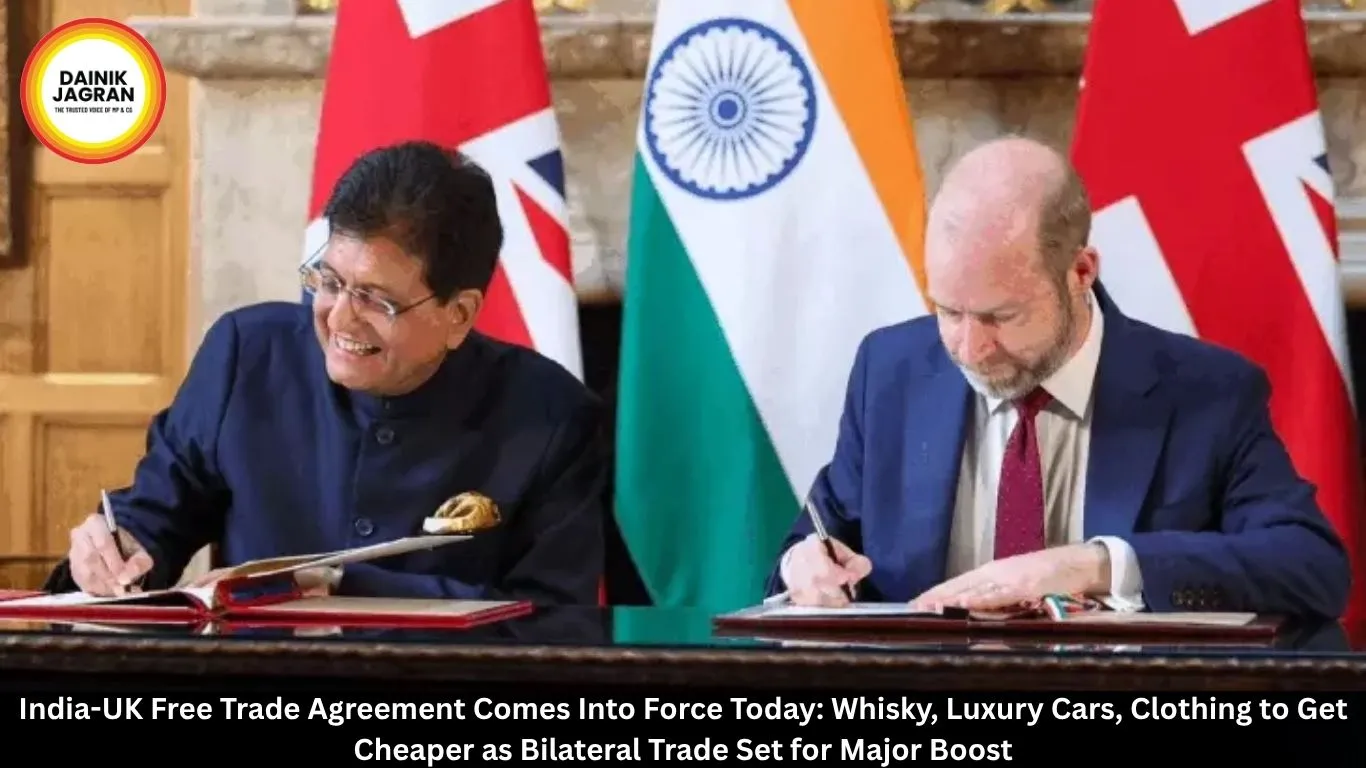
The trade pact, signed on July 24, 2025, after nearly three years of negotiations spanning 14 formal rounds, is expected to double bilateral trade to nearly USD 120 billion by 2030. Commerce Minister Piyush Goyal and UK Business and Trade Secretary Jonathan Reynolds had signed the agreement in the presence of Prime Minister Narendra Modi and British Prime Minister Keir Starmer.

Lower Tariffs to Benefit Consumers

One of the most immediate impacts of the agreement will be seen in consumer prices. The average tariff on imports from the UK will decline from around 15% to 3%, while 99% of Indian exports will enjoy zero-duty access to the British market.

Among the biggest beneficiaries are premium British products such as Scotch whisky, luxury cars, branded clothing, cosmetics, chocolates, medical equipment and specialty consumer goods.

Import duty on Scotch whisky and gin will reduce from 150% to 75% immediately, with a phased reduction to 40% over the next decade. Industry estimates suggest that premium whisky could become substantially more affordable for Indian consumers.

Similarly, import duties on luxury British automobiles, including brands such as Jaguar Land Rover and Rolls-Royce, will fall sharply under a quota-based system, potentially lowering retail prices by 20–30%.

Major Push for Indian Exports

The agreement is expected to provide a strong boost to India's export-oriented industries.

Indian textile manufacturers will gain duty-free access to the UK market, improving their competitiveness against countries such as Bangladesh and Vietnam. Export hubs including Tiruppur, Surat and Ludhiana are expected to benefit significantly over the coming years.

The jewellery, leather goods, engineering products, auto components, pharmaceuticals, chemicals, tea, spices, seafood and agricultural sectors are also expected to witness higher exports due to the removal of import duties in the UK.

Indian pharmaceutical companies are likely to benefit from simplified regulatory procedures for generic medicines, enabling faster entry into Britain's National Health Service (NHS) procurement system.

MSMEs and Manufacturing to Gain

The agreement is expected to create new opportunities for India's Micro, Small and Medium Enterprises (MSMEs), which account for nearly 40% of the country's exports. Easier market access and lower trade barriers are expected to improve profitability and expand export volumes.

Officials also expect increased British investments in sectors such as financial services, information technology, clean energy, electric mobility and advanced manufacturing.

The agreement includes provisions aimed at strengthening cooperation in renewable energy, green hydrogen, electric vehicle infrastructure and critical mineral supply chains.

UK Welcomes the Agreement

Ahead of the agreement's implementation, British High Commissioner to India Lindy Cameron described the development as a "historic moment" for bilateral relations.

In a post on social media platform X, she said the agreement would usher in "a new era of growth" for both economies and strengthen the modern UK-India partnership.

Long Negotiation Process

Negotiations for the India-UK FTA began on January 13, 2022, and concluded after more than three years of discussions. The pact becomes one of India's most significant bilateral trade agreements in recent years, following similar deals with the UAE, Australia, Mauritius and the European Free Trade Association (EFTA).

India is also continuing negotiations on comprehensive trade agreements with the European Union.

Economists believe the agreement will not only increase trade volumes but also deepen investment, strengthen supply chains and generate employment across manufacturing and export-intensive sectors.


 

--------

🚨 Beat the News Rush – Join Now!

Get breaking alerts, hot exclusives, and game-changing stories instantly on your phone. No delays, no fluff – just the edge you need. ⚡

Tap to join: 

🟢 WhatsApp Channel: Dainik Jagran MP CG

Crave more?

🅕 Facebook: Dainik Jagran MP CG English

🅧 Twitter (X): Dainik Jagran MP CG

🅘 Instagram: Dainik Jagran MP CG

Share the fire – keep your crew ahead! 🗞️🔥

english.dainikjagranmpcg.com
15 Jul 2026 By Abhishek Joshi

India-UK Free Trade Agreement Takes Effect Today: Whisky, Cars, Clothing Become Cheaper

Digital Desk

India and the United Kingdom have officially implemented their long-awaited Free Trade Agreement (FTA) from Wednesday, marking a major milestone in economic relations between the two countries. The agreement is expected to significantly reduce tariffs on thousands of products, making several imported British goods cheaper in India while opening wider market access for Indian exporters.

The trade pact, signed on July 24, 2025, after nearly three years of negotiations spanning 14 formal rounds, is expected to double bilateral trade to nearly USD 120 billion by 2030. Commerce Minister Piyush Goyal and UK Business and Trade Secretary Jonathan Reynolds had signed the agreement in the presence of Prime Minister Narendra Modi and British Prime Minister Keir Starmer.

Lower Tariffs to Benefit Consumers

One of the most immediate impacts of the agreement will be seen in consumer prices. The average tariff on imports from the UK will decline from around 15% to 3%, while 99% of Indian exports will enjoy zero-duty access to the British market.

Among the biggest beneficiaries are premium British products such as Scotch whisky, luxury cars, branded clothing, cosmetics, chocolates, medical equipment and specialty consumer goods.

Import duty on Scotch whisky and gin will reduce from 150% to 75% immediately, with a phased reduction to 40% over the next decade. Industry estimates suggest that premium whisky could become substantially more affordable for Indian consumers.

Similarly, import duties on luxury British automobiles, including brands such as Jaguar Land Rover and Rolls-Royce, will fall sharply under a quota-based system, potentially lowering retail prices by 20–30%.

Major Push for Indian Exports

The agreement is expected to provide a strong boost to India's export-oriented industries.

Indian textile manufacturers will gain duty-free access to the UK market, improving their competitiveness against countries such as Bangladesh and Vietnam. Export hubs including Tiruppur, Surat and Ludhiana are expected to benefit significantly over the coming years.

The jewellery, leather goods, engineering products, auto components, pharmaceuticals, chemicals, tea, spices, seafood and agricultural sectors are also expected to witness higher exports due to the removal of import duties in the UK.

Indian pharmaceutical companies are likely to benefit from simplified regulatory procedures for generic medicines, enabling faster entry into Britain's National Health Service (NHS) procurement system.

MSMEs and Manufacturing to Gain

The agreement is expected to create new opportunities for India's Micro, Small and Medium Enterprises (MSMEs), which account for nearly 40% of the country's exports. Easier market access and lower trade barriers are expected to improve profitability and expand export volumes.

Officials also expect increased British investments in sectors such as financial services, information technology, clean energy, electric mobility and advanced manufacturing.

The agreement includes provisions aimed at strengthening cooperation in renewable energy, green hydrogen, electric vehicle infrastructure and critical mineral supply chains.

UK Welcomes the Agreement

Ahead of the agreement's implementation, British High Commissioner to India Lindy Cameron described the development as a "historic moment" for bilateral relations.

In a post on social media platform X, she said the agreement would usher in "a new era of growth" for both economies and strengthen the modern UK-India partnership.

Long Negotiation Process

Negotiations for the India-UK FTA began on January 13, 2022, and concluded after more than three years of discussions. The pact becomes one of India's most significant bilateral trade agreements in recent years, following similar deals with the UAE, Australia, Mauritius and the European Free Trade Association (EFTA).

India is also continuing negotiations on comprehensive trade agreements with the European Union.

Economists believe the agreement will not only increase trade volumes but also deepen investment, strengthen supply chains and generate employment across manufacturing and export-intensive sectors.


https://english.dainikjagranmpcg.com/business/india-uk-free-trade-agreement-takes-effect-today-whisky-cars-clothing/article-22209

Trending News