India-UK Free Trade Agreement Comes Into Effect: Whisky, Cars and Fashion Products to Get Cheaper
Digital Desk
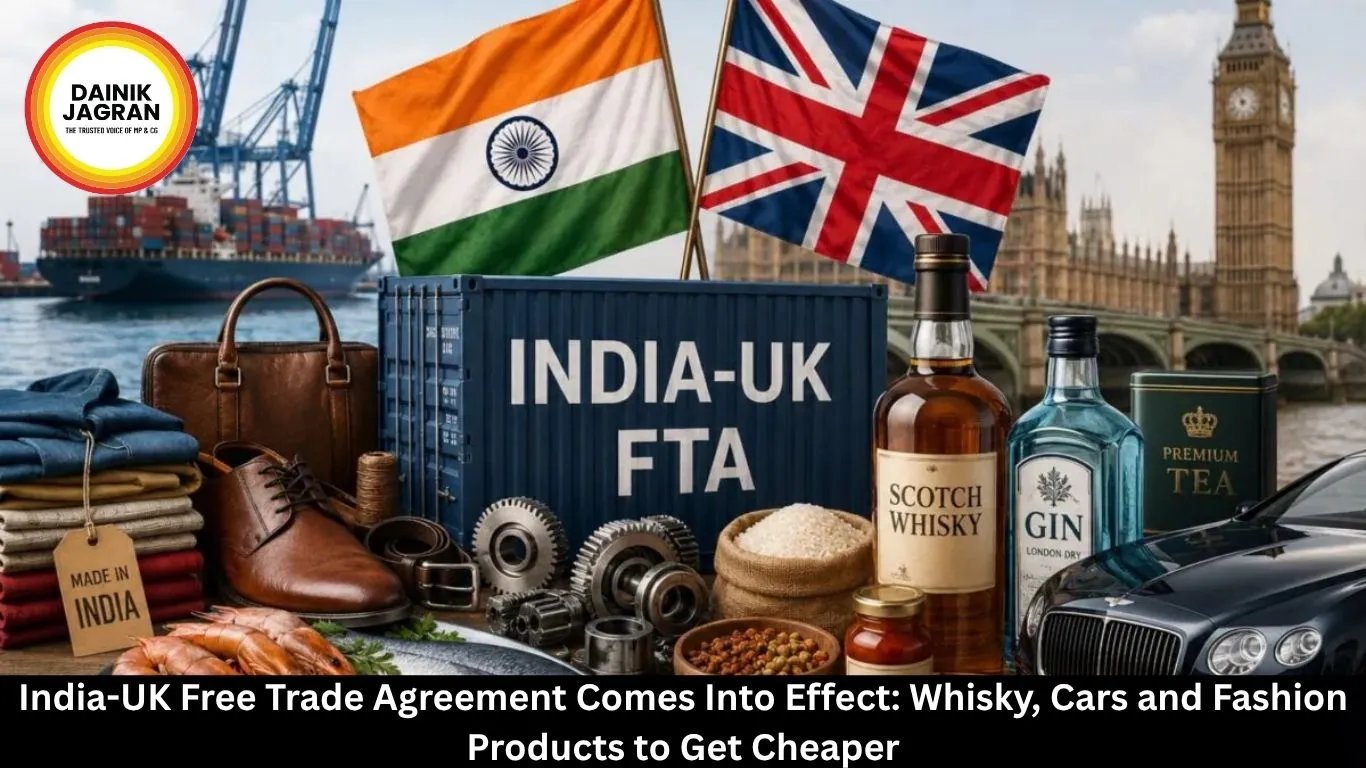
India and the UK have implemented the Comprehensive Economic and Trade Agreement (CETA), reducing tariffs on whisky, luxury cars, clothing and other products while giving 99% of Indian exports duty-free access to the UK market.
India-UK Free Trade Agreement Comes Into Effect Today: Whisky, Luxury Cars, Fashion to Get Cheaper; Indian Exports Receive Zero-Tariff Access
India and the United Kingdom's landmark Comprehensive Economic and Trade Agreement (CETA) officially came into force on Wednesday, marking one of India's most significant bilateral trade deals in recent years. The agreement is expected to reduce prices of several imported British products in India while providing Indian exporters duty-free access to almost the entire UK market.
Under the agreement, 99% of Indian goods will now enter the UK without import duties, while India will gradually reduce tariffs on 99% of British products, bringing the average import tariff down from around 15% to nearly 3%. Policymakers from both countries believe the pact could help double bilateral trade to nearly USD 120 billion by 2030.
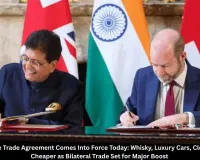
The agreement was signed on July 24, 2025, after nearly three-and-a-half years of negotiations involving 14 formal rounds. Commerce and Industry Minister Piyush Goyal and UK Secretary of State for Business and Trade Jonathan Reynolds signed the pact in the presence of Prime Minister Narendra Modi and UK Prime Minister Keir Starmer.
British Products to Become More Affordable
Consumers are expected to see a phased reduction in prices of several premium British products.
Import duty on Scotch whisky and gin has been reduced from 150% to 75%, with a further reduction to 40% planned over the next decade. Industry estimates suggest premium Scotch whisky could become substantially more affordable as tariff reductions are implemented.
Luxury automobiles from brands such as Jaguar Land Rover and Rolls-Royce will also benefit from sharply reduced duties under a quota-based system, potentially lowering retail prices by 20–30%.
The agreement also cuts tariffs on products including salmon, lamb, chocolates, biscuits, soft drinks, cosmetics, medical devices, aerospace components, branded clothing, furniture and selected electronics, making many imported British goods more competitively priced in India over time.
Export-Oriented Industries Set to Gain
The FTA is expected to provide a major boost to India's export-driven sectors.
Indian textiles and apparel, which previously attracted import duties of 8–12% in the UK, will now enjoy duty-free access, improving competitiveness against exporters from Bangladesh and Vietnam. Manufacturing hubs such as Tiruppur, Surat and Ludhiana are expected to benefit from increased export demand.
The agreement also removes tariffs on Indian jewellery, leather goods, engineering products, machinery, auto components, marine products, tea, spices, basmati rice, chemicals and speciality materials, creating fresh opportunities for exporters.
Indian pharmaceutical companies are expected to benefit from simplified registration procedures for generic medicines, allowing faster entry into the UK's healthcare market.
MSMEs and Green Investment
Officials believe the agreement will strengthen India's Micro, Small and Medium Enterprises (MSMEs), which contribute nearly 40% of the country's exports. Easier market access is expected to improve margins and expand business opportunities for smaller exporters.
The agreement also encourages greater British investment in information technology, financial services, renewable energy, green hydrogen, electric vehicles and clean technology, supporting India's manufacturing ambitions and energy transition goals.
Sensitive Sectors Protected
While the agreement significantly liberalises trade, India has kept several sensitive sectors outside the tariff reduction framework.
Products including dairy items, apples, cheese, oats, selected edible oils, along with certain industrial products such as specific plastics, diamonds, silver, smartphones, optical fibre products and telecom equipment, remain protected under the agreement.
Strategic Trade Partnership
Trade experts describe the India-UK agreement as part of New Delhi's broader strategy to strengthen economic partnerships with major global economies. Following agreements with Australia, the UAE and the European Free Trade Association (EFTA), India is now actively pursuing comprehensive trade deals with the European Union and the United States.
Government officials expect the agreement to increase exports, attract investment, strengthen supply chains and create employment across manufacturing and labour-intensive industries over the coming decade.
--------
🚨 Beat the News Rush – Join Now!
Get breaking alerts, hot exclusives, and game-changing stories instantly on your phone. No delays, no fluff – just the edge you need. ⚡
Tap to join:
🟢 WhatsApp Channel: Dainik Jagran MP CG
Crave more?
🅕 Facebook: Dainik Jagran MP CG English
🅧 Twitter (X): Dainik Jagran MP CG
🅘 Instagram: Dainik Jagran MP CG
Share the fire – keep your crew ahead! 🗞️🔥
India-UK Free Trade Agreement Comes Into Effect: Whisky, Cars and Fashion Products to Get Cheaper
Digital Desk
India-UK Free Trade Agreement Comes Into Effect Today: Whisky, Luxury Cars, Fashion to Get Cheaper; Indian Exports Receive Zero-Tariff Access
India and the United Kingdom's landmark Comprehensive Economic and Trade Agreement (CETA) officially came into force on Wednesday, marking one of India's most significant bilateral trade deals in recent years. The agreement is expected to reduce prices of several imported British products in India while providing Indian exporters duty-free access to almost the entire UK market.
Under the agreement, 99% of Indian goods will now enter the UK without import duties, while India will gradually reduce tariffs on 99% of British products, bringing the average import tariff down from around 15% to nearly 3%. Policymakers from both countries believe the pact could help double bilateral trade to nearly USD 120 billion by 2030.
The agreement was signed on July 24, 2025, after nearly three-and-a-half years of negotiations involving 14 formal rounds. Commerce and Industry Minister Piyush Goyal and UK Secretary of State for Business and Trade Jonathan Reynolds signed the pact in the presence of Prime Minister Narendra Modi and UK Prime Minister Keir Starmer.
British Products to Become More Affordable
Consumers are expected to see a phased reduction in prices of several premium British products.
Import duty on Scotch whisky and gin has been reduced from 150% to 75%, with a further reduction to 40% planned over the next decade. Industry estimates suggest premium Scotch whisky could become substantially more affordable as tariff reductions are implemented.
Luxury automobiles from brands such as Jaguar Land Rover and Rolls-Royce will also benefit from sharply reduced duties under a quota-based system, potentially lowering retail prices by 20–30%.
The agreement also cuts tariffs on products including salmon, lamb, chocolates, biscuits, soft drinks, cosmetics, medical devices, aerospace components, branded clothing, furniture and selected electronics, making many imported British goods more competitively priced in India over time.
Export-Oriented Industries Set to Gain
The FTA is expected to provide a major boost to India's export-driven sectors.
Indian textiles and apparel, which previously attracted import duties of 8–12% in the UK, will now enjoy duty-free access, improving competitiveness against exporters from Bangladesh and Vietnam. Manufacturing hubs such as Tiruppur, Surat and Ludhiana are expected to benefit from increased export demand.
The agreement also removes tariffs on Indian jewellery, leather goods, engineering products, machinery, auto components, marine products, tea, spices, basmati rice, chemicals and speciality materials, creating fresh opportunities for exporters.
Indian pharmaceutical companies are expected to benefit from simplified registration procedures for generic medicines, allowing faster entry into the UK's healthcare market.
MSMEs and Green Investment
Officials believe the agreement will strengthen India's Micro, Small and Medium Enterprises (MSMEs), which contribute nearly 40% of the country's exports. Easier market access is expected to improve margins and expand business opportunities for smaller exporters.
The agreement also encourages greater British investment in information technology, financial services, renewable energy, green hydrogen, electric vehicles and clean technology, supporting India's manufacturing ambitions and energy transition goals.
Sensitive Sectors Protected
While the agreement significantly liberalises trade, India has kept several sensitive sectors outside the tariff reduction framework.
Products including dairy items, apples, cheese, oats, selected edible oils, along with certain industrial products such as specific plastics, diamonds, silver, smartphones, optical fibre products and telecom equipment, remain protected under the agreement.
Strategic Trade Partnership
Trade experts describe the India-UK agreement as part of New Delhi's broader strategy to strengthen economic partnerships with major global economies. Following agreements with Australia, the UAE and the European Free Trade Association (EFTA), India is now actively pursuing comprehensive trade deals with the European Union and the United States.
Government officials expect the agreement to increase exports, attract investment, strengthen supply chains and create employment across manufacturing and labour-intensive industries over the coming decade.