

Middle Class Income Rises in India: President Murmu Credits Inflation Control and Reforms
Digital Desk
Middle Class Incomes Rising in India, Says President Murmu; Inflation Control Key
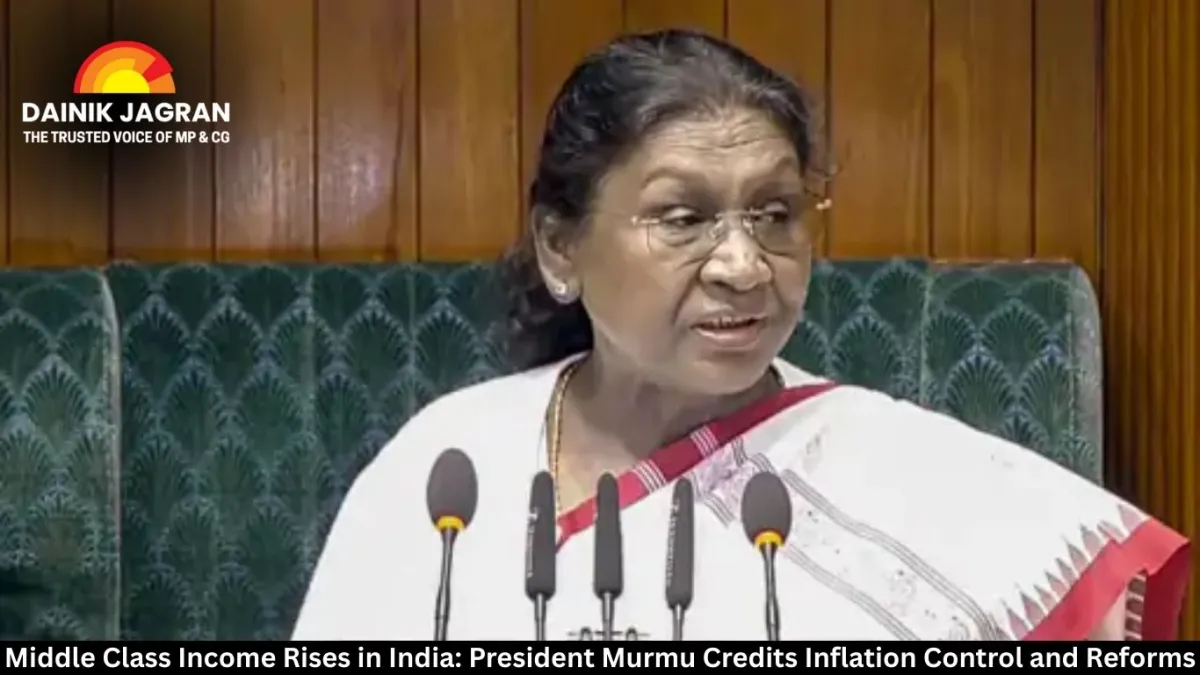
In a significant address to Parliament, President Droupadi Murmu outlined a strengthening Indian economy, with a notable middle class income increase in India driven by government policies that have kept inflation in check and put more savings into households.
Speaking on the nation’s progress over the past 11 years, Murmu stated that India’s economic foundation is now “much stronger” and that consistent growth amidst global challenges has directly benefited citizens. “The government’s efforts to keep inflation under control have put more savings in people’s hands,” she affirmed, highlighting the direct impact on purchasing power for families.
Economic Reforms Fueling Growth
The President detailed a multi-pronged approach behind this middle class income increase. Key among them is the Goods and Services Tax (GST), which she called a major success. “GST has simplified the tax system and has resulted in significant savings for citizens, estimated at around Rs 1 lakh crore,” Murmu said. This, coupled with income tax exemptions for earnings up to Rs 12 lakh, provides substantial relief and boosts disposable income.
Beyond taxes, the government’s focus on modernizing regulations—termed the “Reforms Express”—aims to create a more efficient business environment, which in turn supports job creation and wage growth.
Infrastructure and Support for Key Sectors
Murmu also pointed to massive infrastructure development as a growth pillar. Over 7,200 km of national highways and 50,000 km of rural roads have improved connectivity, linking remote areas to markets and services. For farmers, direct benefit transfers like the PM Kisan Samman Nidhi have pumped over Rs 4 lakh crore into the rural economy, supporting record agricultural production.
On manufacturing, the Production Linked Incentive (PLI) scheme has attracted huge investments, boosting India’s share in global exports and attracting approximately $750 billion in Foreign Direct Investment over the last decade.
Future Focus: Tech and Global Leadership
Looking ahead, the President highlighted India’s push into new technologies like semiconductor manufacturing, with 10 units expected soon, and the National Critical Mineral Mission to ensure self-reliance. However, she also issued a caution on Artificial Intelligence, warning of deepfakes and misinformation as threats to social harmony.
India’s growing global role was underscored, with its current BRICS presidency and plans to host a Global AI Impact Summit. This external engagement, Murmu suggested, mirrors the domestic economic confidence.
Why This Matters Now
This update comes at a time when inflation control remains a top concern for households worldwide. Murmu’s speech frames India’s economic narrative as one of resilience and direct citizen benefit, offering a positive outlook for middle-class income increase and financial stability. For millions, the message is clear: policy reforms are translating into tangible savings and greater economic security.




.jpg)




