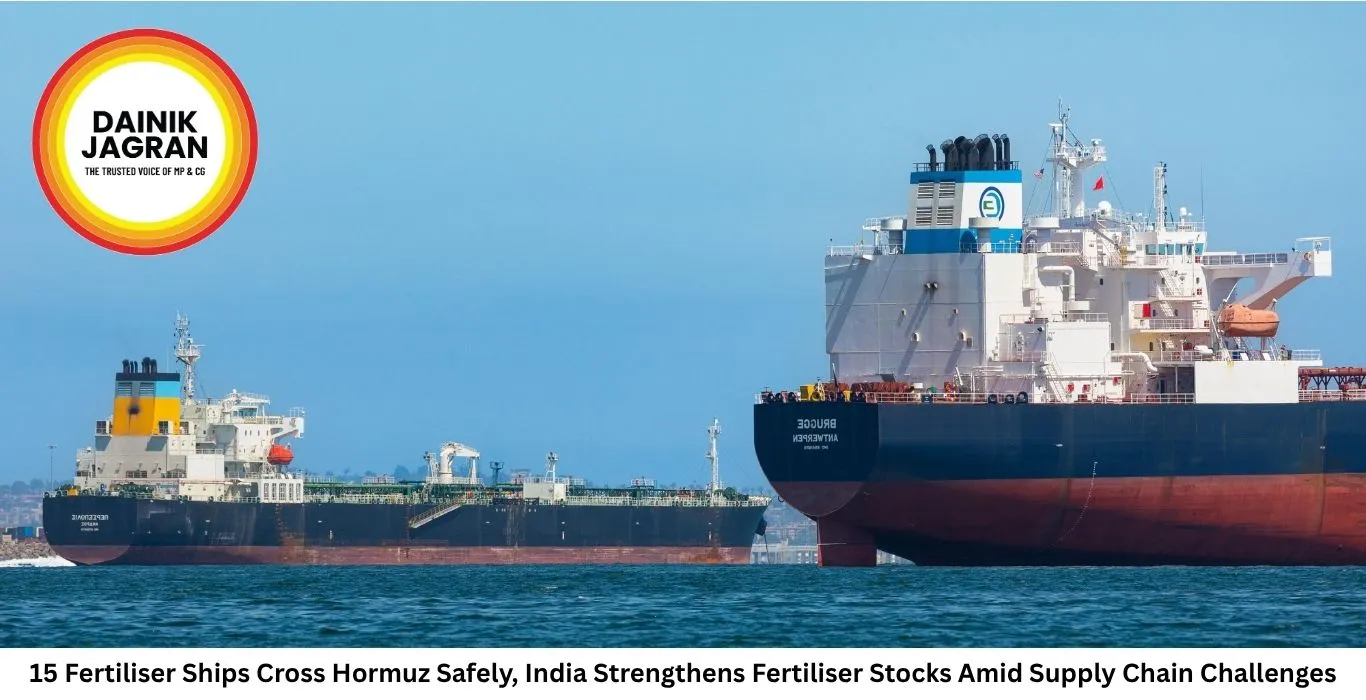
15 Fertiliser Ships Cross Hormuz Safely, India Strengthens Fertiliser Stocks Amid Supply Chain Challenges
Digital desk
New Delhi: India has received a major boost to its fertiliser supply chain after 15 ships carrying fertilisers and key raw materials safely crossed the strategically important Hormuz Strait, despite recent disruptions caused by tensions in West Asia. The development is expected to significantly strengthen the country’s fertiliser reserves ahead of upcoming agricultural seasons.
According to the government, the vessels are transporting fertilisers and critical raw materials under scheduled delivery plans, ensuring uninterrupted supplies to India. Officials said the arrival of these shipments at Indian ports will substantially improve domestic stock levels and support the country’s agricultural requirements.
The government highlighted that despite challenges to maritime traffic in the Hormuz Strait during the recent regional conflict, coordinated planning, continuous monitoring and timely interventions helped maintain the flow of essential fertiliser imports. Authorities also expanded procurement efforts by securing supplies from multiple countries, further reinforcing India’s fertiliser supply network.
Union Minister for Chemicals and Fertilisers J.P. Nadda said global supply chains faced severe disruptions due to the conflict in West Asia, leading to rising fertiliser prices and longer delivery timelines worldwide. He noted that India was not immune to these challenges but managed to address potential shortages through proactive measures and strategic planning under the leadership of Prime Minister Narendra Modi.
The government also credited India’s diplomatic network for supporting supply diversification efforts. As many as 28 Indian missions abroad, including embassies and high commissions, worked closely with potential producers and suppliers to facilitate timely fertiliser availability.
For urea imports, India secured arrangements with countries including Oman, Malaysia, Vietnam, Georgia, Nigeria, Russia, Finland, Egypt, Algeria, Türkiye and the Netherlands. Meanwhile, supplies of DAP and NPK fertilisers were coordinated through the Red Sea route from Russia, Morocco, Egypt, the United States, Jordan, South Korea, Tunisia and Saudi Arabia.
Officials said the 15 ships currently en route or arriving in India include eight vessels carrying 3.32 lakh metric tonnes of urea, four ships transporting 2.57 lakh metric tonnes of DAP and three vessels carrying 1.11 lakh metric tonnes of sulphur. In addition, five more ships have been scheduled for India. These include consignments of ammonia, urea and sulphur that are expected to arrive in the coming weeks.
Alongside imports, domestic fertiliser production has also recorded strong growth. The availability of natural gas for fertiliser plants, which had temporarily declined to around 65 per cent, has now returned to full capacity. As a result, all urea manufacturing units across the country are operating at maximum production levels.
Government data showed that urea production exceeded targets in each of the first three months of the 2026-27 financial year. During the April-June quarter, total urea production reached 71.55 lakh metric tonnes against a target of 67.86 lakh metric tonnes, surpassing the goal by 3.69 lakh metric tonnes.
DAP production also outperformed expectations during the quarter. Total output stood at 9.84 lakh metric tonnes compared to the target of 8.61 lakh metric tonnes, registering an excess production of 1.23 lakh metric tonnes. Domestic production of NPK fertilisers reached 20.77 lakh metric tonnes, while SSP output stood at 13.50 lakh metric tonnes during the same period.
The combined impact of increased imports and higher domestic production has helped maintain adequate fertiliser availability across the country. According to the Ministry of Agriculture and Farmers Welfare, India has already secured 197.56 lakh metric tonnes of fertiliser stocks against an estimated annual requirement of 383.9 lakh metric tonnes, representing more than 51 per cent of projected demand.
Officials said the current inventory position is expected to ensure smooth fertiliser availability for farmers and support agricultural activities throughout the upcoming crop seasons.

--------
๐จ Beat the News Rush โ Join Now!
Get breaking alerts, hot exclusives, and game-changing stories instantly on your phone. No delays, no fluff โ just the edge you need. โก
Tap to join:ย
๐ข WhatsApp Channel: Dainik Jagran MP CG
Crave more?
๐ Facebook: Dainik Jagran MP CG English
๐ ง Twitter (X): Dainik Jagran MP CG
๐ Instagram: Dainik Jagran MP CG
Share the fire โ keep your crew ahead! ๐๏ธ๐ฅ
15 Fertiliser Ships Cross Hormuz Safely, India Strengthens Fertiliser Stocks Amid Supply Chain Challenges
Digital desk
According to the government, the vessels are transporting fertilisers and critical raw materials under scheduled delivery plans, ensuring uninterrupted supplies to India. Officials said the arrival of these shipments at Indian ports will substantially improve domestic stock levels and support the country’s agricultural requirements.
The government highlighted that despite challenges to maritime traffic in the Hormuz Strait during the recent regional conflict, coordinated planning, continuous monitoring and timely interventions helped maintain the flow of essential fertiliser imports. Authorities also expanded procurement efforts by securing supplies from multiple countries, further reinforcing India’s fertiliser supply network.
Union Minister for Chemicals and Fertilisers J.P. Nadda said global supply chains faced severe disruptions due to the conflict in West Asia, leading to rising fertiliser prices and longer delivery timelines worldwide. He noted that India was not immune to these challenges but managed to address potential shortages through proactive measures and strategic planning under the leadership of Prime Minister Narendra Modi.
The government also credited India’s diplomatic network for supporting supply diversification efforts. As many as 28 Indian missions abroad, including embassies and high commissions, worked closely with potential producers and suppliers to facilitate timely fertiliser availability.
For urea imports, India secured arrangements with countries including Oman, Malaysia, Vietnam, Georgia, Nigeria, Russia, Finland, Egypt, Algeria, Türkiye and the Netherlands. Meanwhile, supplies of DAP and NPK fertilisers were coordinated through the Red Sea route from Russia, Morocco, Egypt, the United States, Jordan, South Korea, Tunisia and Saudi Arabia.
Officials said the 15 ships currently en route or arriving in India include eight vessels carrying 3.32 lakh metric tonnes of urea, four ships transporting 2.57 lakh metric tonnes of DAP and three vessels carrying 1.11 lakh metric tonnes of sulphur. In addition, five more ships have been scheduled for India. These include consignments of ammonia, urea and sulphur that are expected to arrive in the coming weeks.
Alongside imports, domestic fertiliser production has also recorded strong growth. The availability of natural gas for fertiliser plants, which had temporarily declined to around 65 per cent, has now returned to full capacity. As a result, all urea manufacturing units across the country are operating at maximum production levels.
Government data showed that urea production exceeded targets in each of the first three months of the 2026-27 financial year. During the April-June quarter, total urea production reached 71.55 lakh metric tonnes against a target of 67.86 lakh metric tonnes, surpassing the goal by 3.69 lakh metric tonnes.
DAP production also outperformed expectations during the quarter. Total output stood at 9.84 lakh metric tonnes compared to the target of 8.61 lakh metric tonnes, registering an excess production of 1.23 lakh metric tonnes. Domestic production of NPK fertilisers reached 20.77 lakh metric tonnes, while SSP output stood at 13.50 lakh metric tonnes during the same period.
The combined impact of increased imports and higher domestic production has helped maintain adequate fertiliser availability across the country. According to the Ministry of Agriculture and Farmers Welfare, India has already secured 197.56 lakh metric tonnes of fertiliser stocks against an estimated annual requirement of 383.9 lakh metric tonnes, representing more than 51 per cent of projected demand.
Officials said the current inventory position is expected to ensure smooth fertiliser availability for farmers and support agricultural activities throughout the upcoming crop seasons.