

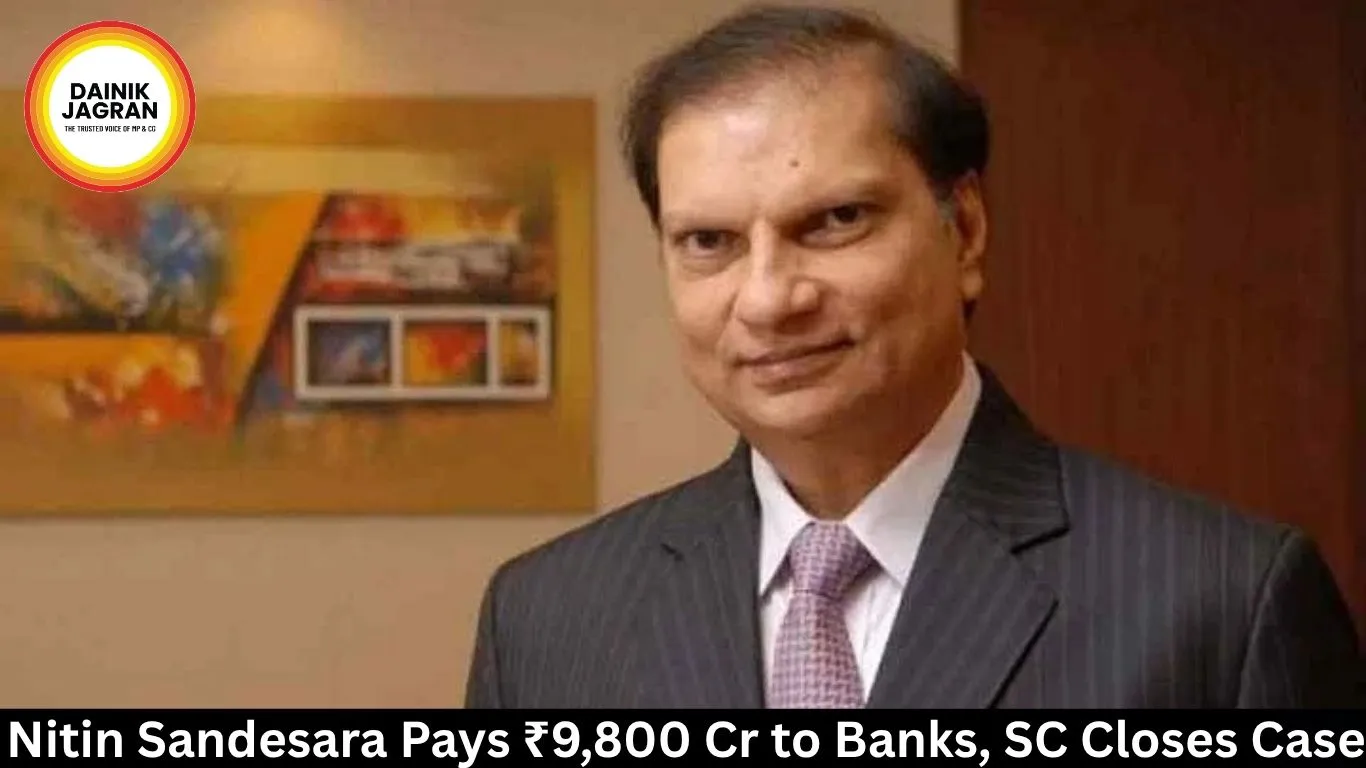
Nitin Sandesara Pays ₹9,800 Cr to Banks, SC Closes Case
Digital Desk
Nitin Sandesara achieves full quietus as Supreme Court closes CBI and ED cases after a record ₹9,800 crore repayment to Indian banks, far exceeding original dues.
Nitin Sandesara repays ₹9,800 crore; Supreme Court closes all proceedings
In a rare NPA resolution, Nitin Sandesara settles dues at 180% of the original reference amount to ensure "complete quietus."
In a landmark development for India’s corporate legal landscape, the Supreme Court has formally closed all proceedings against businessman Nitin J. Sandesara after the total repayment of ₹9,800 crore to creditor banks. The move marks the end of a high-profile pursuit, concluding with a recovery that significantly exceeds the original claims made by financial institutions.
The Bench, comprising Justices J.K. Maheshwari and Vijay Bishnoi, moved to shut the files on cases spearheaded by the Central Bureau of Investigation (CBI), the Enforcement Directorate (ED), and the Serious Fraud Investigation Office (SFIO). The court’s decision follows the successful verification of payments that effectively made every secured lender whole.
Beyond the original debt
The closure of the matter is anchored in a repayment figure that has surprised market observers. While the original reference amount in the case stood at ₹5,383 crore, the final realization for the banking system reached ₹9,800 crore.
This represents nearly 180% of the initial alleged default. Unlike typical Non-Performing Asset (NPA) resolutions where lenders often accept "haircuts" ranging from 50 to 70 percent, this case resulted in banks receiving substantially more than the principal amount contested.
Breakdown of the recovery
According to court filings and compliance reports, the recovery was structured through multiple channels to ensure full transparency. A sum of ₹3,507 crore was paid directly to the consortium of lender banks through various tranches.
An additional ₹1,192 crore was realized through liquidation processes. The single largest component, amounting to ₹5,111 crore, was deposited directly with the Supreme Court registry, as confirmed in a compliance order dated December 17, 2025.
Supreme Court sets precedent
Legal experts tracking the case noted that the Supreme Court described the resolution as a "new and positive standard" for corporate dispute settlements in India. The finality of the order ensures a "complete quietus" to the litigation.
The court's insistence on total accountability was evident during the final stages of the hearing. On April 2, when the Securities and Exchange Board of India (SEBI) sought a ten-day window to finalize its regulatory obligations, the Bench restricted the extension to just seven days.
Closing the final gap
The discipline of the repayment process was highlighted by the precision of the final settlement. By April 10, 2026, the balance remaining was reported as just ₹45,70,522—a marginal figure compared to the thousands of crores already cleared.
This final amount was deposited via a demand draft on April 13, 2026. This meticulous follow-through to the last rupee was a critical factor in the court’s decision to quash all outstanding FIRs and investigative proceedings.
Impact on corporate India
This resolution is expected to have a significant impact on how large-scale corporate defaults are viewed. By choosing to meet the full weight of the financial obligation rather than seeking protracted legal exits, the case offers a template for constructive resolution.
The outcome provides a clean slate for Nitin Sandesara, as the highest judicial authority in the land has now declared the matter settled. For the Indian banking sector, it represents a rare instance where the recovery far outpaced the initial stress on the books.
Future of NPA settlements
As the Indian business world observes this development, the focus shifts to how other stressed assets might be handled. The Sandesara case proves that complex disputes can end with the satisfaction of all stakeholders, including regulators and the judiciary.
With the Supreme Court’s final seal of approval, this chapter in India’s corporate history concludes as a benchmark for accountability. This latest news today serves as a reminder of the potential for the legal system to facilitate total recovery for public interest and national and international news coverage of Indian enterprise.

--------
🚨 Beat the News Rush – Join Now!
Get breaking alerts, hot exclusives, and game-changing stories instantly on your phone. No delays, no fluff – just the edge you need. ⚡
Tap to join:
🟢 WhatsApp Channel: Dainik Jagran MP CG
Crave more?
🅕 Facebook: Dainik Jagran MP CG English
🅧 Twitter (X): Dainik Jagran MP CG
🅘 Instagram: Dainik Jagran MP CG
Share the fire – keep your crew ahead! 🗞️🔥
Nitin Sandesara Pays ₹9,800 Cr to Banks, SC Closes Case
Digital Desk
Nitin Sandesara repays ₹9,800 crore; Supreme Court closes all proceedings
In a rare NPA resolution, Nitin Sandesara settles dues at 180% of the original reference amount to ensure "complete quietus."
In a landmark development for India’s corporate legal landscape, the Supreme Court has formally closed all proceedings against businessman Nitin J. Sandesara after the total repayment of ₹9,800 crore to creditor banks. The move marks the end of a high-profile pursuit, concluding with a recovery that significantly exceeds the original claims made by financial institutions.
The Bench, comprising Justices J.K. Maheshwari and Vijay Bishnoi, moved to shut the files on cases spearheaded by the Central Bureau of Investigation (CBI), the Enforcement Directorate (ED), and the Serious Fraud Investigation Office (SFIO). The court’s decision follows the successful verification of payments that effectively made every secured lender whole.
Beyond the original debt
The closure of the matter is anchored in a repayment figure that has surprised market observers. While the original reference amount in the case stood at ₹5,383 crore, the final realization for the banking system reached ₹9,800 crore.
This represents nearly 180% of the initial alleged default. Unlike typical Non-Performing Asset (NPA) resolutions where lenders often accept "haircuts" ranging from 50 to 70 percent, this case resulted in banks receiving substantially more than the principal amount contested.
Breakdown of the recovery
According to court filings and compliance reports, the recovery was structured through multiple channels to ensure full transparency. A sum of ₹3,507 crore was paid directly to the consortium of lender banks through various tranches.
An additional ₹1,192 crore was realized through liquidation processes. The single largest component, amounting to ₹5,111 crore, was deposited directly with the Supreme Court registry, as confirmed in a compliance order dated December 17, 2025.
Supreme Court sets precedent
Legal experts tracking the case noted that the Supreme Court described the resolution as a "new and positive standard" for corporate dispute settlements in India. The finality of the order ensures a "complete quietus" to the litigation.
The court's insistence on total accountability was evident during the final stages of the hearing. On April 2, when the Securities and Exchange Board of India (SEBI) sought a ten-day window to finalize its regulatory obligations, the Bench restricted the extension to just seven days.
Closing the final gap
The discipline of the repayment process was highlighted by the precision of the final settlement. By April 10, 2026, the balance remaining was reported as just ₹45,70,522—a marginal figure compared to the thousands of crores already cleared.
This final amount was deposited via a demand draft on April 13, 2026. This meticulous follow-through to the last rupee was a critical factor in the court’s decision to quash all outstanding FIRs and investigative proceedings.
Impact on corporate India
This resolution is expected to have a significant impact on how large-scale corporate defaults are viewed. By choosing to meet the full weight of the financial obligation rather than seeking protracted legal exits, the case offers a template for constructive resolution.
The outcome provides a clean slate for Nitin Sandesara, as the highest judicial authority in the land has now declared the matter settled. For the Indian banking sector, it represents a rare instance where the recovery far outpaced the initial stress on the books.
Future of NPA settlements
As the Indian business world observes this development, the focus shifts to how other stressed assets might be handled. The Sandesara case proves that complex disputes can end with the satisfaction of all stakeholders, including regulators and the judiciary.
With the Supreme Court’s final seal of approval, this chapter in India’s corporate history concludes as a benchmark for accountability. This latest news today serves as a reminder of the potential for the legal system to facilitate total recovery for public interest and national and international news coverage of Indian enterprise.


