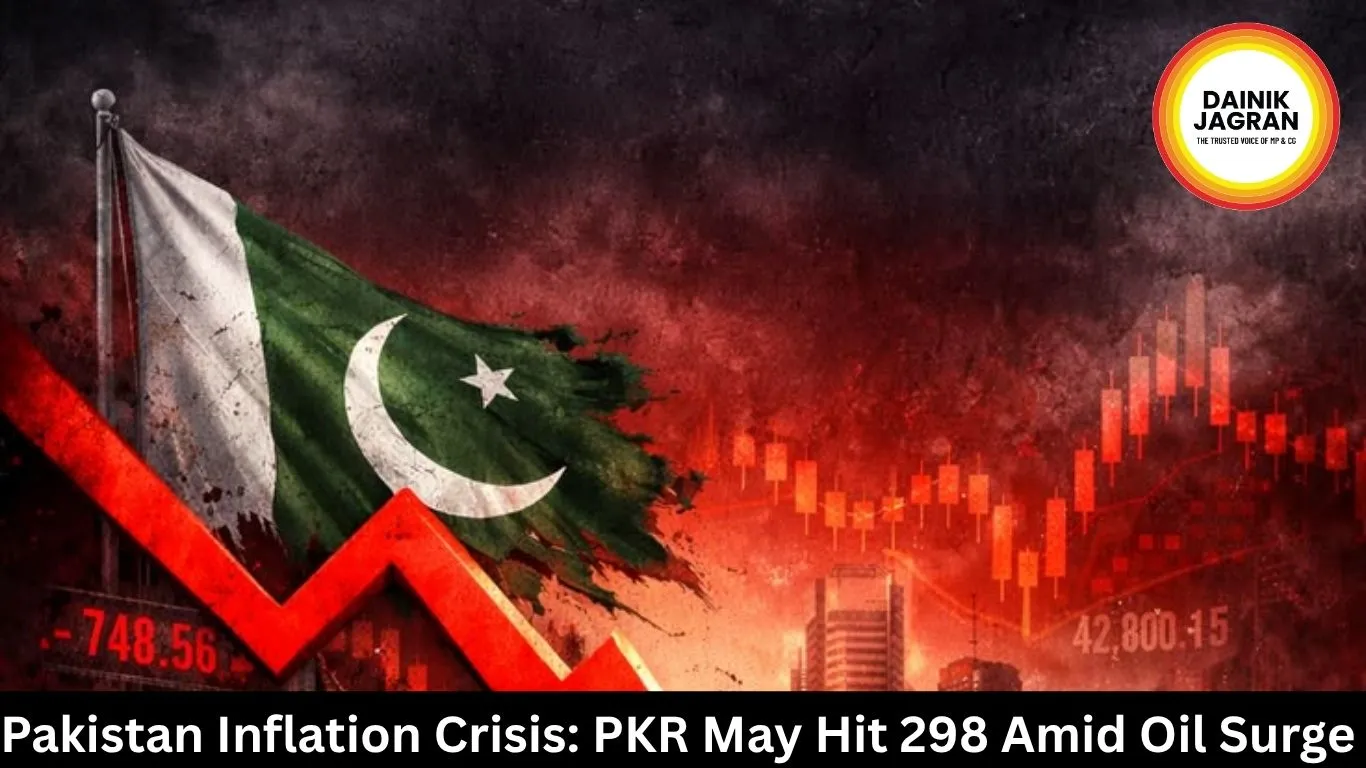
Pakistan Inflation Crisis: PKR May Hit 298 Amid Oil Surge

Digital Desk

Pakistan Inflation Crisis: PKR May Hit 298 Amid Oil Surge

Pakistan's inflation could hit 11% and the Rupee may drop to 298 against the dollar due to the Iran war and rising oil prices, warns a new strategy report.


Pakistan Braces for 11% Inflation as Middle East Conflict Looms

New report warns of a potential currency slide to 298 against the dollar and a significant dent in GDP growth if oil prices breach the $120 mark.

The fragile stability of Pakistan’s economy is facing a fresh set of external threats as escalating tensions in West Asia and a volatile global energy market cast a long shadow over fiscal projections. According to the latest Pakistan Strategy Report released by Topline Securities and cited by local media, the country could see inflation surge back into double digits, potentially hitting 11% if regional instability drives crude oil prices upward.

The fallout of a prolonged conflict involving Iran could be particularly devastating for the Pakistani Rupee (PKR). Analysts suggest that the currency, which has shown relative steadiness recently, could slide to 298 against the US dollar by the 2027 fiscal year. This depreciation, coupled with imported inflation, threatens to undo the minor gains made under recent stabilization programs.

Oil price triggers and CPI spikes

The report highlights a direct correlation between international crude prices and domestic consumer pain. Under the current baseline, inflation is expected to hover between 9% and 10%. However, the fourth quarter of fiscal year 2026 remains a major concern for policymakers.

"Every $10 surge in oil prices is estimated to raise inflation by approximately 50 basis points," the report noted. If Brent crude crosses the $120 per barrel threshold, annual inflation is almost certain to touch 11%. Such a scenario would likely force the State Bank of Pakistan (SBP) to pivot from its current path and hike interest rates to mop up liquidity and defend the currency.

GDP growth outlook slashed

Economic activity is already showing signs of a slowdown. Given the mounting inflationary pressure, researchers have revised Pakistan’s GDP growth forecast for fiscal year 2027 downward. Previously pegged at 4.0%, the growth rate is now expected to struggle within the 2.5% to 3.0% range.

The industrial sector is poised to bear the brunt of this contraction. With energy costs rising and domestic demand weakening, industrial growth—which was previously anticipated to be healthy—could plummet from 4% to a dismal 1%. For the upcoming fiscal year 2026, the growth target remains slightly more optimistic at 3.5-4.0%, though this remains contingent on global commodity price stability.

Widening current account deficit

A major red flag raised in the report concerns the Current Account Deficit (CAD). If the federal government fails to implement stringent import controls, the CAD could balloon to over $8 billion in FY2027. This would place an immense strain on the country’s already lean foreign exchange reserves.

Furthermore, the fiscal deficit for FY2026 is projected at 4.0 to 4.5% of the GDP. These figures are significantly higher than the benchmarks discussed with the International Monetary Fund (IMF), potentially complicating future tranches of financial assistance or the negotiation of new programs.

Energy dependence hits markets

The Pakistan Stock Exchange (PSX) has reflected this unease, emerging as one of the more volatile markets globally. Investors remain jittery over Pakistan’s heavy reliance on energy imports, which account for nearly 85% of its requirements.

With petroleum imports for FY2026 estimated at $15 billion, the massive outflow of dollars continues to be the economy's Achilles' heel. This dependence led to a 15% decline in market performance during the first quarter of the year, as stakeholders reacted to the heightened risks in the Middle East supply chain.

Decline in remittances and exports

On the external front, the news remains grim. Remittances, the lifeblood of Pakistan's foreign exchange earnings, are expected to see a 3.5% dip. Specifically, funds sent home by workers in Gulf Cooperation Council (GCC) countries could drop by as much as 10% if regional instability disrupts employment or economic activity in those nations.

Export earnings are also projected to shrink by 4%. As the PKR prepares for a possible slide toward the 298 mark, the combined effect of reduced inflows and higher import bills suggests a difficult road ahead for the country's economic managers.


 

--------

๐Ÿšจ Beat the News Rush โ€“ Join Now!

Get breaking alerts, hot exclusives, and game-changing stories instantly on your phone. No delays, no fluff โ€“ just the edge you need. โšก

Tap to join:ย 

๐ŸŸข WhatsApp Channel: Dainik Jagran MP CG

Crave more?

๐Ÿ…• Facebook: Dainik Jagran MP CG English

๐Ÿ…ง Twitter (X): Dainik Jagran MP CG

๐Ÿ…˜ Instagram: Dainik Jagran MP CG

Share the fire โ€“ keep your crew ahead! ๐Ÿ—ž๏ธ๐Ÿ”ฅ

english.dainikjagranmpcg.com
04 May 2026 By Danik Jagran English

Pakistan Inflation Crisis: PKR May Hit 298 Amid Oil Surge

Digital Desk

Pakistan Braces for 11% Inflation as Middle East Conflict Looms

New report warns of a potential currency slide to 298 against the dollar and a significant dent in GDP growth if oil prices breach the $120 mark.

The fragile stability of Pakistan’s economy is facing a fresh set of external threats as escalating tensions in West Asia and a volatile global energy market cast a long shadow over fiscal projections. According to the latest Pakistan Strategy Report released by Topline Securities and cited by local media, the country could see inflation surge back into double digits, potentially hitting 11% if regional instability drives crude oil prices upward.

The fallout of a prolonged conflict involving Iran could be particularly devastating for the Pakistani Rupee (PKR). Analysts suggest that the currency, which has shown relative steadiness recently, could slide to 298 against the US dollar by the 2027 fiscal year. This depreciation, coupled with imported inflation, threatens to undo the minor gains made under recent stabilization programs.

Oil price triggers and CPI spikes

The report highlights a direct correlation between international crude prices and domestic consumer pain. Under the current baseline, inflation is expected to hover between 9% and 10%. However, the fourth quarter of fiscal year 2026 remains a major concern for policymakers.

"Every $10 surge in oil prices is estimated to raise inflation by approximately 50 basis points," the report noted. If Brent crude crosses the $120 per barrel threshold, annual inflation is almost certain to touch 11%. Such a scenario would likely force the State Bank of Pakistan (SBP) to pivot from its current path and hike interest rates to mop up liquidity and defend the currency.

GDP growth outlook slashed

Economic activity is already showing signs of a slowdown. Given the mounting inflationary pressure, researchers have revised Pakistan’s GDP growth forecast for fiscal year 2027 downward. Previously pegged at 4.0%, the growth rate is now expected to struggle within the 2.5% to 3.0% range.

The industrial sector is poised to bear the brunt of this contraction. With energy costs rising and domestic demand weakening, industrial growth—which was previously anticipated to be healthy—could plummet from 4% to a dismal 1%. For the upcoming fiscal year 2026, the growth target remains slightly more optimistic at 3.5-4.0%, though this remains contingent on global commodity price stability.

Widening current account deficit

A major red flag raised in the report concerns the Current Account Deficit (CAD). If the federal government fails to implement stringent import controls, the CAD could balloon to over $8 billion in FY2027. This would place an immense strain on the country’s already lean foreign exchange reserves.

Furthermore, the fiscal deficit for FY2026 is projected at 4.0 to 4.5% of the GDP. These figures are significantly higher than the benchmarks discussed with the International Monetary Fund (IMF), potentially complicating future tranches of financial assistance or the negotiation of new programs.

Energy dependence hits markets

The Pakistan Stock Exchange (PSX) has reflected this unease, emerging as one of the more volatile markets globally. Investors remain jittery over Pakistan’s heavy reliance on energy imports, which account for nearly 85% of its requirements.

With petroleum imports for FY2026 estimated at $15 billion, the massive outflow of dollars continues to be the economy's Achilles' heel. This dependence led to a 15% decline in market performance during the first quarter of the year, as stakeholders reacted to the heightened risks in the Middle East supply chain.

Decline in remittances and exports

On the external front, the news remains grim. Remittances, the lifeblood of Pakistan's foreign exchange earnings, are expected to see a 3.5% dip. Specifically, funds sent home by workers in Gulf Cooperation Council (GCC) countries could drop by as much as 10% if regional instability disrupts employment or economic activity in those nations.

Export earnings are also projected to shrink by 4%. As the PKR prepares for a possible slide toward the 298 mark, the combined effect of reduced inflows and higher import bills suggests a difficult road ahead for the country's economic managers.


https://english.dainikjagranmpcg.com/business/pakistan-inflation-crisis-pkr-may-hit-298-amid-oil-surge/article-17758

Latest News

Mahasamund LPG Scam: 2 Food Officers, Gas Agency Operator Arrested Mahasamund LPG Scam: 2 Food Officers, Gas Agency Operator Arrested
Chhattisgarh police arrest District Food Officer Ajay Yadav, Assistant Manish Yadav and Pankaj Chandrakar in Mahasamund LPG gas diversion case...
Balod Road Accident: Three Friends Killed in High-Speed Crash
BJP MLA Porte Blasts Officials at Sushasan Tihaar Balrampur
Korba Disneyland Fair Assault Video Sparks Police Action
Durg Municipal Corp staffer thrashed over religious comments
35 Women From Chhattisgarh Trapped in Jharkhand Nursing Centre
Rewa Youth Suicide After Mumbai Return