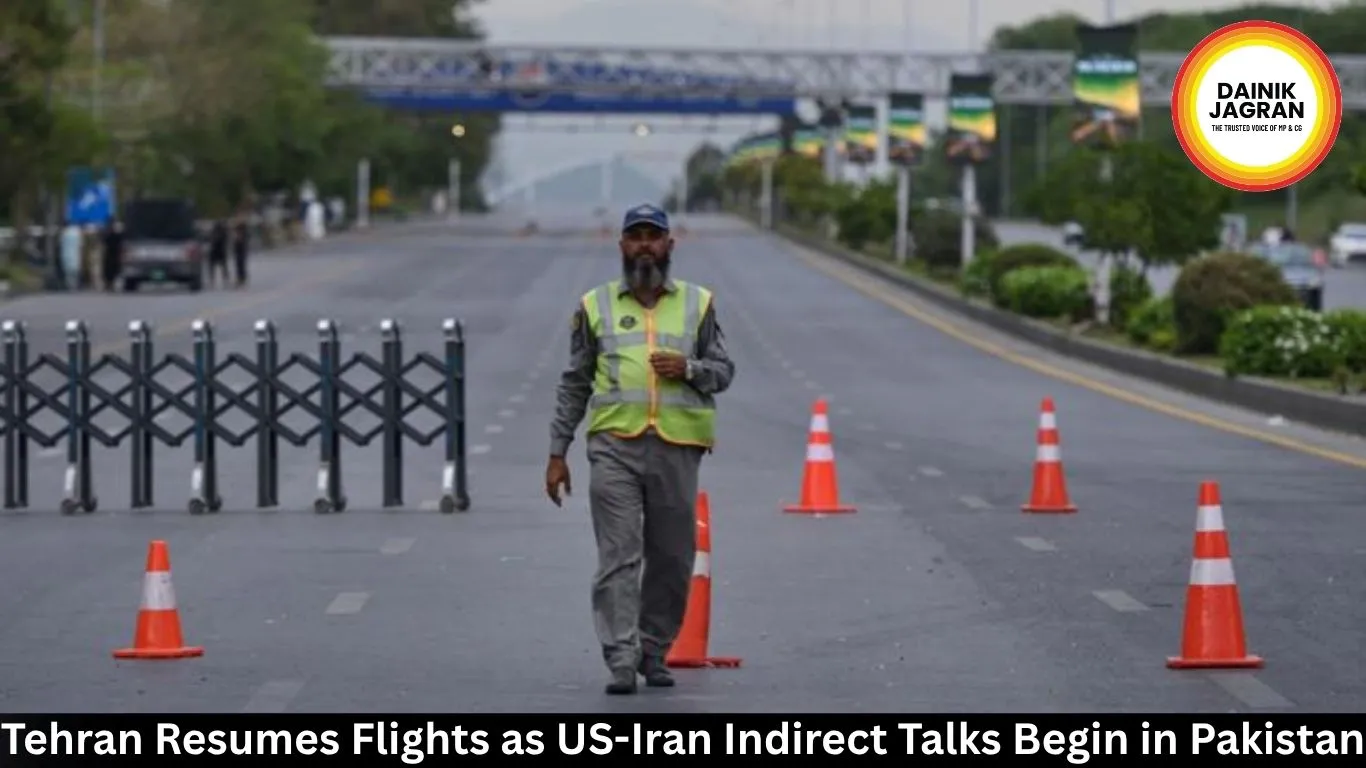
Tehran Resumes Flights as US-Iran Indirect Talks Begin in Pakistan

Digital Desk

Tehran Resumes Flights as US-Iran Indirect Talks Begin in Pakistan

Iran reopens Tehran airport for commercial flights as Pakistan hosts indirect talks between US and Iranian envoys to stabilize the ongoing regional ceasefire.


Tehran Resumes Commercial Flights as Pakistan Brokers Indirect US-Iran Talks

Tehran’s Imam Khomeini International Airport resumed commercial operations on Saturday, marking a significant step towards normalcy as Islamabad hosts a high-stakes diplomatic push to salvage ceasefire negotiations between the United States and Iran.

  In a major development for regional aviation and diplomacy, Iran has reopened its primary international gateway to commercial traffic for the first time since large-scale hostilities with the U.S. and Israel erupted two months ago. The resumption of flights coincides with a critical diplomatic mission in Pakistan, where top officials are attempting to bridge the gap between Tehran and Washington to prevent a return to active combat.

Aviation sector sees partial revival

State-run media in Tehran confirmed that the first batch of commercial flights departed from Imam Khomeini International Airport on Saturday morning. Destinations included Istanbul, Muscat, and Medina, signaling a cautious reopening of Iranian airspace. While the country had partially relaxed air travel restrictions earlier this month, the full resumption of international schedules at the capital's main hub is being viewed as a litmus test for the durability of the current ceasefire.

Pakistan hosts indirect diplomatic efforts

The diplomatic spotlight has shifted to Islamabad, where Iranian Foreign Minister Abbas Araghchi held extensive meetings with Pakistan’s top civil and military leadership. These discussions serve as a precursor to the expected arrival of U.S. envoys Steve Witkoff and Jared Kushner. However, hopes for a historic face-to-face meeting were dampened as Tehran officially ruled out direct negotiations, insisting that all communication be mediated through Pakistani officials.

Energy markets react to developments

The economic stakes of the conflict remain high, primarily due to the continued disruption of the Strait of Hormuz. In response to the volatility, U.S. President Donald Trump has issued a 90-day extension to the Jones Act waiver, aimed at stabilizing global energy prices. Brent crude oil prices showed immediate sensitivity to the news, fluctuating between $103 and $107 per barrel as the maritime blockade on Iranian ports continues to squeeze global supply chains.

Human cost of the conflict

Despite the current pause in fighting, the human toll over the last 60 days has been devastating. Official reports indicate that over 3,375 people have been killed in Iran, while Lebanese authorities have recorded nearly 2,500 fatalities. The conflict has also claimed the lives of 13 U.S. service members and 15 Israeli soldiers. International peacekeeping efforts have not been spared, with UNIFIL reporting the death of an Indonesian peacekeeper this week.

Tensions persist on Lebanese border

While a three-week extension of the ceasefire between Israel and Hezbollah was recently announced, the situation on the ground remains precarious. The Israeli military reported downing a drone over Lebanon today, while Hezbollah claimed to have intercepted an Israeli UAV near Tyre. Prime Minister Benjamin Netanyahu has characterized the truce as a step toward "historic peace," yet evacuation orders in southern Lebanese villages suggest that a full de-escalation is still far off.

Regional security and naval standoffs

The maritime environment remains a flashpoint for potential escalation. While flights have resumed, the U.S. military maintains a strict "shoot and kill" order against small vessels suspected of mine-laying activities in the Persian Gulf. Iran, meanwhile, continues to exert significant control over traffic through the Strait of Hormuz, a waterway essential for a fifth of the world’s oil shipments, keeping global maritime trade in a state of high alert.

Outlook for the Islamabad talks

The success of the "Islamabad Channel" depends heavily on whether the indirect messages carried by Pakistani intermediaries can find common ground on Tehran’s nuclear program and the lifting of blockades. With the ceasefire currently indefinite but fragile, the next 48 hours in the Pakistani capital will likely determine if the region moves toward a formal treaty or slides back into a broader confrontation.

 

--------

🚨 Beat the News Rush – Join Now!

Get breaking alerts, hot exclusives, and game-changing stories instantly on your phone. No delays, no fluff – just the edge you need. ⚡

Tap to join: 

🟢 WhatsApp Channel: Dainik Jagran MP CG

Crave more?

🅕 Facebook: Dainik Jagran MP CG English

🅧 Twitter (X): Dainik Jagran MP CG

🅘 Instagram: Dainik Jagran MP CG

Share the fire – keep your crew ahead! 🗞️🔥

english.dainikjagranmpcg.com
25 Apr 2026 By Abhishek Joshi

Tehran Resumes Flights as US-Iran Indirect Talks Begin in Pakistan

Digital Desk

Tehran Resumes Commercial Flights as Pakistan Brokers Indirect US-Iran Talks

Tehran’s Imam Khomeini International Airport resumed commercial operations on Saturday, marking a significant step towards normalcy as Islamabad hosts a high-stakes diplomatic push to salvage ceasefire negotiations between the United States and Iran.

  In a major development for regional aviation and diplomacy, Iran has reopened its primary international gateway to commercial traffic for the first time since large-scale hostilities with the U.S. and Israel erupted two months ago. The resumption of flights coincides with a critical diplomatic mission in Pakistan, where top officials are attempting to bridge the gap between Tehran and Washington to prevent a return to active combat.

Aviation sector sees partial revival

State-run media in Tehran confirmed that the first batch of commercial flights departed from Imam Khomeini International Airport on Saturday morning. Destinations included Istanbul, Muscat, and Medina, signaling a cautious reopening of Iranian airspace. While the country had partially relaxed air travel restrictions earlier this month, the full resumption of international schedules at the capital's main hub is being viewed as a litmus test for the durability of the current ceasefire.

Pakistan hosts indirect diplomatic efforts

The diplomatic spotlight has shifted to Islamabad, where Iranian Foreign Minister Abbas Araghchi held extensive meetings with Pakistan’s top civil and military leadership. These discussions serve as a precursor to the expected arrival of U.S. envoys Steve Witkoff and Jared Kushner. However, hopes for a historic face-to-face meeting were dampened as Tehran officially ruled out direct negotiations, insisting that all communication be mediated through Pakistani officials.

Energy markets react to developments

The economic stakes of the conflict remain high, primarily due to the continued disruption of the Strait of Hormuz. In response to the volatility, U.S. President Donald Trump has issued a 90-day extension to the Jones Act waiver, aimed at stabilizing global energy prices. Brent crude oil prices showed immediate sensitivity to the news, fluctuating between $103 and $107 per barrel as the maritime blockade on Iranian ports continues to squeeze global supply chains.

Human cost of the conflict

Despite the current pause in fighting, the human toll over the last 60 days has been devastating. Official reports indicate that over 3,375 people have been killed in Iran, while Lebanese authorities have recorded nearly 2,500 fatalities. The conflict has also claimed the lives of 13 U.S. service members and 15 Israeli soldiers. International peacekeeping efforts have not been spared, with UNIFIL reporting the death of an Indonesian peacekeeper this week.

Tensions persist on Lebanese border

While a three-week extension of the ceasefire between Israel and Hezbollah was recently announced, the situation on the ground remains precarious. The Israeli military reported downing a drone over Lebanon today, while Hezbollah claimed to have intercepted an Israeli UAV near Tyre. Prime Minister Benjamin Netanyahu has characterized the truce as a step toward "historic peace," yet evacuation orders in southern Lebanese villages suggest that a full de-escalation is still far off.

Regional security and naval standoffs

The maritime environment remains a flashpoint for potential escalation. While flights have resumed, the U.S. military maintains a strict "shoot and kill" order against small vessels suspected of mine-laying activities in the Persian Gulf. Iran, meanwhile, continues to exert significant control over traffic through the Strait of Hormuz, a waterway essential for a fifth of the world’s oil shipments, keeping global maritime trade in a state of high alert.

Outlook for the Islamabad talks

The success of the "Islamabad Channel" depends heavily on whether the indirect messages carried by Pakistani intermediaries can find common ground on Tehran’s nuclear program and the lifting of blockades. With the ceasefire currently indefinite but fragile, the next 48 hours in the Pakistani capital will likely determine if the region moves toward a formal treaty or slides back into a broader confrontation.

 

https://english.dainikjagranmpcg.com/international/tehran-resumes-flights-as-us-iran-indirect-talks-begin-in-pakistan/article-17362

Latest News