


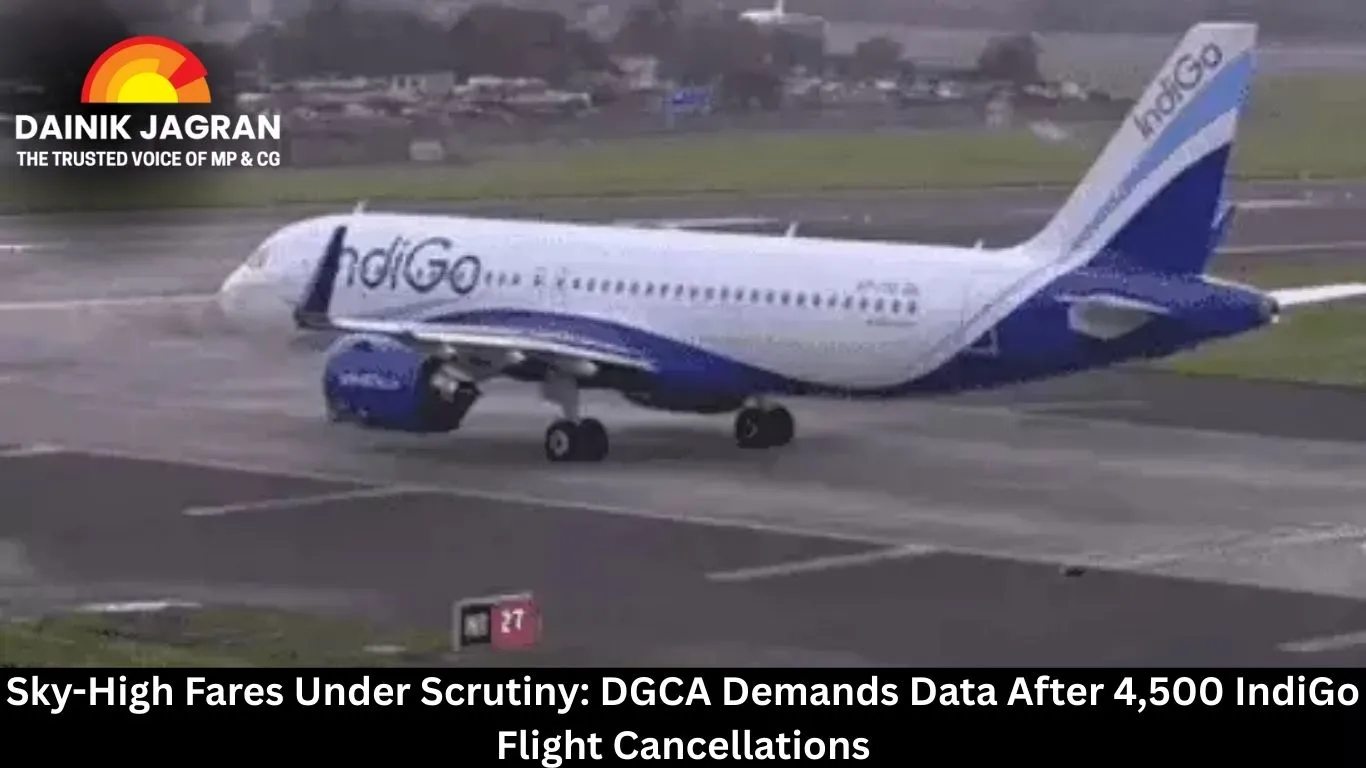
Sky-High Fares Under Scrutiny: DGCA Demands Data After 4,500 IndiGo Flight Cancellations
Digital Desk
The Indian aviation sector is facing intense regulatory heat as the government begins a deep dive into the pricing strategies of domestic carriers. The Directorate General of Civil Aviation (DGCA) has officially asked airlines—including Air India, SpiceJet, and Akasa Air—to submit comprehensive details of average airfares charged during the first half of December.
This DGCA airfare investigation is a direct response to the chaos triggered by IndiGo flight cancellations, which saw nearly 4,500 flights grounded last month, leaving passengers at the mercy of skyrocketing ticket prices.
The December Meltdown: Why Fares Surged
The crisis peaked in early December when IndiGo, which commands a massive 63-65% market share, struggled to implement the revised Flight Duty Time Limitation (FDTL) rules. These safety-focused norms, mandated by the DGCA, require longer rest periods for pilots and stricter limits on night landings.
While intended to reduce pilot fatigue, the transition led to an acute crew shortage. IndiGo’s high-utilization model—which relies on back-to-back rotations—buckled under the new constraints, leading to:
-
4,500+ cancellations in a single month.
-
Last-minute surges, with some domestic tickets reportedly hitting ₹80,000.
-
Stranded passengers forced to book alternative flights at "predatory" rates.
CCI Probe: Is Market Dominance Being Misused?
Beyond safety audits, the CCI market dominance probe has now taken center stage. The Competition Commission of India is investigating whether IndiGo leveraged its "dominant position" to unfairly hike prices or create artificial scarcity during the meltdown. Under Section 4 of the Competition Act, companies are prohibited from using their market power to exploit consumers—a charge the airline could face if the data shows opportunistic pricing.
A Turbulent Outlook for Airlines
The financial impact isn't limited to fines. According to rating agency ICRA, India aviation sector losses are projected to widen significantly to ₹17,000–18,000 crore for FY26. This is a sharp jump from previous estimates of ₹10,500 crore, attributed to:
-
Massive passenger refunds and operational disruptions.
-
Weakened travel sentiment following the December chaos.
-
Rising Aviation Turbine Fuel (ATF) prices and rupee depreciation.
What This Means for You: Is an Airfare Cap Coming?
The government has already experimented with temporary "distance-based" fare caps (ranging from ₹7,500 to ₹18,000 depending on the route) to protect travelers during the peak of the crisis.
While Aviation Minister K. Rammohan Naidu maintains that a deregulated market is healthier for growth, the current DGCA airfare investigation suggests that "extraordinary circumstances" may lead to more permanent price-monitoring mechanisms. For now, IndiGo is reportedly accelerating its pilot hiring to prevent a repeat of the December disaster.
.jpg)




