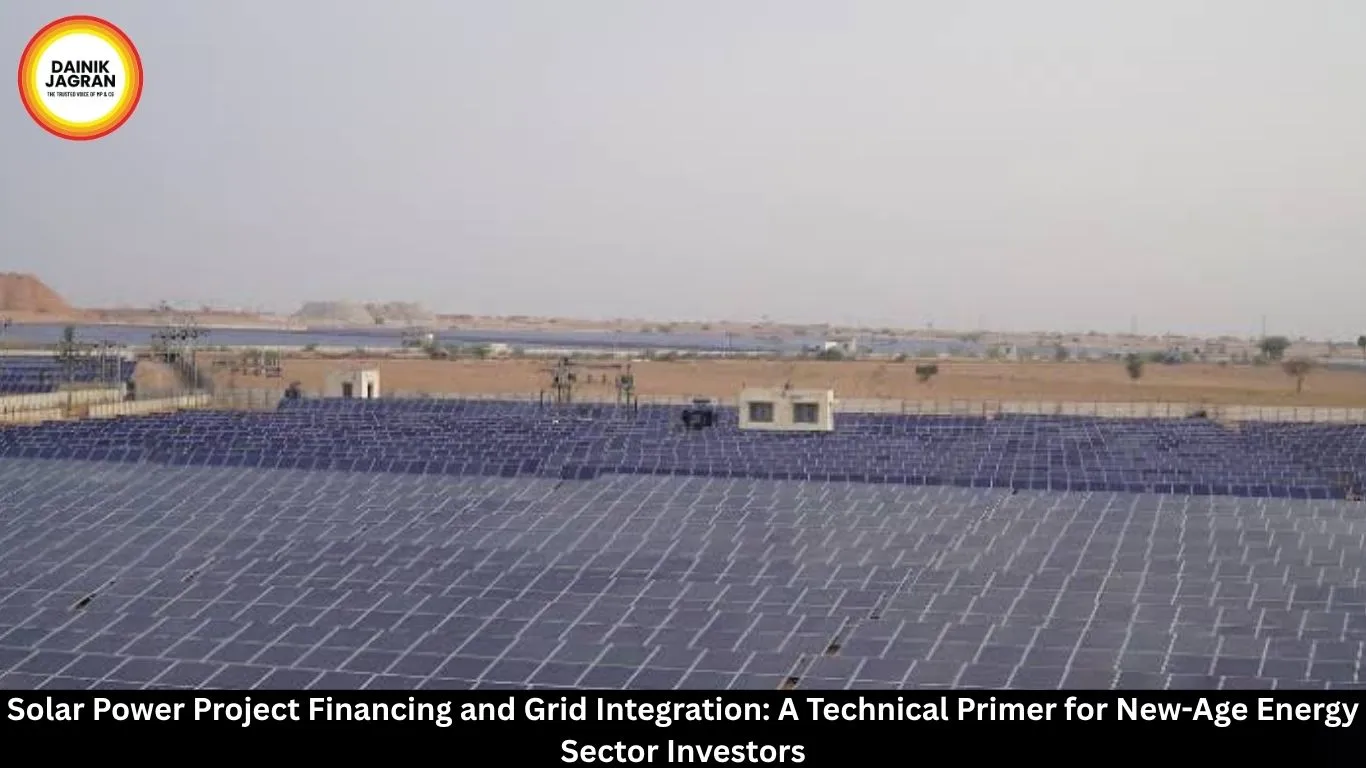
Solar Power Project Financing and Grid Integration: A Technical Primer for New-Age Energy Sector Investors

Digital Desk

Solar Power Project Financing and Grid Integration: A Technical Primer for New-Age Energy Sector Investors

Renewable energy financing has grown into a specialized area of India's capital markets, and continued interest around the Juniper Green IPO offers a timely opportunity to explore how solar and wind project financing actually works, along with the practical mechanics investors should understand while tracking demand through the bidding process.

The Capital Structure Behind Renewable Projects

Renewable energy projects typically require financing structures quite different from conventional business borrowing, shaped by their predictable but long-duration cash flow characteristics:

  • Non-recourse project financing, isolating lender risk to specific project assets and cash flows
  • Debt service coverage ratios, calculated against contracted power sale revenue
  • Long-tenure loan structures, often matching the fifteen to twenty-five year contract periods
  • Refinancing opportunities, allowing companies to optimize borrowing costs once projects stabilize

This financing approach allows renewable energy companies to fund capital-intensive projects while limiting risk exposure across their broader corporate balance sheet.

Grid Connectivity as a Critical Success Factor

Beyond generating electricity, renewable energy projects depend entirely on functional grid infrastructure to actually deliver that power to buyers:

  1. Transmission line availability, connecting generation sites to the broader grid network
  2. Substation capacity, determining how much power can be evacuated from a given region
  3. Grid stability management, particularly important as renewable penetration increases
  4. Interconnection approval timelines, which can affect overall project commissioning schedules

Projects situated in regions with robust, well-planned transmission infrastructure generally avoid the curtailment and delay issues that sometimes affect renewable capacity in areas where grid development lags behind generation capacity additions.

Power Sale Agreement Structures Worth Understanding

Revenue predictability in renewable energy stems largely from the specific structure of power sale agreements companies secure:

  • Fixed tariff contracts, providing straightforward, predictable revenue per unit generated
  • Escalating tariff structures, gradually increasing rates over the contract tenure
  • Merchant power sales, exposed to open market pricing fluctuations
  • Group captive arrangements, serving specific corporate consumers under specialized regulations

Companies with a higher proportion of long-term fixed or escalating tariff contracts generally offer more predictable financial forecasting compared to those with significant merchant power exposure subject to market volatility.

Technology Selection and Long-Term Performance

The specific equipment and technology choices renewable energy companies make directly influence decades of subsequent generation performance:

  • Solar module technology generation, affecting both efficiency and degradation rates over time
  • Wind turbine capacity ratings, influencing generation output relative to installed capacity
  • Inverter and balance-of-system quality, affecting overall system reliability
  • Predictive maintenance capabilities, increasingly important for optimizing long-term output

Companies investing in proven, high-quality technology often experience lower long-term maintenance costs and more consistent generation output compared to those prioritizing lowest upfront cost over durability.

Environmental and Site-Specific Risk Factors

Renewable energy generation depends fundamentally on natural resource availability, introducing risk considerations distinct from conventional industrial businesses:

  • Solar irradiation variability, affecting year-to-year generation consistency
  • Wind resource assessment accuracy, since actual wind patterns can differ from initial projections
  • Climate change impact considerations, potentially affecting long-term resource availability patterns
  • Land acquisition and environmental clearance risks, affecting project development timelines

Understanding these site-specific and environmental factors helps investors set realistic expectations around generation consistency rather than assuming theoretical capacity projections will always translate directly into actual output.

Tracking Demand Momentum During the Bidding Window

Once a renewable energy offering opens for subscription, market participants often observe how demand builds progressively rather than waiting until the window closes to assess overall interest. This ongoing visibility provides useful context for understanding investor sentiment as the offering approaches its final bidding day.

How to Follow Subscription Progress Effectively

Investors can track demand throughout the bidding period by reviewing the IPO Subscription Status, which typically reflects updated figures across investor categories as each day of bidding progresses. Early subscription trends shouldn't be treated as definitive predictors of final outcomes, since renewable energy offerings, like most public issues, frequently experience significant demand acceleration during the closing day of bidding, sometimes substantially altering overall subscription levels from where they stood earlier in the window.

Comparing Renewable Offerings Against Sector Peers

Given the growing number of renewable energy companies entering public markets, comparative analysis often provides useful evaluation context:

  • Tariff competitiveness, relative to other renewable energy companies' contracted rates
  • Project execution track record, compared against sector peers' commissioning timelines
  • Debt-to-equity positioning, benchmarked against other capital-intensive energy companies
  • Growth pipeline visibility, indicating future capacity addition potential relative to competitors

This comparative approach helps investors understand whether a particular renewable energy offering represents reasonable value relative to the broader sector rather than evaluating it purely in isolation.

Long-Term Considerations for Renewable Energy Holdings

Given the multi-decade operational horizon typical of renewable energy assets, sustainable investment evaluation requires patience extending well beyond initial listing performance, including monitoring capacity addition execution against stated targets, tracking generation efficiency relative to original projections, and observing how effectively companies manage the balance between growth ambition and financial discipline throughout their long-term project lifecycle.


    

--------

🚨 Beat the News Rush – Join Now!

Get breaking alerts, hot exclusives, and game-changing stories instantly on your phone. No delays, no fluff – just the edge you need. ⚡

Tap to join: 

🟢 WhatsApp Channel: Dainik Jagran MP CG

Crave more?

🅕 Facebook: Dainik Jagran MP CG English

🅧 Twitter (X): Dainik Jagran MP CG

🅘 Instagram: Dainik Jagran MP CG

Share the fire – keep your crew ahead! 🗞️🔥

english.dainikjagranmpcg.com
30 Jul 2026 By Danik Jagran English

Solar Power Project Financing and Grid Integration: A Technical Primer for New-Age Energy Sector Investors

Digital Desk

The Capital Structure Behind Renewable Projects

Renewable energy projects typically require financing structures quite different from conventional business borrowing, shaped by their predictable but long-duration cash flow characteristics:

  • Non-recourse project financing, isolating lender risk to specific project assets and cash flows
  • Debt service coverage ratios, calculated against contracted power sale revenue
  • Long-tenure loan structures, often matching the fifteen to twenty-five year contract periods
  • Refinancing opportunities, allowing companies to optimize borrowing costs once projects stabilize

This financing approach allows renewable energy companies to fund capital-intensive projects while limiting risk exposure across their broader corporate balance sheet.

Grid Connectivity as a Critical Success Factor

Beyond generating electricity, renewable energy projects depend entirely on functional grid infrastructure to actually deliver that power to buyers:

  1. Transmission line availability, connecting generation sites to the broader grid network
  2. Substation capacity, determining how much power can be evacuated from a given region
  3. Grid stability management, particularly important as renewable penetration increases
  4. Interconnection approval timelines, which can affect overall project commissioning schedules

Projects situated in regions with robust, well-planned transmission infrastructure generally avoid the curtailment and delay issues that sometimes affect renewable capacity in areas where grid development lags behind generation capacity additions.

Power Sale Agreement Structures Worth Understanding

Revenue predictability in renewable energy stems largely from the specific structure of power sale agreements companies secure:

  • Fixed tariff contracts, providing straightforward, predictable revenue per unit generated
  • Escalating tariff structures, gradually increasing rates over the contract tenure
  • Merchant power sales, exposed to open market pricing fluctuations
  • Group captive arrangements, serving specific corporate consumers under specialized regulations

Companies with a higher proportion of long-term fixed or escalating tariff contracts generally offer more predictable financial forecasting compared to those with significant merchant power exposure subject to market volatility.

Technology Selection and Long-Term Performance

The specific equipment and technology choices renewable energy companies make directly influence decades of subsequent generation performance:

  • Solar module technology generation, affecting both efficiency and degradation rates over time
  • Wind turbine capacity ratings, influencing generation output relative to installed capacity
  • Inverter and balance-of-system quality, affecting overall system reliability
  • Predictive maintenance capabilities, increasingly important for optimizing long-term output

Companies investing in proven, high-quality technology often experience lower long-term maintenance costs and more consistent generation output compared to those prioritizing lowest upfront cost over durability.

Environmental and Site-Specific Risk Factors

Renewable energy generation depends fundamentally on natural resource availability, introducing risk considerations distinct from conventional industrial businesses:

  • Solar irradiation variability, affecting year-to-year generation consistency
  • Wind resource assessment accuracy, since actual wind patterns can differ from initial projections
  • Climate change impact considerations, potentially affecting long-term resource availability patterns
  • Land acquisition and environmental clearance risks, affecting project development timelines

Understanding these site-specific and environmental factors helps investors set realistic expectations around generation consistency rather than assuming theoretical capacity projections will always translate directly into actual output.

Tracking Demand Momentum During the Bidding Window

Once a renewable energy offering opens for subscription, market participants often observe how demand builds progressively rather than waiting until the window closes to assess overall interest. This ongoing visibility provides useful context for understanding investor sentiment as the offering approaches its final bidding day.

How to Follow Subscription Progress Effectively

Investors can track demand throughout the bidding period by reviewing the IPO Subscription Status, which typically reflects updated figures across investor categories as each day of bidding progresses. Early subscription trends shouldn't be treated as definitive predictors of final outcomes, since renewable energy offerings, like most public issues, frequently experience significant demand acceleration during the closing day of bidding, sometimes substantially altering overall subscription levels from where they stood earlier in the window.

Comparing Renewable Offerings Against Sector Peers

Given the growing number of renewable energy companies entering public markets, comparative analysis often provides useful evaluation context:

  • Tariff competitiveness, relative to other renewable energy companies' contracted rates
  • Project execution track record, compared against sector peers' commissioning timelines
  • Debt-to-equity positioning, benchmarked against other capital-intensive energy companies
  • Growth pipeline visibility, indicating future capacity addition potential relative to competitors

This comparative approach helps investors understand whether a particular renewable energy offering represents reasonable value relative to the broader sector rather than evaluating it purely in isolation.

Long-Term Considerations for Renewable Energy Holdings

Given the multi-decade operational horizon typical of renewable energy assets, sustainable investment evaluation requires patience extending well beyond initial listing performance, including monitoring capacity addition execution against stated targets, tracking generation efficiency relative to original projections, and observing how effectively companies manage the balance between growth ambition and financial discipline throughout their long-term project lifecycle.


https://english.dainikjagranmpcg.com/business/solar-power-project-financing-and-grid-integration-a-technical-primer/article-24296
Tags:

Trending News