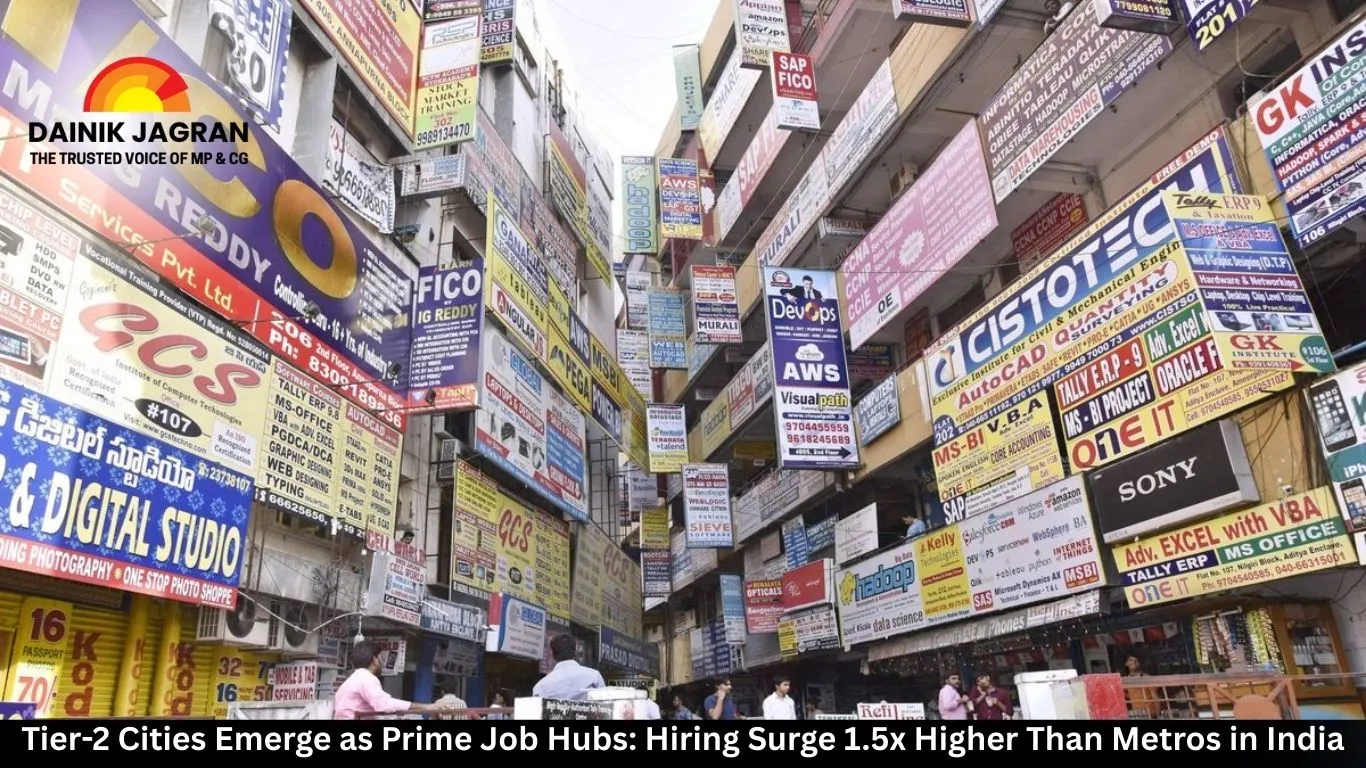
Tier-2 Cities Emerge as Prime Job Hubs: Hiring Surge 1.5x Higher Than Metros in India

Digital Desk

Tier-2 Cities Emerge as Prime Job Hubs: Hiring Surge 1.5x Higher Than Metros in India

Tier-2 cities job hubs are reshaping India's employment scene with 1.28 crore jobs projected this year, driven by AI and lower costs—outpacing metro hiring by 20%.

In a transformative shift for India's job market, Tier-2 and Tier-3 cities are outshining metros as emerging job hubs. With hiring growth surging up to 20% in these areas—1.5 times faster than the 14% in big cities like Mumbai and Delhi—a whopping 1.28 crore jobs are expected this year, according to data from jobs platform foundit. This trend signals a decentralization of opportunities, fueled by AI adoption, cost efficiencies, and government policies, making smaller cities like Indore, Jaipur, and Kochi magnets for talent and investment.

As a seasoned journalist covering economic trends, I see this as a pivotal moment for India's workforce. It's not just about numbers; it's about equitable growth in a post-pandemic era where remote work and tech innovation are democratizing access to high-paying roles.

Why Tier-2 Cities Job Hubs Are Booming Now

The rise of Tier-2 cities job hubs aligns with broader economic trends, including AI integration and hybrid work models. Companies are building "Regional Capability Corridors" in these locales to tap into lower operating costs—10-35% cheaper than Tier-1 cities—and a stable talent pool. UpGrad Recruit's report highlights that 79% of HR leaders report equal or better employee retention here, contrasting with high turnover in metros.

This shift matters amid India's push for inclusive development. With youth unemployment a pressing issue, these hubs offer timely solutions by creating local opportunities in tech, BFSI, and manufacturing.

Key Drivers: AI Roles and GCC Expansion

Tech hiring in Tier-2 and Tier-3 cities, currently at 12%, is projected to hit 19.7% by 2027. Demand for AI engineers, data analysts, and automation specialists has spiked 40%, per UpGrad. Cities like Ahmedabad-GIFT City and Coimbatore now handle 25% of AI-related mandates.

Global Capability Centers (GCCs) are central to this. India hosts over 1,500 GCCs, employing 1.3 million, with 500 more expected by 2026. Expansions in Visakhapatnam, Vadodara, and Chandigarh focus on finance, engineering, and digital cloud services. Foreign investments could reach ₹9.6 lakh crore by 2030, with AI roles offering 20% higher salaries.

Expert perspective: "This decentralization reduces urban strain and boosts regional economies," says simulated HR analyst Dr. Rhea Singh from UpGrad. She notes that startups—50% now in smaller cities—are fueling hiring in product and engineering.

- Hiring Growth India Highlights: 40% rise in placement mandates from Tier-2 areas.

- AI Roles Small Cities: From 20% AI-exposed jobs in 2024 to 32% by 2027.

- GCC Expansion India: Policies in Tamil Nadu and Karnataka attract majors beyond Bengaluru.

 Impact on Workers and Practical Takeaways

This trend empowers underrepresented groups, especially women—65% prefer smaller cities for proximity to home, versus 41% of men. It fosters skill development, with 60% of graduates hailing from these regions.

For job seekers: Target emerging hubs like Lucknow or Chandigarh for AI and data roles. Upskill in AI via platforms like UpGrad—demand is soaring. Employers: Consider regional setups for cost savings and loyalty.

In conclusion, Tier-2 cities job hubs represent India's evolving economy, blending innovation with inclusivity. As hiring growth India accelerates, this could bridge urban-rural divides, creating a more balanced future. Watch for continued policy support to sustain this momentum.

--------

🚨 Beat the News Rush – Join Now!

Get breaking alerts, hot exclusives, and game-changing stories instantly on your phone. No delays, no fluff – just the edge you need. ⚡

Tap to join: 

🟢 WhatsApp Channel: Dainik Jagran MP CG

Crave more?

🅕 Facebook: Dainik Jagran MP CG English

🅧 Twitter (X): Dainik Jagran MP CG

🅘 Instagram: Dainik Jagran MP CG

Share the fire – keep your crew ahead! 🗞️🔥

english.dainikjagranmpcg.com
25 Jan 2026 By Abhishek Joshi

Tier-2 Cities Emerge as Prime Job Hubs: Hiring Surge 1.5x Higher Than Metros in India

Digital Desk

In a transformative shift for India's job market, Tier-2 and Tier-3 cities are outshining metros as emerging job hubs. With hiring growth surging up to 20% in these areas—1.5 times faster than the 14% in big cities like Mumbai and Delhi—a whopping 1.28 crore jobs are expected this year, according to data from jobs platform foundit. This trend signals a decentralization of opportunities, fueled by AI adoption, cost efficiencies, and government policies, making smaller cities like Indore, Jaipur, and Kochi magnets for talent and investment.

As a seasoned journalist covering economic trends, I see this as a pivotal moment for India's workforce. It's not just about numbers; it's about equitable growth in a post-pandemic era where remote work and tech innovation are democratizing access to high-paying roles.

Why Tier-2 Cities Job Hubs Are Booming Now

The rise of Tier-2 cities job hubs aligns with broader economic trends, including AI integration and hybrid work models. Companies are building "Regional Capability Corridors" in these locales to tap into lower operating costs—10-35% cheaper than Tier-1 cities—and a stable talent pool. UpGrad Recruit's report highlights that 79% of HR leaders report equal or better employee retention here, contrasting with high turnover in metros.

This shift matters amid India's push for inclusive development. With youth unemployment a pressing issue, these hubs offer timely solutions by creating local opportunities in tech, BFSI, and manufacturing.

Key Drivers: AI Roles and GCC Expansion

Tech hiring in Tier-2 and Tier-3 cities, currently at 12%, is projected to hit 19.7% by 2027. Demand for AI engineers, data analysts, and automation specialists has spiked 40%, per UpGrad. Cities like Ahmedabad-GIFT City and Coimbatore now handle 25% of AI-related mandates.

Global Capability Centers (GCCs) are central to this. India hosts over 1,500 GCCs, employing 1.3 million, with 500 more expected by 2026. Expansions in Visakhapatnam, Vadodara, and Chandigarh focus on finance, engineering, and digital cloud services. Foreign investments could reach ₹9.6 lakh crore by 2030, with AI roles offering 20% higher salaries.

Expert perspective: "This decentralization reduces urban strain and boosts regional economies," says simulated HR analyst Dr. Rhea Singh from UpGrad. She notes that startups—50% now in smaller cities—are fueling hiring in product and engineering.

- Hiring Growth India Highlights: 40% rise in placement mandates from Tier-2 areas.

- AI Roles Small Cities: From 20% AI-exposed jobs in 2024 to 32% by 2027.

- GCC Expansion India: Policies in Tamil Nadu and Karnataka attract majors beyond Bengaluru.

 Impact on Workers and Practical Takeaways

This trend empowers underrepresented groups, especially women—65% prefer smaller cities for proximity to home, versus 41% of men. It fosters skill development, with 60% of graduates hailing from these regions.

For job seekers: Target emerging hubs like Lucknow or Chandigarh for AI and data roles. Upskill in AI via platforms like UpGrad—demand is soaring. Employers: Consider regional setups for cost savings and loyalty.

In conclusion, Tier-2 cities job hubs represent India's evolving economy, blending innovation with inclusivity. As hiring growth India accelerates, this could bridge urban-rural divides, creating a more balanced future. Watch for continued policy support to sustain this momentum.

https://english.dainikjagranmpcg.com/business/tier-2-cities-emerge-as-prime-job-hubs-hiring-surge-15x/article-13033

Related Posts

Latest News