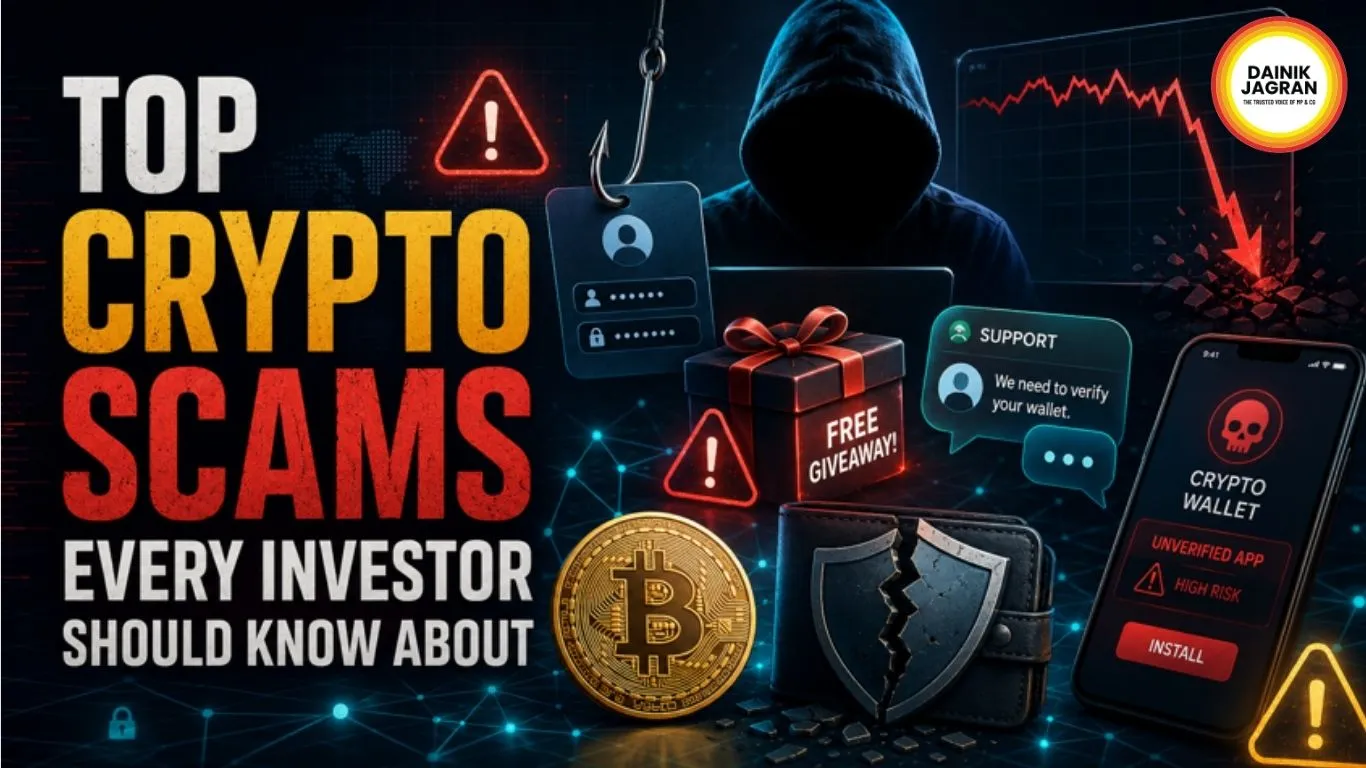
Top Crypto Scams Every Investor Should Know About

Digital Desk

Top Crypto Scams Every Investor Should Know About

Crypto trading offers real opportunities, but it also attracts scammers because transactions can be fast, global, and difficult to reverse. A trader may focus on Bitcoin, Ethereum, Solana, XRP, spot trading, futures trading, or a funded trading account, but one mistake outside the chart can still damage capital.

Good risk management is not only about stop loss, position sizing, drawdown, or leverage. It also means knowing which platforms, links, wallets, offers, and promises should not be trusted.

 Why Crypto Scams Are Common

Crypto scams work because they target emotions. Scammers understand greed, fear, FOMO, impatience, and overconfidence. They know many traders want fast profit, early entry, secret signals, or guaranteed returns.

A scam may look professional. It can have a clean website, fake dashboard, fake testimonials, Telegram support, trading screenshots, and even small successful withdrawals in the beginning. The goal is to make investors deposit more money before the scam becomes obvious.

The FTC warns that scammers often impersonate businesses or promote fake crypto coins, tokens, and investment opportunities using websites, ads, or social media content.

 1. Fake Crypto Trading Platforms

Fake trading platforms are one of the most dangerous crypto scams. They show fake profits on a dashboard and make users believe their Bitcoin or USDT balance is growing. At first, the platform may allow a small withdrawal to build trust. Later, when the investor deposits more, withdrawals get blocked. The platform may ask for extra money as tax, verification fee, wallet unlock charge, or withdrawal fee.

A serious red flag is simple: if a platform asks you to deposit more money before withdrawing your own funds, stop immediately.

2. Pig Butchering Scams

Pig butchering scams start with trust. The scammer may connect through dating apps, WhatsApp, Telegram, Instagram, LinkedIn, or a random “wrong number” message. They slowly build a relationship and then introduce a crypto investment opportunity. The victim is guided to a fake trading platform where profits look real. Once a large amount is deposited, withdrawal problems begin.

This scam is dangerous because it does not feel like a scam at first. It feels like friendship, mentorship, romance, or business networking.

3. Pump-and-Dump Groups

Pump-and-dump scams usually happen in low-liquidity coins. A group buys a token early, creates hype on Telegram, Discord, X, or YouTube, and then sells when retail traders enter. The chart may show a sudden green candle, but that does not mean the project is strong. Many late buyers become exit liquidity for insiders.

For traders, this is where trading psychology matters. If you enter only because everyone is saying “buy now,” that is not a trading strategy. It is FOMO.

4. Fake Airdrops and Wallet Drainers

Fake airdrops promise free tokens but ask users to connect their crypto wallet to a fake website. Once connected, the user may approve a malicious smart contract. That approval can allow scammers to drain tokens from the wallet. These scams often copy real blockchain projects, exchanges, NFT collections, or DeFi platforms. The website may look almost real, with only a small spelling difference in the domain.

Never connect your main wallet to unknown websites. Use a separate wallet for testing, and never approve transactions you do not understand.

5. Phishing Links and Fake Support

Phishing scams try to steal your login details, private key, seed phrase, or two-factor authentication code. A fake support account may message you after you post about a wallet issue. A fake email may say your account will be suspended. A fake exchange page may ask you to log in again.

No genuine wallet, exchange, prop firm, or support team should ask for your seed phrase. If someone asks for it, treat it as a scam.

6. Rug Pulls and Fake Token Launches

A rug pull happens when token creators attract investors and then disappear, remove liquidity, or manipulate the token contract. Many rug pulls look professional at the start. They may have a roadmap, website, social media campaign, influencer promotion, and fake community activity. But if liquidity is weak, the team is anonymous, or a few wallets hold most of the supply, risk is high.

Before buying a new token, check liquidity, holder distribution, contract risk, team background, and whether selling is possible.     

7. Guaranteed Return Schemes

Any crypto offer that promises fixed daily or monthly returns should be treated carefully. Scammers often use phrases like “AI trading bot,” “guaranteed profit,” “no loss strategy,” “double your crypto,” or “daily passive income.” Real crypto trading involves volatility, losses, drawdown, and risk. No real trading strategy can guarantee profit every day.

The CFTC has warned about digital asset scams where fraudsters promote crypto trading systems, mining farms, or advisory businesses while promising high guaranteed returns with little or no risk.

8. Fake Prop Firms and Funded Account Scams

Prop trading and funded trading are popular because traders want access to larger capital. But scammers also use this demand to create fake prop firm offers. A genuine funded trader program should clearly explain profit target, daily drawdown, maximum drawdown, payout rules, account breach conditions, and risk management requirements.

Be careful with platforms that promise guaranteed passing, instant huge payouts, no rules, or “we will pass your funded trading challenge for you.” In real proprietary trading, the trader must show discipline, not shortcuts.

9. Fake Recovery Services

Recovery scams target people who have already lost money. The scammer claims they can recover stolen Bitcoin, Ethereum, USDT, or wallet funds for an upfront fee. They may pretend to be hackers, lawyers, blockchain experts, or government agents. In most cases, they take more money from someone who is already stressed.

If you lose funds, report through official channels, contact the exchange if relevant, and avoid anyone promising guaranteed recovery for crypto payment.

How Traders Can Protect Themselves

The best protection is a simple verification habit.

Do not trust screenshots. Test withdrawals before depositing larger funds. Never share private keys or seed phrases. Avoid unknown wallet links. Do not chase pump groups. Use separate wallets for trading, holding, and testing DeFi platforms. For funded traders and prop traders, scam protection is part of capital preservation. A trader may manage position sizing and stop loss well, but still lose money by trusting a fake platform, fake signal group, or fake wallet link.

Crypto rewards patience. Scams reward impulsive decisions. Before entering any opportunity, ask one question: “Do I understand the risk, or am I only reacting to excitement?”

How to Verify a Legitimate Prop Firm Before Joining

With the growing popularity of funded trading accounts, traders should carefully verify any prop firm before starting a trading challenge. A legitimate prop trading firm should provide clear information about its evaluation process, trading rules, drawdown limits, payout structure, and risk management requirements.

For example, traders evaluating platforms like Tradescape should review the available information about the funded trader program, understand the challenge rules, and make decisions based on transparency rather than unrealistic promises. Unlike scam platforms that attract users with guaranteed profits, fake payouts, or unclear conditions, genuine prop firms focus on structured evaluations, trader discipline, and defined risk parameters.

Before joining any prop firm, traders should always verify important details such as company information, terms and conditions, support channels, payout policies, and trading restrictions. A transparent approach helps traders separate legitimate funded trading opportunities from fraudulent schemes.

 Key Takeaway

Crypto scams are not always obvious. Fake platforms, pig butchering scams, pump-and-dumps, phishing links, wallet drainers, rug pulls, guaranteed return schemes, and fake prop firms all use the same weakness: emotional decision-making. The safest traders do not only study charts. They verify platforms, protect wallets, control leverage, manage drawdown, and avoid offers that sound too good to be true.

In crypto trading, protecting capital is the first skill. Profit comes later.

--------

🚨 Beat the News Rush – Join Now!

Get breaking alerts, hot exclusives, and game-changing stories instantly on your phone. No delays, no fluff – just the edge you need. ⚡

Tap to join: 

🟢 WhatsApp Channel: Dainik Jagran MP CG

Crave more?

🅕 Facebook: Dainik Jagran MP CG English

🅧 Twitter (X): Dainik Jagran MP CG

🅘 Instagram: Dainik Jagran MP CG

Share the fire – keep your crew ahead! 🗞️🔥

english.dainikjagranmpcg.com
20 Jul 2026 By Danik Jagran English

Top Crypto Scams Every Investor Should Know About

Digital Desk

Crypto trading offers real opportunities, but it also attracts scammers because transactions can be fast, global, and difficult to reverse. A trader may focus on Bitcoin, Ethereum, Solana, XRP, spot trading, futures trading, or a funded trading account, but one mistake outside the chart can still damage capital.

Good risk management is not only about stop loss, position sizing, drawdown, or leverage. It also means knowing which platforms, links, wallets, offers, and promises should not be trusted.

 Why Crypto Scams Are Common

Crypto scams work because they target emotions. Scammers understand greed, fear, FOMO, impatience, and overconfidence. They know many traders want fast profit, early entry, secret signals, or guaranteed returns.

A scam may look professional. It can have a clean website, fake dashboard, fake testimonials, Telegram support, trading screenshots, and even small successful withdrawals in the beginning. The goal is to make investors deposit more money before the scam becomes obvious.

The FTC warns that scammers often impersonate businesses or promote fake crypto coins, tokens, and investment opportunities using websites, ads, or social media content.

 1. Fake Crypto Trading Platforms

Fake trading platforms are one of the most dangerous crypto scams. They show fake profits on a dashboard and make users believe their Bitcoin or USDT balance is growing. At first, the platform may allow a small withdrawal to build trust. Later, when the investor deposits more, withdrawals get blocked. The platform may ask for extra money as tax, verification fee, wallet unlock charge, or withdrawal fee.

A serious red flag is simple: if a platform asks you to deposit more money before withdrawing your own funds, stop immediately.

2. Pig Butchering Scams

Pig butchering scams start with trust. The scammer may connect through dating apps, WhatsApp, Telegram, Instagram, LinkedIn, or a random “wrong number” message. They slowly build a relationship and then introduce a crypto investment opportunity. The victim is guided to a fake trading platform where profits look real. Once a large amount is deposited, withdrawal problems begin.

This scam is dangerous because it does not feel like a scam at first. It feels like friendship, mentorship, romance, or business networking.

3. Pump-and-Dump Groups

Pump-and-dump scams usually happen in low-liquidity coins. A group buys a token early, creates hype on Telegram, Discord, X, or YouTube, and then sells when retail traders enter. The chart may show a sudden green candle, but that does not mean the project is strong. Many late buyers become exit liquidity for insiders.

For traders, this is where trading psychology matters. If you enter only because everyone is saying “buy now,” that is not a trading strategy. It is FOMO.

4. Fake Airdrops and Wallet Drainers

Fake airdrops promise free tokens but ask users to connect their crypto wallet to a fake website. Once connected, the user may approve a malicious smart contract. That approval can allow scammers to drain tokens from the wallet. These scams often copy real blockchain projects, exchanges, NFT collections, or DeFi platforms. The website may look almost real, with only a small spelling difference in the domain.

Never connect your main wallet to unknown websites. Use a separate wallet for testing, and never approve transactions you do not understand.

5. Phishing Links and Fake Support

Phishing scams try to steal your login details, private key, seed phrase, or two-factor authentication code. A fake support account may message you after you post about a wallet issue. A fake email may say your account will be suspended. A fake exchange page may ask you to log in again.

No genuine wallet, exchange, prop firm, or support team should ask for your seed phrase. If someone asks for it, treat it as a scam.

6. Rug Pulls and Fake Token Launches

A rug pull happens when token creators attract investors and then disappear, remove liquidity, or manipulate the token contract. Many rug pulls look professional at the start. They may have a roadmap, website, social media campaign, influencer promotion, and fake community activity. But if liquidity is weak, the team is anonymous, or a few wallets hold most of the supply, risk is high.

Before buying a new token, check liquidity, holder distribution, contract risk, team background, and whether selling is possible.     

7. Guaranteed Return Schemes

Any crypto offer that promises fixed daily or monthly returns should be treated carefully. Scammers often use phrases like “AI trading bot,” “guaranteed profit,” “no loss strategy,” “double your crypto,” or “daily passive income.” Real crypto trading involves volatility, losses, drawdown, and risk. No real trading strategy can guarantee profit every day.

The CFTC has warned about digital asset scams where fraudsters promote crypto trading systems, mining farms, or advisory businesses while promising high guaranteed returns with little or no risk.

8. Fake Prop Firms and Funded Account Scams

Prop trading and funded trading are popular because traders want access to larger capital. But scammers also use this demand to create fake prop firm offers. A genuine funded trader program should clearly explain profit target, daily drawdown, maximum drawdown, payout rules, account breach conditions, and risk management requirements.

Be careful with platforms that promise guaranteed passing, instant huge payouts, no rules, or “we will pass your funded trading challenge for you.” In real proprietary trading, the trader must show discipline, not shortcuts.

9. Fake Recovery Services

Recovery scams target people who have already lost money. The scammer claims they can recover stolen Bitcoin, Ethereum, USDT, or wallet funds for an upfront fee. They may pretend to be hackers, lawyers, blockchain experts, or government agents. In most cases, they take more money from someone who is already stressed.

If you lose funds, report through official channels, contact the exchange if relevant, and avoid anyone promising guaranteed recovery for crypto payment.

How Traders Can Protect Themselves

The best protection is a simple verification habit.

Do not trust screenshots. Test withdrawals before depositing larger funds. Never share private keys or seed phrases. Avoid unknown wallet links. Do not chase pump groups. Use separate wallets for trading, holding, and testing DeFi platforms. For funded traders and prop traders, scam protection is part of capital preservation. A trader may manage position sizing and stop loss well, but still lose money by trusting a fake platform, fake signal group, or fake wallet link.

Crypto rewards patience. Scams reward impulsive decisions. Before entering any opportunity, ask one question: “Do I understand the risk, or am I only reacting to excitement?”

How to Verify a Legitimate Prop Firm Before Joining

With the growing popularity of funded trading accounts, traders should carefully verify any prop firm before starting a trading challenge. A legitimate prop trading firm should provide clear information about its evaluation process, trading rules, drawdown limits, payout structure, and risk management requirements.

For example, traders evaluating platforms like Tradescape should review the available information about the funded trader program, understand the challenge rules, and make decisions based on transparency rather than unrealistic promises. Unlike scam platforms that attract users with guaranteed profits, fake payouts, or unclear conditions, genuine prop firms focus on structured evaluations, trader discipline, and defined risk parameters.

Before joining any prop firm, traders should always verify important details such as company information, terms and conditions, support channels, payout policies, and trading restrictions. A transparent approach helps traders separate legitimate funded trading opportunities from fraudulent schemes.

 Key Takeaway

Crypto scams are not always obvious. Fake platforms, pig butchering scams, pump-and-dumps, phishing links, wallet drainers, rug pulls, guaranteed return schemes, and fake prop firms all use the same weakness: emotional decision-making. The safest traders do not only study charts. They verify platforms, protect wallets, control leverage, manage drawdown, and avoid offers that sound too good to be true.

In crypto trading, protecting capital is the first skill. Profit comes later.

https://english.dainikjagranmpcg.com/business/top-crypto-scams-every-investor-should-know-about/article-22909
Tags:

Trending News