


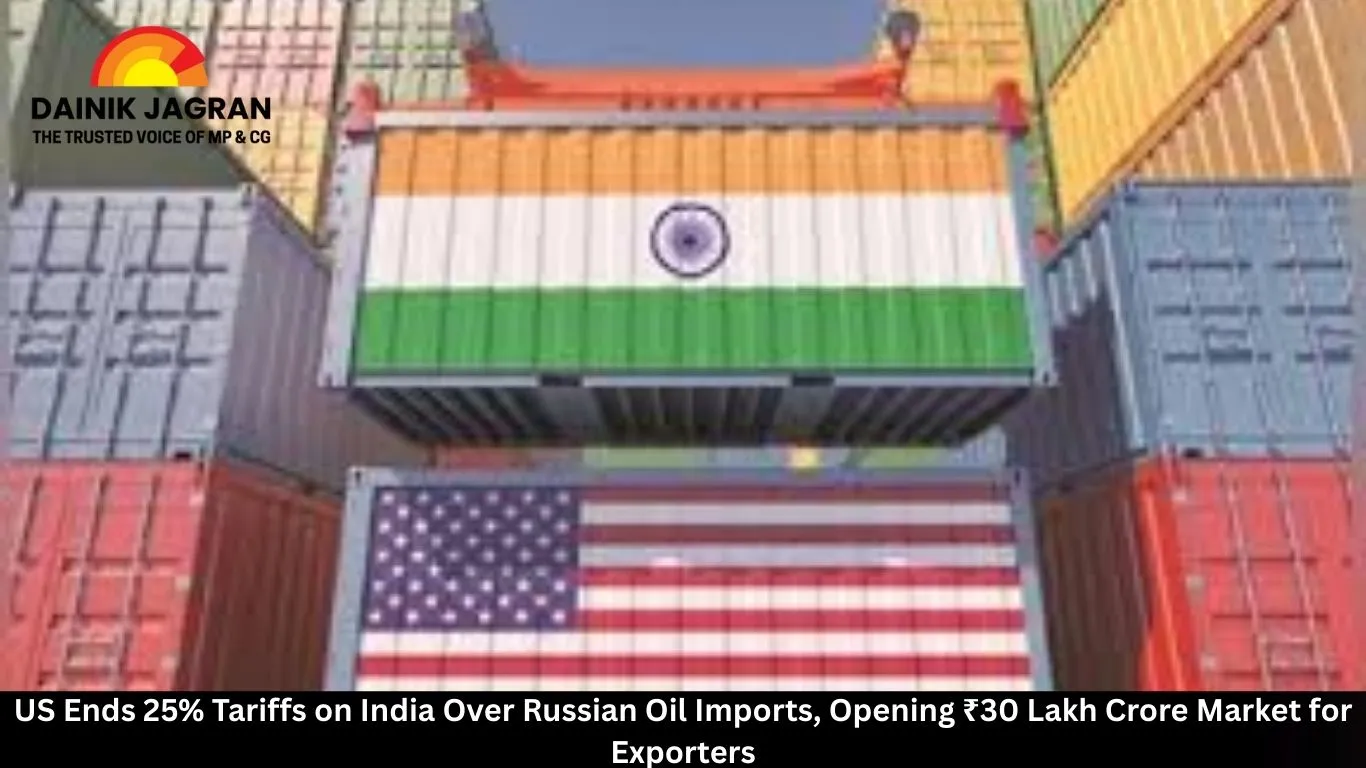
US Ends 25% Tariffs on India Over Russian Oil Imports, Opening ₹30 Lakh Crore Market for Exporters
Digital Desk
US Ends 25% Tariffs on India: What the Interim Trade Deal Means
In a major boost to India-US economic ties, the United States has officially ended the additional 25% tariffs imposed on Indian imports over Russian oil purchases. The decision comes as part of a newly unveiled India-US interim trade deal framework, a move expected to unlock a massive ₹30 lakh crore ($30 trillion) market for Indian exporters.
The tariff rollback took effect at 10:30 am IST on February 7, 2026, following an executive order from the White House. The duties were originally imposed in August 2025, citing concerns over India’s energy trade with Russia.
Why the Tariff Rollback Matters Right Now
The announcement is timely as both nations are working toward a full Bilateral Trade Agreement (BTA), launched in February 2025 by US President Donald Trump and Prime Minister Narendra Modi. At that time, both leaders set an ambitious target of doubling bilateral trade by 2030.
According to the US administration, India’s commitment to halt direct and indirect imports of Russian oil and expand purchases of American energy products played a key role in the decision. Washington also highlighted deeper defence cooperation and alignment with US national security priorities.
Importantly, Indian exporters who already paid the additional duties will receive refunds under standard US customs procedures.
10 Key Takeaways of the India-US Interim Trade Framework
Here’s a simplified look at what the deal includes:
18% reciprocal tariffs on key Indian exports like textiles, leather, chemicals, machinery, home décor, and handicrafts.
Possible tariff removal on generic drugs, gems and diamonds, and aircraft parts in the next phase.
India to cut duties on US industrial goods and farm products such as nuts, fruits, wine, spirits, and animal feed.
$500 billion purchase plan by India over five years covering US energy, aircraft, coal, and technology goods.
Preferential market access for both countries in mutually important sectors.
Relief for aviation and auto parts, including removal of some US national security tariffs.
Pharmaceutical negotiations linked to an ongoing US Section 232 investigation.
Reduction of non-tariff barriers, especially for medical devices, ICT goods, and agricultural exports.
Stronger supply chains and tech ties, focusing on GPUs, data centres, and economic security.
Clear roadmap toward a comprehensive Bilateral Trade Agreement.
Government and Global Reactions
Union Commerce Minister Piyush Goyal called the framework a game-changer, saying it opens access to a $30 trillion market and will benefit farmers, fishermen, MSMEs, women, and youth through job creation. He also stressed that sensitive sectors like dairy, grains, and poultry remain fully protected.
Meanwhile, Russia responded calmly, with the Kremlin stating that India is free to source oil from any supplier.
What’s Next?
Both New Delhi and Washington have agreed to fast-track implementation of the interim deal. For Indian exporters, this development signals reduced trade barriers, improved market access, and fresh growth opportunities at a time when global trade dynamics are rapidly shifting.
As talks move toward a full-fledged trade pact, the decision that US ends 25% tariffs on India marks a crucial turning point in strengthening one of the world’s most strategic economic partnerships.
.jpg)




