


Uttar Pradesh Man Self-Injures Foot for Disability Quota: Evolution of Reservation in India and Its Impact on Hindutva Politics
Digital Desk
Lead: A Shocking Act of Desperation
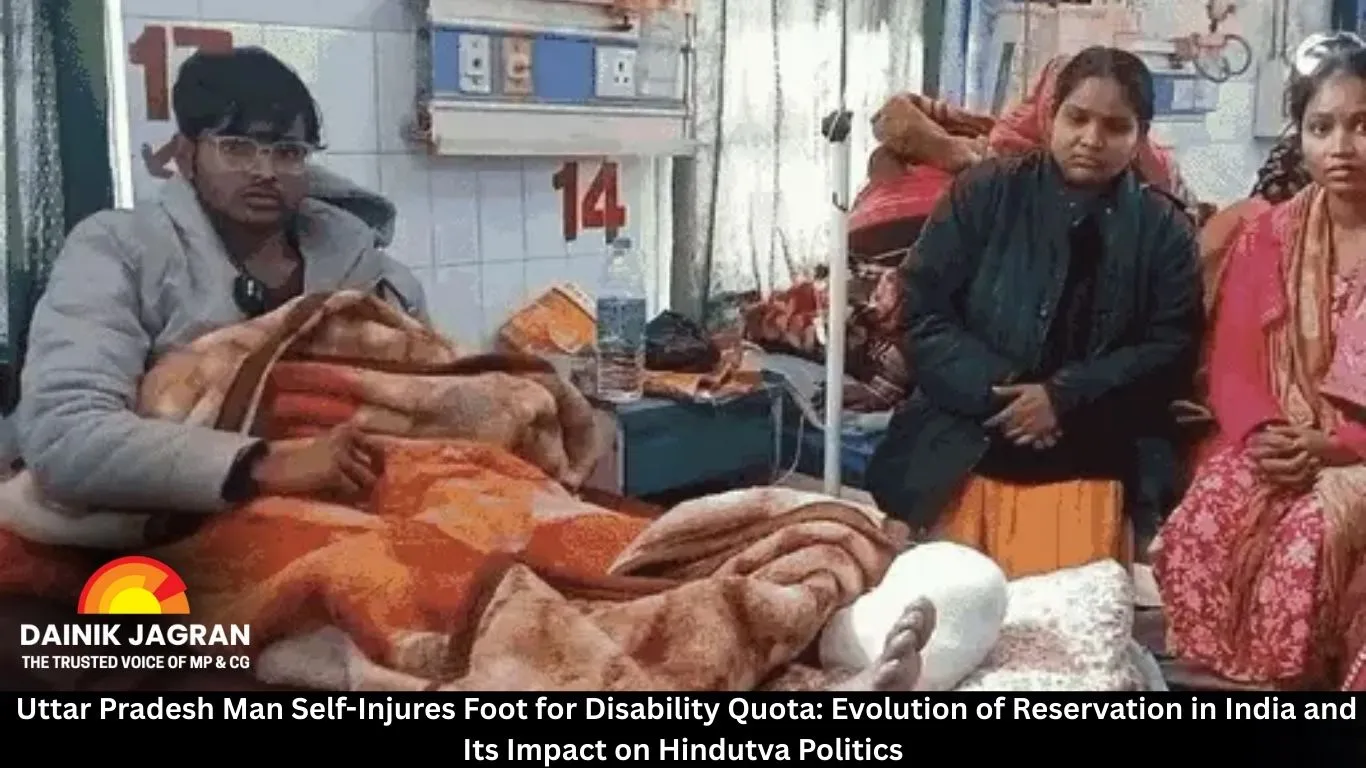
In a bizarre incident highlighting the intense pressure of India's competitive education system, a 24-year-old man from Uttar Pradesh's Jaunpur district, Suraj Bhaskar, allegedly severed four toes from his left foot to qualify for the disability quota in MBBS admissions via NEET. This January 2026 case, uncovered just days ago, underscores the extremes aspirants go to amid reservation in India debates. As investigations reveal self-inflicted harm driven by frustration, it reignites discussions on how reservation in India has evolved and influenced political landscapes, including the rise of Hindutva politics.
The Uttar Pradesh Incident: What Happened?
Suraj, a D-Pharma graduate preparing for NEET, initially claimed attackers assaulted him in his fields at midnight, leaving him unconscious and maimed. Police, however, found evidence of self-injury: anesthesia vials, syringes, and a saw near the scene. His diary entries vowed MBBS admission "at any cost" in 2026, and his girlfriend's statements exposed the plan. Previously, he attempted to secure disability forms at BHU in October 2025 but failed.
Now stable in hospital, Suraj faces charges for misleading authorities. This event, trending online, exposes mental health strains from reservation pressures, where disability quota offers a 5% edge in medical seats for those with at least 40% certified disability.
Roots and Evolution of Reservation in India
Reservation in India stems from combating caste-based discrimination, formalized post-independence. The Constitution's Articles 15 and 16 enable quotas for Scheduled Castes (SC), Scheduled Tribes (ST), and later Other Backward Classes (OBC).
A pivotal shift occurred with the 1979 Mandal Commission, recommending 27% OBC quotas. Implemented in 1990 by PM V.P. Singh, it sparked anti-reservation protests, including self-immolations like Rajeev Goswami's. The Supreme Court's 1992 Indra Sawhney ruling capped quotas at 50% and excluded the "creamy layer."
By 2026, reservations stand at:
- SC: 15%
- ST: 7.5%
- OBC: 27%
- EWS: 10%
Disability quotas, under the 2016 RPwD Act, mandate 4-5% reservations in jobs and education, ensuring inclusion for benchmark disabilities.
How Reservation Shaped Hindutva Politics
Reservation politics, or "Mandal politics," fragmented votes along caste lines, boosting parties like SP and RJD. In response, "Kamandal politics" – symbolizing religious unity – emerged via Hindutva, promoted by BJP and RSS.
Hindutva unites Hindus beyond caste, exemplified by the 1990s Ram Janmabhoomi movement. Post-2014, under PM Modi, it dominated, with Yogi Adityanath's 2017 UP win shifting from caste to religious mobilization. This strategy secured northern states, reclaiming Madhya Pradesh, Rajasthan, and Chhattisgarh by 2023.
Expert perspective: Political analyst Yogendra Yadav simulates, "Reservation exposes inequalities, but Hindutva reframes them as cultural threats, consolidating power."
Why It Matters Now: Takeaways for Readers
In 2026, amid rising NEET competition, such frauds question reservation integrity. Actionable insights:
- Verify disabilities through NTA-certified centers to avoid scams.
- Seek mental health support for exam stress via helplines like AASRA.
- Advocate for merit-inclusive reforms to balance equity.

.jpg)




