


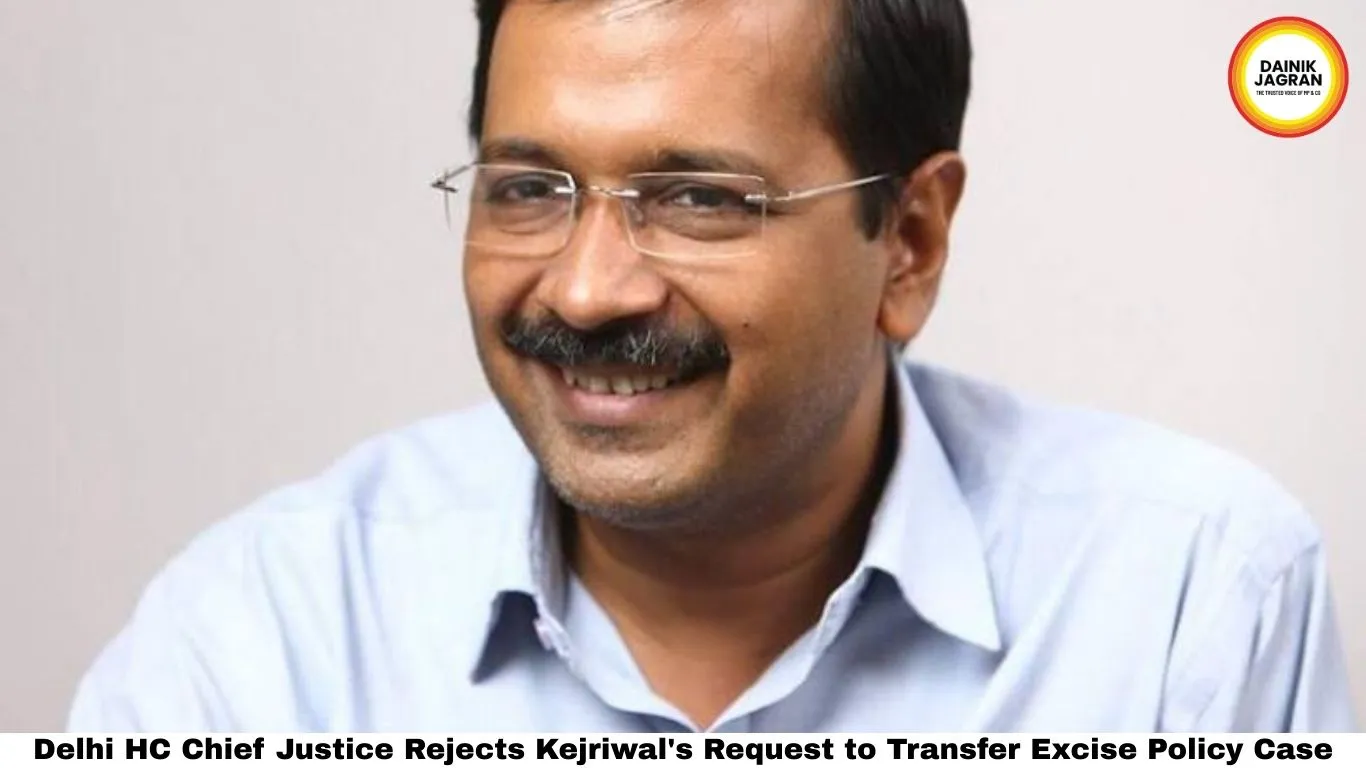
Delhi HC Chief Justice Rejects Kejriwal's Request to Transfer Excise Policy Case, Next Hearing March 16
Digital Desk
The Delhi High Court's Chief Justice Devendra Kumar Upadhyaya on Sunday, March 15 declined former Chief Minister Arvind Kejriwal's request to transfer the CBI's appeal against his discharge in the Delhi excise policy case from the bench of Justice Swarana Kanta Sharma to another judge. In a written communication on the administrative side, the Chief Justice stated that the matter had been assigned to Justice Sharma in accordance with the existing court roster, and there was no ground to order a transfer.
Background: Trial Court Discharge and CBI's Challenge
On February 27, 2026, a Special CBI Court at Rouse Avenue discharged Kejriwal, former Deputy Chief Minister Manish Sisodia, and 21 other accused persons in the Delhi excise policy case — delivering a sharply worded indictment of the CBI's investigation, calling the agency's case wholly unable to survive judicial scrutiny. The trial court found no overarching conspiracy and held that the excise policy had been formulated through a proper consultative and deliberative process.
Kejriwal, who had spent six months in jail in connection with the case, broke down after the verdict and described the corruption charges against him as the biggest political conspiracy in the history of independent India.
The CBI immediately challenged the discharge order before the Delhi High Court, filing a revision petition arguing that the trial court's order was perverse and effectively amounted to an acquittal before trial. The petition was assigned to Justice Swarana Kanta Sharma's bench.
March 9 Hearing Triggers Bias Concerns
At the first hearing of the CBI's revision petition on March 9, Justice Sharma issued notice to Kejriwal, Sisodia, and all 21 other accused. The bench stayed the trial court's directions that had called for departmental proceedings against the CBI's investigating officer. Justice Sharma also recorded a prima facie observation that certain findings in the trial court's discharge order appeared to be erroneous. Additionally, the bench directed the trial court hearing the connected Enforcement Directorate case under the Prevention of Money Laundering Act to defer its proceedings pending the High Court's decision on the CBI petition — even though the ED had not been made a party to the CBI revision petition and had not sought that relief.
These developments prompted Kejriwal to file a formal representation on March 11 before Chief Justice Upadhyaya seeking an administrative transfer of the case.
Kejriwal's Case for Transfer
In his representation, Kejriwal argued that he had a genuine, serious, and reasonable apprehension that the matter would not receive a hearing marked by complete impartiality and neutrality before Justice Sharma's bench. He pointed to multiple grounds for this concern.
Kejriwal argued that Justice Sharma had previously heard several matters arising from the same excise policy investigation and had recorded detailed prima facie observations on the same core facts and roles of the accused — observations that would now be central to the CBI's revision petition as well. He highlighted that multiple orders passed by Justice Sharma's bench in those earlier excise-related matters had subsequently been set aside by the Supreme Court, with the apex court granting relief to the accused persons in three matters and referring a fourth to a larger bench.
He also objected to the fact that during the March 9 hearing, the court had intervened on behalf of the ED — directing deferral of PMLA proceedings — without the ED being a party before it, without any such prayer from the CBI, and without hearing the discharged accused. He contended that granting only one week to respond in a case involving voluminous records spanning five charge sheets and 23 accused persons further reflected a predisposition toward speed that disadvantaged the respondents.
"Justice must not only be done, but must be seen to be done," his representation stated, adding that the concern raised was institutional rather than personal.
Chief Justice's Response
Chief Justice Devendra Kumar Upadhyaya, in his written communication declining the request, stated clearly that the matter was assigned to Justice Sharma as per the current roster, that he found no reason to order a transfer on the administrative side, and that if any question of recusal arose, that decision rested solely with Justice Sharma herself as the judge hearing the matter.
"The petition is assigned to the Hon'ble Judge as per the current roster. Any call of recusal has to be taken by the Hon'ble Judge. I, however, do not find any reason to transfer the petition by passing an order on the administrative side," the Chief Justice stated.
What Happens Next
The CBI's revision petition is listed for its next hearing before Justice Sharma's bench on March 16 — Monday. The court has already issued notice to all 23 discharged accused and indicated that certain observations of the trial court prima facie appeared erroneous and required consideration. The direction to defer proceedings in the connected ED-PMLA case also remains in force until the revision petition is decided.
Manish Sisodia, who spent two years in jail in connection with the case before being granted bail, had separately filed his own representation before the Chief Justice seeking the same transfer — a request that stands equally declined by Sunday's communication.
.jpg)




