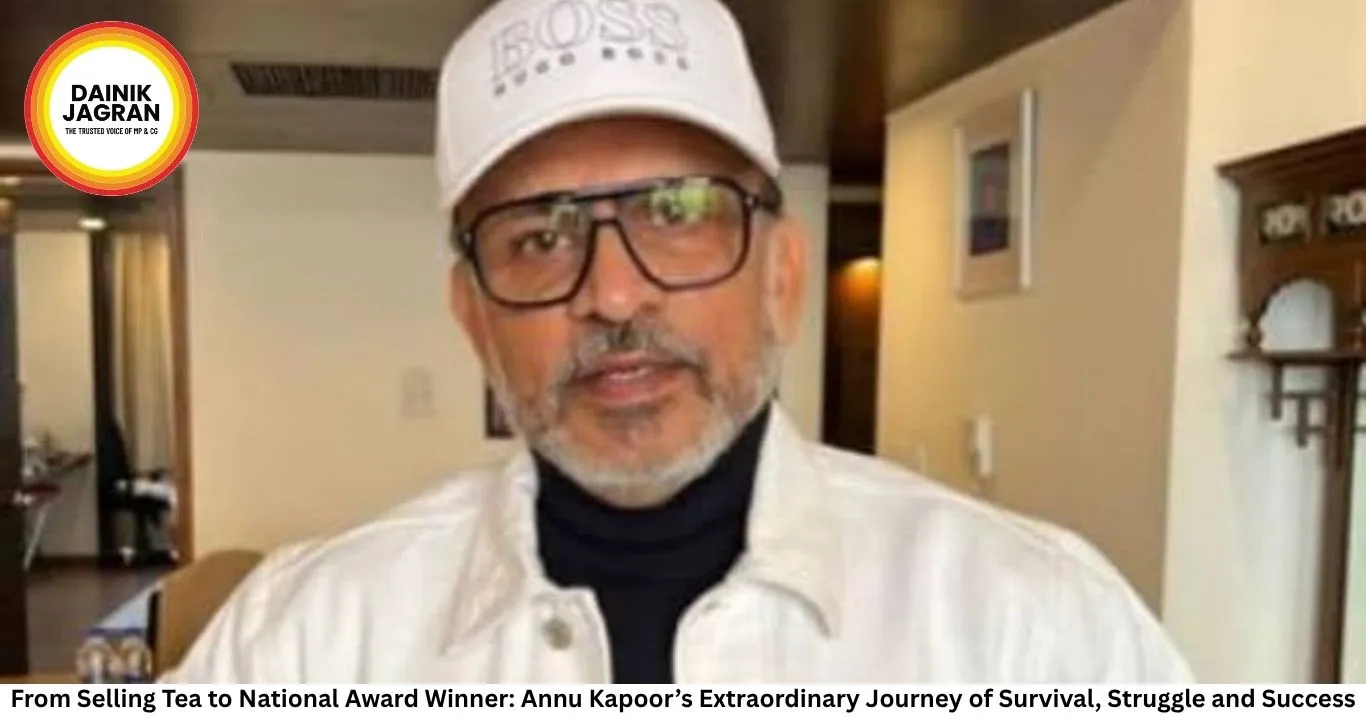
From Selling Tea to National Award Winner: Annu Kapoor’s Extraordinary Journey of Survival, Struggle and Success

Digital desk

From Selling Tea to National Award Winner: Annu Kapoor’s Extraordinary Journey of Survival, Struggle and Success

Veteran actor Annu Kapoor’s journey to success is one of the most inspiring stories in Indian cinema. Long before becoming a National Award-winning actor and one of television’s most recognizable hosts, Kapoor battled extreme poverty, financial uncertainty and repeated rejection. His story reflects resilience, determination and an unwavering belief in talent over appearance.

Born on February 20, 1956, in Bhopal, Annu Kapoor grew up in a financially struggling family. His father, Madanlal Kapoor, managed a Parsi theatre company, while his mother, Kamal Shabnam, was a classical singer and teacher. Although the family shared a deep connection with the performing arts, financial hardships often overshadowed their daily lives.

Kapoor was academically bright and once dreamed of becoming an Indian Administrative Service (IAS) officer. However, worsening financial conditions forced him to abandon his education and begin earning to support his family. During those years, he took up every possible job, including selling tea, operating a street food stall, selling lottery tickets and driving an auto-rickshaw.

Despite these struggles, theatre remained close to his heart. He enrolled at the National School of Drama (NSD), where he refined his acting skills. However, even at NSD, he encountered setbacks. According to Kapoor, he once secured the highest score during an audition conducted by renowned theatre director Barry John but still lost the role because his appearance did not suit the character.

Rather than giving up, Kapoor decided to let his performances define him instead of his looks.

His breakthrough came during his NSD days when he portrayed a 70-year-old man in the stage production Ek Ruka Hua Faisla. Though he was only in his twenties, his convincing performance impressed filmmaker Shyam Benegal, who later cast him in the 1983 film Mandi. The role marked Kapoor’s entry into Hindi cinema.

Armed with only ₹419.25, Kapoor eventually moved to Mumbai to pursue acting full-time. The city offered no guarantees. He was repeatedly rejected because he did not fit the conventional image of a Bollywood hero. Yet he continued accepting every opportunity that came his way, gradually building a reputation through memorable supporting performances in films such as Utsav, Chameli Ki Shaadi, Mr. India, Tezaab and Ram Lakhan.

Interestingly, Kapoor’s birth name was Anil Kapoor. To avoid confusion with actor Anil Kapoor, who entered the industry around the same period, he adopted the name Annu Kapoor, a decision he later described as practical rather than emotional.

Television transformed his career in the early 1990s when he became the host of the musical game show Antakshari. His command over Hindi and Urdu, deep knowledge of Indian music, quick wit and effortless humour made him a household name. The programme became one of Indian television’s biggest successes, with Kapoor emerging as its defining face.

However, just before Antakshari changed his fortunes, Kapoor experienced one of the darkest phases of his life.

Recalling that period in interviews, he revealed that he remained unemployed for nearly four-and-a-half months. With no income and an empty wallet, he deliberately slept until noon to avoid spending money on breakfast. He often spent evenings playing cards with friends simply to distract himself from financial stress.

During those difficult months, Kapoor also experienced an act of loyalty that he has never forgotten. He advised his driver, Keshav Dutt, to leave him for a better-paying job. The driver refused, saying he could not abandon Kapoor during hard times because it would weigh on his conscience. Kapoor has frequently cited the incident as one of the most emotional moments of his life.

Everything changed on September 3, 1993, when the first episode of Antakshari aired on television. Watching himself on screen at a friend’s house, Kapoor was told that his struggles were finally over. The prediction proved remarkably accurate, as the programme established him as one of India’s most popular television personalities.

Even after achieving fame, Kapoor consistently maintained that he never wanted to become a star. His ambition, he often said, was simply to become a respected actor.

Three decades into his career, Kapoor received one of the biggest recognitions of his life for portraying Dr. Baldev Chaddha in Shoojit Sircar’s Vicky Donor (2012). His outstanding performance earned him the National Film Award for Best Supporting Actor, validating years of perseverance and hard work.

Over the years, Kapoor continued reinventing himself through films such as 7 Khoon Maaf, Aitraaz, Jolly LLB 2 and Dream Girl. He also remained active on television and radio, where his programme Suhaana Safar with Annu Kapoor became popular for its engaging stories about Hindi cinema and music.

Today, Annu Kapoor’s journey stands as a reminder that success is rarely defined by appearances or instant fame. Instead, it is built through persistence, resilience and an unwavering commitment to one’s craft.

--------

🚨 Beat the News Rush – Join Now!

Get breaking alerts, hot exclusives, and game-changing stories instantly on your phone. No delays, no fluff – just the edge you need. ⚡

Tap to join: 

🟢 WhatsApp Channel: Dainik Jagran MP CG

Crave more?

🅕 Facebook: Dainik Jagran MP CG English

🅧 Twitter (X): Dainik Jagran MP CG

🅘 Instagram: Dainik Jagran MP CG

Share the fire – keep your crew ahead! 🗞️🔥

english.dainikjagranmpcg.com
30 Jul 2026 By Priyanshu.Jha

From Selling Tea to National Award Winner: Annu Kapoor’s Extraordinary Journey of Survival, Struggle and Success

Digital desk

Born on February 20, 1956, in Bhopal, Annu Kapoor grew up in a financially struggling family. His father, Madanlal Kapoor, managed a Parsi theatre company, while his mother, Kamal Shabnam, was a classical singer and teacher. Although the family shared a deep connection with the performing arts, financial hardships often overshadowed their daily lives.

Kapoor was academically bright and once dreamed of becoming an Indian Administrative Service (IAS) officer. However, worsening financial conditions forced him to abandon his education and begin earning to support his family. During those years, he took up every possible job, including selling tea, operating a street food stall, selling lottery tickets and driving an auto-rickshaw.

Despite these struggles, theatre remained close to his heart. He enrolled at the National School of Drama (NSD), where he refined his acting skills. However, even at NSD, he encountered setbacks. According to Kapoor, he once secured the highest score during an audition conducted by renowned theatre director Barry John but still lost the role because his appearance did not suit the character.

Rather than giving up, Kapoor decided to let his performances define him instead of his looks.

His breakthrough came during his NSD days when he portrayed a 70-year-old man in the stage production Ek Ruka Hua Faisla. Though he was only in his twenties, his convincing performance impressed filmmaker Shyam Benegal, who later cast him in the 1983 film Mandi. The role marked Kapoor’s entry into Hindi cinema.

Armed with only ₹419.25, Kapoor eventually moved to Mumbai to pursue acting full-time. The city offered no guarantees. He was repeatedly rejected because he did not fit the conventional image of a Bollywood hero. Yet he continued accepting every opportunity that came his way, gradually building a reputation through memorable supporting performances in films such as Utsav, Chameli Ki Shaadi, Mr. India, Tezaab and Ram Lakhan.

Interestingly, Kapoor’s birth name was Anil Kapoor. To avoid confusion with actor Anil Kapoor, who entered the industry around the same period, he adopted the name Annu Kapoor, a decision he later described as practical rather than emotional.

Television transformed his career in the early 1990s when he became the host of the musical game show Antakshari. His command over Hindi and Urdu, deep knowledge of Indian music, quick wit and effortless humour made him a household name. The programme became one of Indian television’s biggest successes, with Kapoor emerging as its defining face.

However, just before Antakshari changed his fortunes, Kapoor experienced one of the darkest phases of his life.

Recalling that period in interviews, he revealed that he remained unemployed for nearly four-and-a-half months. With no income and an empty wallet, he deliberately slept until noon to avoid spending money on breakfast. He often spent evenings playing cards with friends simply to distract himself from financial stress.

During those difficult months, Kapoor also experienced an act of loyalty that he has never forgotten. He advised his driver, Keshav Dutt, to leave him for a better-paying job. The driver refused, saying he could not abandon Kapoor during hard times because it would weigh on his conscience. Kapoor has frequently cited the incident as one of the most emotional moments of his life.

Everything changed on September 3, 1993, when the first episode of Antakshari aired on television. Watching himself on screen at a friend’s house, Kapoor was told that his struggles were finally over. The prediction proved remarkably accurate, as the programme established him as one of India’s most popular television personalities.

Even after achieving fame, Kapoor consistently maintained that he never wanted to become a star. His ambition, he often said, was simply to become a respected actor.

Three decades into his career, Kapoor received one of the biggest recognitions of his life for portraying Dr. Baldev Chaddha in Shoojit Sircar’s Vicky Donor (2012). His outstanding performance earned him the National Film Award for Best Supporting Actor, validating years of perseverance and hard work.

Over the years, Kapoor continued reinventing himself through films such as 7 Khoon Maaf, Aitraaz, Jolly LLB 2 and Dream Girl. He also remained active on television and radio, where his programme Suhaana Safar with Annu Kapoor became popular for its engaging stories about Hindi cinema and music.

Today, Annu Kapoor’s journey stands as a reminder that success is rarely defined by appearances or instant fame. Instead, it is built through persistence, resilience and an unwavering commitment to one’s craft.

https://english.dainikjagranmpcg.com/entertainment/from-selling-tea-to-national-award-winner-annu-kapoor%E2%80%99s-extraordinary/article-24166

Trending News