Ceuta Migration Crisis Explained: Why Thousands Crossed from Morocco into Spain
Digital Desk
Thousands of migrants crossed from Morocco into Spain's Ceuta enclave, leaving at least 18 dead. Here's why the migration surge happened, what Ceuta is, and how Europe is responding.
Spain is grappling with a major migration emergency after thousands of migrants attempted to enter the Spanish enclave of Ceuta from neighbouring Morocco, with at least 18 people reported dead during the dangerous crossing. The unprecedented surge has prompted Spain to deploy additional military personnel, intensified political tensions within the European Union, and reignited debate over migration management along Europe's southern border.
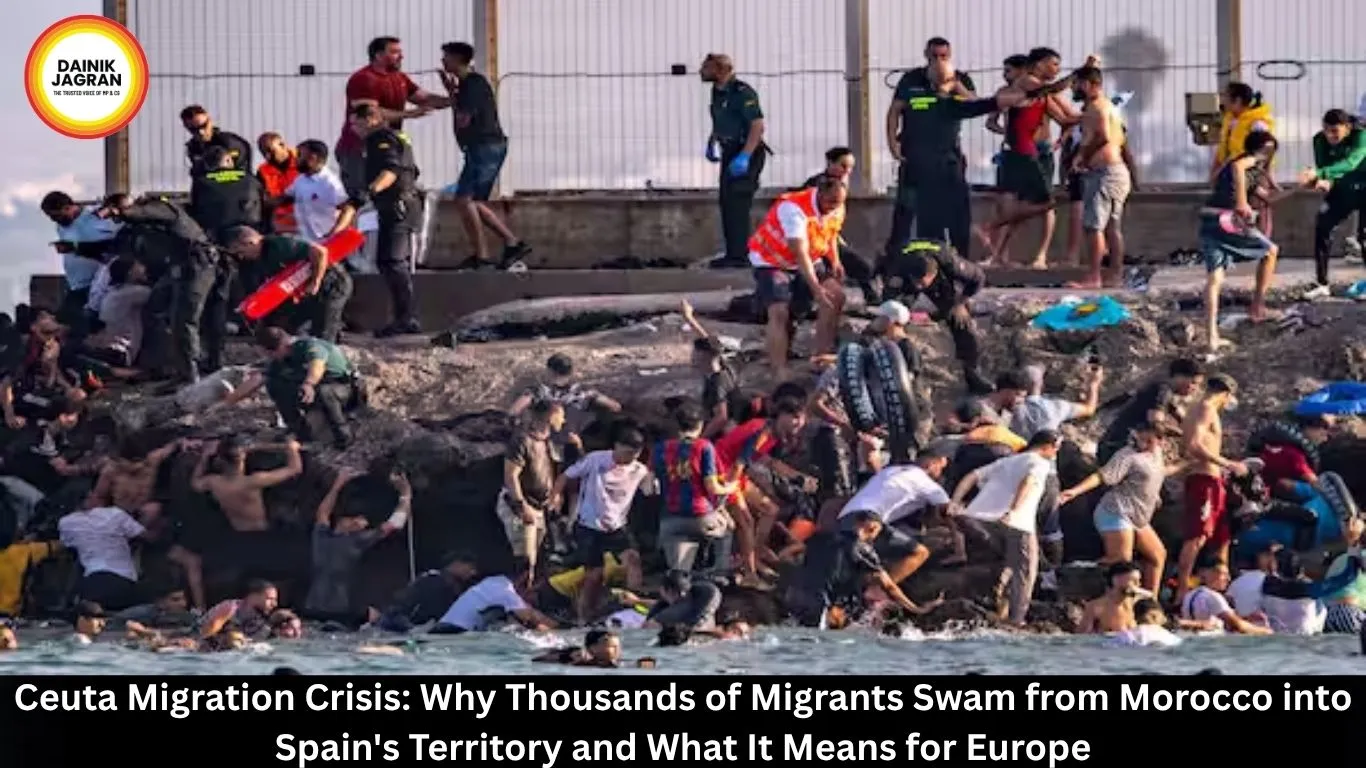
The dramatic scenes unfolded on July 30 as large groups of migrants swam across the sea, climbed border barriers and entered the North African enclave, overwhelming Spanish security forces stationed in the territory.
What is Ceuta?
Ceuta is a Spanish autonomous city located on the northern coast of Africa, sharing an eight-kilometre land border with Morocco. Although geographically situated on the African continent, Ceuta is legally part of Spain and, by extension, the European Union.
The territory has remained under Spanish administration for centuries, a status Morocco does not officially recognise. Along with Melilla, another Spanish enclave in North Africa, Ceuta has long been a key gateway for migrants seeking entry into Europe.
Thousands Attempt Dangerous Crossing
According to Spanish authorities, thousands of migrants gathered near the Moroccan town of Fnideq before attempting to reach Ceuta by swimming across the coastline or scaling border fences.
Videos circulating on social media showed hundreds entering the water simultaneously, while others climbed the heavily fortified barriers separating Morocco from Spanish territory.
Spanish officials said border security was overwhelmed by the sudden influx. Emergency teams, the Guardia Civil and later military personnel were deployed to restore control as rescue operations continued along the coastline.
Authorities confirmed that at least 18 people lost their lives, while many others required medical treatment after the hazardous sea crossing.
Why Did the Migration Surge Happen?
Officials are examining multiple factors behind the sudden increase in crossings.
Spanish authorities believe human trafficking networks may have encouraged migrants to attempt the journey after a recent ruling by Spain's Supreme Court strengthened legal protections for migrants intercepted while attempting to reach Ceuta or Melilla. The judgment reportedly limits immediate returns without following legal procedures.
However, migration experts and rights groups argue that legal developments alone cannot explain the scale of the movement.
Analysts have also linked the timing to broader diplomatic tensions between Spain and Morocco. Recent high-level engagements between Spain and Algeria, Morocco's regional rival over Western Sahara, have fuelled speculation that deteriorating diplomatic relations may have indirectly influenced border management, although no official evidence has confirmed such claims.
Economic hardship, unemployment and aspirations for better opportunities in Europe also remain longstanding drivers of migration from North Africa.
Political Reactions Across Europe
Spain has moved quickly to reinforce security around Ceuta.
Prime Minister Pedro Sánchez said the government was mobilising all available resources and coordinating with Moroccan authorities to restore order.
Meanwhile, the crisis has triggered political reactions across Europe. Italian Prime Minister Giorgia Meloni described the situation as deeply concerning and called for stronger European measures to address irregular migration. Some Italian leaders even suggested reviewing Spain's position within the Schengen travel framework, highlighting growing divisions over migration policy inside the European Union.
The images from Ceuta have also been widely shared in political debates across Europe and the United States, where immigration continues to be a major electoral issue.
A Longstanding Migration Flashpoint
Ceuta has experienced similar migration waves before. One of the largest occurred in May 2021, when more than 10,000 migrants entered the enclave within two days after Morocco eased border controls during a diplomatic dispute with Spain.
The latest incident once again underlines the strategic importance of Ceuta as one of Europe's most sensitive external borders.
What Happens Next?
Spanish authorities are expected to continue security operations while processing migrants who entered the territory. Many may face deportation proceedings, while others could seek asylum under European and international refugee laws.
The incident is also likely to intensify discussions within the European Union over border security, migration policy and cooperation with North African countries.
For now, Ceuta remains at the centre of one of Europe's most significant migration crises in recent years, with humanitarian concerns, political tensions and diplomatic questions continuing to unfold.

--------
🚨 Beat the News Rush – Join Now!
Get breaking alerts, hot exclusives, and game-changing stories instantly on your phone. No delays, no fluff – just the edge you need. ⚡
Tap to join:
🟢 WhatsApp Channel: Dainik Jagran MP CG
Crave more?
🅕 Facebook: Dainik Jagran MP CG English
🅧 Twitter (X): Dainik Jagran MP CG
🅘 Instagram: Dainik Jagran MP CG
Share the fire – keep your crew ahead! 🗞️🔥
Ceuta Migration Crisis Explained: Why Thousands Crossed from Morocco into Spain
Digital Desk
Spain is grappling with a major migration emergency after thousands of migrants attempted to enter the Spanish enclave of Ceuta from neighbouring Morocco, with at least 18 people reported dead during the dangerous crossing. The unprecedented surge has prompted Spain to deploy additional military personnel, intensified political tensions within the European Union, and reignited debate over migration management along Europe's southern border.
The dramatic scenes unfolded on July 30 as large groups of migrants swam across the sea, climbed border barriers and entered the North African enclave, overwhelming Spanish security forces stationed in the territory.
What is Ceuta?
Ceuta is a Spanish autonomous city located on the northern coast of Africa, sharing an eight-kilometre land border with Morocco. Although geographically situated on the African continent, Ceuta is legally part of Spain and, by extension, the European Union.
The territory has remained under Spanish administration for centuries, a status Morocco does not officially recognise. Along with Melilla, another Spanish enclave in North Africa, Ceuta has long been a key gateway for migrants seeking entry into Europe.
Thousands Attempt Dangerous Crossing
According to Spanish authorities, thousands of migrants gathered near the Moroccan town of Fnideq before attempting to reach Ceuta by swimming across the coastline or scaling border fences.
Videos circulating on social media showed hundreds entering the water simultaneously, while others climbed the heavily fortified barriers separating Morocco from Spanish territory.
Spanish officials said border security was overwhelmed by the sudden influx. Emergency teams, the Guardia Civil and later military personnel were deployed to restore control as rescue operations continued along the coastline.
Authorities confirmed that at least 18 people lost their lives, while many others required medical treatment after the hazardous sea crossing.
Why Did the Migration Surge Happen?
Officials are examining multiple factors behind the sudden increase in crossings.
Spanish authorities believe human trafficking networks may have encouraged migrants to attempt the journey after a recent ruling by Spain's Supreme Court strengthened legal protections for migrants intercepted while attempting to reach Ceuta or Melilla. The judgment reportedly limits immediate returns without following legal procedures.
However, migration experts and rights groups argue that legal developments alone cannot explain the scale of the movement.
Analysts have also linked the timing to broader diplomatic tensions between Spain and Morocco. Recent high-level engagements between Spain and Algeria, Morocco's regional rival over Western Sahara, have fuelled speculation that deteriorating diplomatic relations may have indirectly influenced border management, although no official evidence has confirmed such claims.
Economic hardship, unemployment and aspirations for better opportunities in Europe also remain longstanding drivers of migration from North Africa.
Political Reactions Across Europe
Spain has moved quickly to reinforce security around Ceuta.
Prime Minister Pedro Sánchez said the government was mobilising all available resources and coordinating with Moroccan authorities to restore order.
Meanwhile, the crisis has triggered political reactions across Europe. Italian Prime Minister Giorgia Meloni described the situation as deeply concerning and called for stronger European measures to address irregular migration. Some Italian leaders even suggested reviewing Spain's position within the Schengen travel framework, highlighting growing divisions over migration policy inside the European Union.
The images from Ceuta have also been widely shared in political debates across Europe and the United States, where immigration continues to be a major electoral issue.
A Longstanding Migration Flashpoint
Ceuta has experienced similar migration waves before. One of the largest occurred in May 2021, when more than 10,000 migrants entered the enclave within two days after Morocco eased border controls during a diplomatic dispute with Spain.
The latest incident once again underlines the strategic importance of Ceuta as one of Europe's most sensitive external borders.
What Happens Next?
Spanish authorities are expected to continue security operations while processing migrants who entered the territory. Many may face deportation proceedings, while others could seek asylum under European and international refugee laws.
The incident is also likely to intensify discussions within the European Union over border security, migration policy and cooperation with North African countries.
For now, Ceuta remains at the centre of one of Europe's most significant migration crises in recent years, with humanitarian concerns, political tensions and diplomatic questions continuing to unfold.