Iran Oil Storage Crisis: Only 22 Days Left Amid US Blockade
Digital Desk
Iran may exhaust its oil storage capacity in about 22 days due to the US naval blockade, as diplomatic efforts over the Strait of Hormuz and nuclear programme stall. Tehran insists the conflict is not over, while Trump rejects proposals deferring key issues.
Iran Faces Oil Storage Crunch as Diplomatic Push Stalls Over Nuclear Demands
Tehran’s 22-day oil storage limit adds pressure amid US blockade and rejected ceasefire proposals involving the Strait of Hormuz.
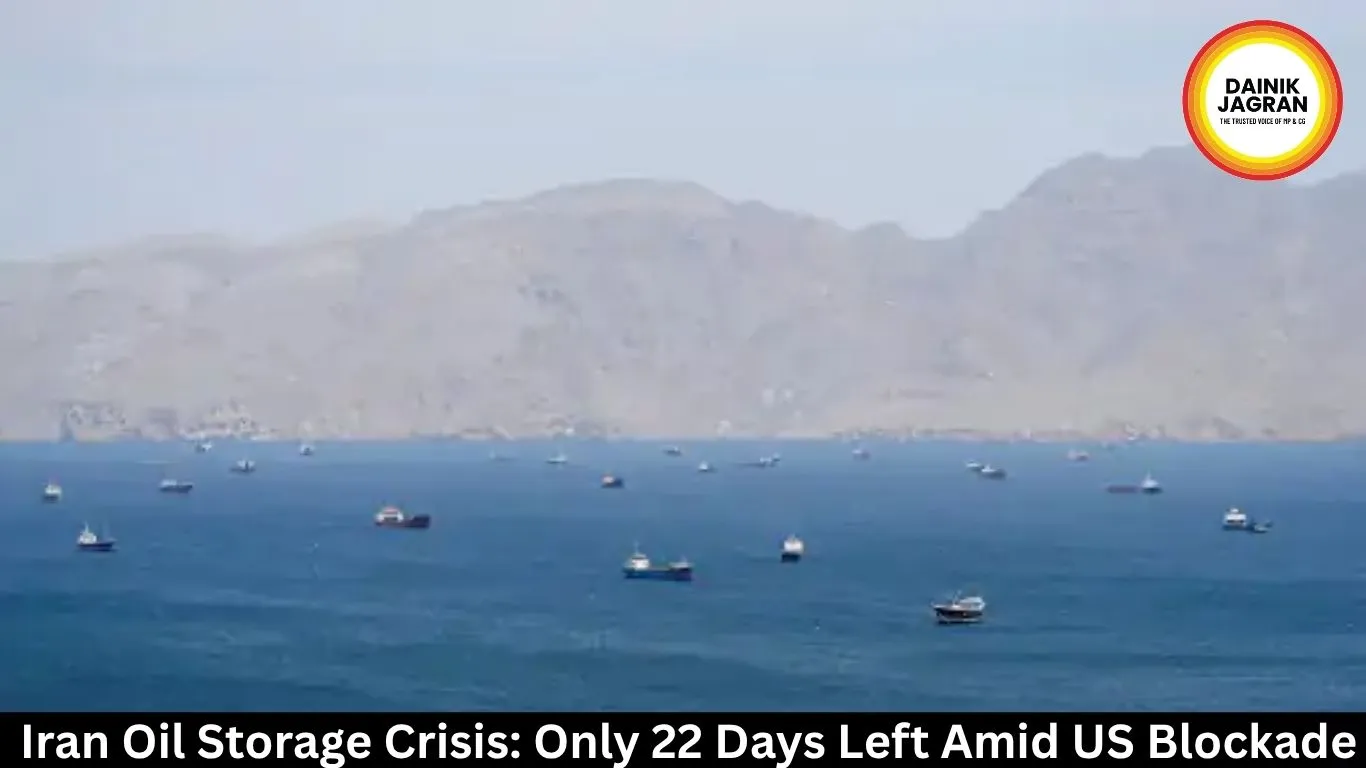
Iran could run out of space to store its crude oil in as little as 22 days if current production rates continue without exports, according to data analytics firm Kpler. The warning comes as Tehran insists the conflict with the United States and Israel is far from over, while diplomatic efforts through mediators like Pakistan show little progress.
The US naval blockade has severely restricted Iran’s ability to ship oil abroad, causing onshore inventories to build up rapidly. Analysts at Kpler noted that usable storage, including some floating capacity, might offer a buffer of around 12 to 22 days. Experts caution that prolonged output cuts could damage older oil wells by reducing natural reservoir pressure, making future extraction more difficult and costly.
Storage Crisis Deepens Under Blockade
The situation has worsened since the US imposed its counter-blockade on vessels heading to or from Iranian ports in mid-April. Oil exports have reportedly dropped sharply, leaving tankers and storage facilities under strain. Initial reports indicate Tehran may soon face the choice of further slashing production, already down significantly from pre-conflict levels.
Local oil industry sources, speaking on condition of anonymity, described the mounting challenge in southern terminals near Bandar Abbas. “Facilities are filling faster than expected,” one industry watcher familiar with the data said. Any extended shutdown risks long-term harm to infrastructure that has already suffered from years of sanctions and now direct conflict-related disruptions.
Tehran Warns Conflict Not Over
Despite a fragile ceasefire in place since early April, Iranian officials maintain that war-like conditions persist. Army spokesman Mohammad Akraminia stated clearly that the military does not consider the war ended. Security agencies continue constant monitoring, with warnings of responses using “new weapons, new methods, and on new fronts” should fresh attacks occur.
Iranian Foreign Minister Abbas Araghchi has been active on the diplomatic front, making his third visit to Pakistan in quick succession before heading to Russia. In Moscow, he met President Vladimir Putin to discuss strategic ties and the regional situation. Russia has criticised the US and Israeli strikes, calling them a threat to international order.
Diverging Proposals on Hormuz and Nuclear Issues
At the heart of the deadlock are differing priorities over the Strait of Hormuz and Iran’s nuclear programme. Iran’s latest proposal, conveyed through Pakistani channels, called for three main steps: an immediate end to hostilities with guarantees against further attacks, lifting the US blockade and reopening the strait to restore shipping, and deferring complex nuclear questions to a later stage.
US President Donald Trump has rejected this approach, insisting that nuclear concerns cannot be sidelined. According to reports, the Trump administration views any reopening of the strait without addressing enrichment and uranium stockpiles as weakening its negotiating position. Washington prefers tackling both issues simultaneously.
Iran had earlier suggested a phased nuclear rollback — complete stop to enrichment for five years, followed by limited civilian use, with part of its stockpile moved to Russia under supervision. That too was turned down. Sources familiar with the talks said Iran is now preparing a fresh proposal, though it needs time for internal consultations, including with the Supreme Leader.
Trump has publicly claimed Iran is nearing collapse and urged quick reopening of the strait. In recent social media posts, he described Tehran as being in a “state of collapse,” while reiterating that the US will not allow Iran to acquire nuclear weapons.
Oil Markets React to Prolonged Uncertainty
Global oil prices continued their upward trend on reports of the extended US blockade. Brent crude futures rose modestly in early trading, reflecting concerns over disrupted supplies from the key Gulf region. The Panama Canal has seen increased traffic as shippers reroute to avoid the troubled Strait of Hormuz.
Qatar’s Foreign Ministry described the use of the strait as a “political weapon” as unacceptable, calling for de-escalation to protect regional stability and global energy flows.
Regional Ripple Effects
Tensions extend beyond the strait. In southern Lebanon, Israeli forces reported operations against Hezbollah infrastructure, while the group claimed drone attacks on Israeli positions. Separate incidents in the occupied West Bank saw arrests and clashes. France paid tribute to its peacekeepers killed in Lebanon, with President Emmanuel Macron attributing responsibility to Hezbollah.
Germany’s Chancellor Friedrich Merz questioned aspects of US strategy, prompting a sharp response from Trump, who accused him of misunderstanding the nuclear threat. Meanwhile, the US Treasury announced new sanctions on what it called Iran’s “shadow banking” network, aimed at further isolating Tehran’s financial channels.
Reza Pahlavi, son of Iran’s last Shah, urged continued pressure on the current government, suggesting targeted actions to encourage internal dissent.
What Lies Ahead
With storage limits approaching, Iran faces mounting economic strain that could force difficult choices on production and exports. Diplomatic shuttling continues, but deep differences over sequencing — ending the immediate blockade versus resolving nuclear issues — suggest talks may drag on.
Local authorities in affected Iranian regions are bracing for potential further cuts, while global markets watch closely for any breakthrough or escalation. Mediators in Islamabad and other capitals remain engaged, yet both sides appear unwilling to yield on core demands for now.
The coming days could prove decisive. If storage constraints tighten as projected, pressure on Tehran to compromise may grow, even as it warns of readiness for new responses. For now, the fragile ceasefire holds, but the risk of renewed disruption to one of the world’s critical energy arteries remains real.
--------
๐จ Beat the News Rush โ Join Now!
Get breaking alerts, hot exclusives, and game-changing stories instantly on your phone. No delays, no fluff โ just the edge you need. โก
Tap to join:ย
๐ข WhatsApp Channel: Dainik Jagran MP CG
Crave more?
๐ Facebook: Dainik Jagran MP CG English
๐ ง Twitter (X): Dainik Jagran MP CG
๐ Instagram: Dainik Jagran MP CG
Share the fire โ keep your crew ahead! ๐๏ธ๐ฅ
Iran Oil Storage Crisis: Only 22 Days Left Amid US Blockade
Digital Desk
Iran Faces Oil Storage Crunch as Diplomatic Push Stalls Over Nuclear Demands
Tehran’s 22-day oil storage limit adds pressure amid US blockade and rejected ceasefire proposals involving the Strait of Hormuz.
Iran could run out of space to store its crude oil in as little as 22 days if current production rates continue without exports, according to data analytics firm Kpler. The warning comes as Tehran insists the conflict with the United States and Israel is far from over, while diplomatic efforts through mediators like Pakistan show little progress.
The US naval blockade has severely restricted Iran’s ability to ship oil abroad, causing onshore inventories to build up rapidly. Analysts at Kpler noted that usable storage, including some floating capacity, might offer a buffer of around 12 to 22 days. Experts caution that prolonged output cuts could damage older oil wells by reducing natural reservoir pressure, making future extraction more difficult and costly.
Storage Crisis Deepens Under Blockade
The situation has worsened since the US imposed its counter-blockade on vessels heading to or from Iranian ports in mid-April. Oil exports have reportedly dropped sharply, leaving tankers and storage facilities under strain. Initial reports indicate Tehran may soon face the choice of further slashing production, already down significantly from pre-conflict levels.
Local oil industry sources, speaking on condition of anonymity, described the mounting challenge in southern terminals near Bandar Abbas. “Facilities are filling faster than expected,” one industry watcher familiar with the data said. Any extended shutdown risks long-term harm to infrastructure that has already suffered from years of sanctions and now direct conflict-related disruptions.
Tehran Warns Conflict Not Over
Despite a fragile ceasefire in place since early April, Iranian officials maintain that war-like conditions persist. Army spokesman Mohammad Akraminia stated clearly that the military does not consider the war ended. Security agencies continue constant monitoring, with warnings of responses using “new weapons, new methods, and on new fronts” should fresh attacks occur.
Iranian Foreign Minister Abbas Araghchi has been active on the diplomatic front, making his third visit to Pakistan in quick succession before heading to Russia. In Moscow, he met President Vladimir Putin to discuss strategic ties and the regional situation. Russia has criticised the US and Israeli strikes, calling them a threat to international order.
Diverging Proposals on Hormuz and Nuclear Issues
At the heart of the deadlock are differing priorities over the Strait of Hormuz and Iran’s nuclear programme. Iran’s latest proposal, conveyed through Pakistani channels, called for three main steps: an immediate end to hostilities with guarantees against further attacks, lifting the US blockade and reopening the strait to restore shipping, and deferring complex nuclear questions to a later stage.
US President Donald Trump has rejected this approach, insisting that nuclear concerns cannot be sidelined. According to reports, the Trump administration views any reopening of the strait without addressing enrichment and uranium stockpiles as weakening its negotiating position. Washington prefers tackling both issues simultaneously.
Iran had earlier suggested a phased nuclear rollback — complete stop to enrichment for five years, followed by limited civilian use, with part of its stockpile moved to Russia under supervision. That too was turned down. Sources familiar with the talks said Iran is now preparing a fresh proposal, though it needs time for internal consultations, including with the Supreme Leader.
Trump has publicly claimed Iran is nearing collapse and urged quick reopening of the strait. In recent social media posts, he described Tehran as being in a “state of collapse,” while reiterating that the US will not allow Iran to acquire nuclear weapons.
Oil Markets React to Prolonged Uncertainty
Global oil prices continued their upward trend on reports of the extended US blockade. Brent crude futures rose modestly in early trading, reflecting concerns over disrupted supplies from the key Gulf region. The Panama Canal has seen increased traffic as shippers reroute to avoid the troubled Strait of Hormuz.
Qatar’s Foreign Ministry described the use of the strait as a “political weapon” as unacceptable, calling for de-escalation to protect regional stability and global energy flows.
Regional Ripple Effects
Tensions extend beyond the strait. In southern Lebanon, Israeli forces reported operations against Hezbollah infrastructure, while the group claimed drone attacks on Israeli positions. Separate incidents in the occupied West Bank saw arrests and clashes. France paid tribute to its peacekeepers killed in Lebanon, with President Emmanuel Macron attributing responsibility to Hezbollah.
Germany’s Chancellor Friedrich Merz questioned aspects of US strategy, prompting a sharp response from Trump, who accused him of misunderstanding the nuclear threat. Meanwhile, the US Treasury announced new sanctions on what it called Iran’s “shadow banking” network, aimed at further isolating Tehran’s financial channels.
Reza Pahlavi, son of Iran’s last Shah, urged continued pressure on the current government, suggesting targeted actions to encourage internal dissent.
What Lies Ahead
With storage limits approaching, Iran faces mounting economic strain that could force difficult choices on production and exports. Diplomatic shuttling continues, but deep differences over sequencing — ending the immediate blockade versus resolving nuclear issues — suggest talks may drag on.
Local authorities in affected Iranian regions are bracing for potential further cuts, while global markets watch closely for any breakthrough or escalation. Mediators in Islamabad and other capitals remain engaged, yet both sides appear unwilling to yield on core demands for now.
The coming days could prove decisive. If storage constraints tighten as projected, pressure on Tehran to compromise may grow, even as it warns of readiness for new responses. For now, the fragile ceasefire holds, but the risk of renewed disruption to one of the world’s critical energy arteries remains real.