

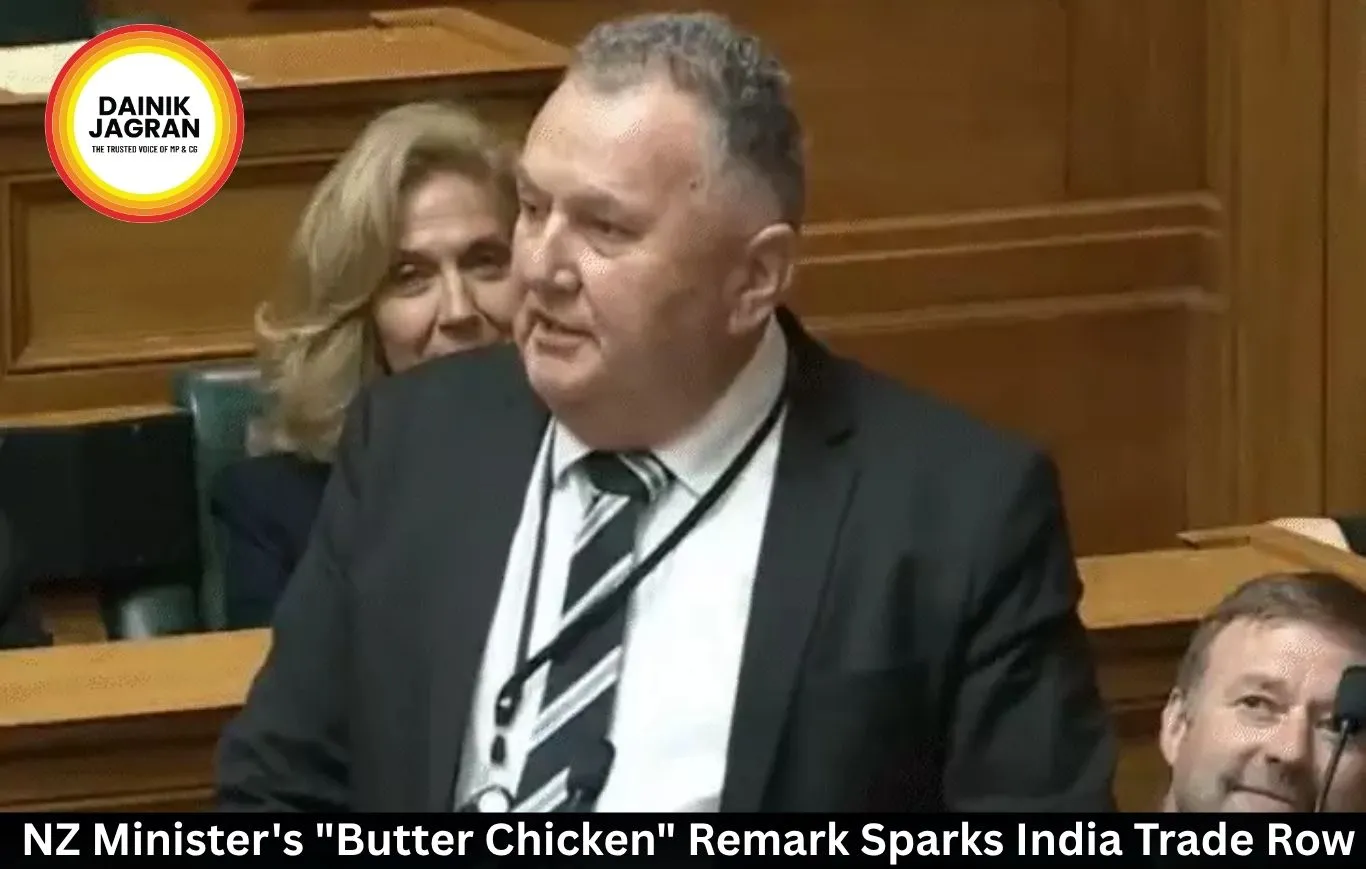
NZ Minister's "Butter Chicken" Remark Sparks India Trade Row
Digital Desk
New Zealand minister Shane Jones faces racism backlash after "butter chicken tsunami" comment on India trade deal. PM Luxon calls remarks unhelpful as agreement faces political pressure.
New Zealand Minister's "Butter Chicken Tsunami" Remark Sparks Racial Backlash Ahead of Trade Deal
India-NZ trade agreement faces political headwinds as language row intensifies
New Zealand's proposed free trade agreement with India faces an unexpected political storm after a senior government minister triggered a racism row with a controversial comment. Shane Jones, deputy leader of New Zealand First, sparked widespread criticism after describing concerns about the bilateral trade deal as a "butter chicken tsunami," language now being condemned as culturally insensitive.
The remark has thrown the trade agreement—set to be signed in New Delhi next week—into uncertain waters, despite both governments framing it as a once-in-a-generation opportunity for economic cooperation and business expansion.
Row Erupts Over Minister's "Tsunami" Language
Speaking at Parliament on Tuesday, Jones expressed his party's staunch opposition to the trade agreement, predicting it would trigger "unfettered immigration" to New Zealand. The deputy leader claimed the arrangement would result in wage suppression, congested roads, and strain on public healthcare and service infrastructure.
"I don't care how much criticism we get. I am just never going to agree with a butter chicken tsunami coming to New Zealand," Jones said, according to multiple media reports. The comment, now circulating widely on social media and news platforms, has ignited fierce debate about the appropriateness of using cultural references—particularly food-related imagery tied to India—in political discourse.
Government Distances Itself from "Unhelpful" Remarks
Prime Minister Christopher Luxon, addressing the controversy at his post-Cabinet press conference, stopped short of directly labelling the remarks as racist but described them as problematic. "It doesn't sound right," Luxon said, characterizing the language as "alarmist" and "unhelpful" to ongoing negotiations.
The Prime Minister emphasized that New Zealand First's immigration concerns were based on misrepresentation of the actual trade deal. "We have taken them through the data, we have taken them through the details of that deal. We'll continue to do so, because we would love them to rethink their position," Luxon stated. He further noted that his government remains committed to the agreement, believing it will strengthen bilateral ties and create significant business opportunities.
Minister Defends Controversial Language as "Attention-Grabbing"
In response to mounting backlash, Jones defended his choice of words, arguing he employs dramatic language deliberately to capture attention during political debates. However, critics contend that such rhetoric conflates India—a major trading partner and source of immigration—with stereotypical food imagery, raising questions about underlying prejudices.
The deputy leader doubled down on his opposition during remarks outside Parliament, reiterating that immigration tied to the trade agreement would undermine New Zealand's "foundation culture" and place additional pressure on stretched public services.
Trade Deal Pivots on Immigration Dispute
The fundamental disagreement centres on immigration implications embedded in the trade agreement. While the government maintains that the deal does not guarantee unrestricted migration flows, New Zealand First has campaigned fiercely against what they characterize as lax border controls linked to bilateral trade arrangements.
According to government sources, the trade deal represents a significant development for New Zealand's economic engagement in the Indo-Pacific region. Officials argue it would unlock market access for New Zealand businesses and facilitate deeper trade relations with India, currently one of Asia's largest economies.
Election-Year Politics Heat Up Over Immigration
Jones has identified immigration as a defining issue for the upcoming election, signalling that his party will make border control and cultural preservation central to their campaign messaging. The row underscores growing tensions within New Zealand's political establishment over how to frame international trade agreements in an era of heightened public concern over migration flows.
The Prime Minister countered this framing, stating that portraying the trade deal as an immigration threat was both inaccurate and counterproductive. "I appreciate they've got a pretty hard no against anything around free trade agreements. I just think that makes New Zealand poorer," Luxon remarked, suggesting that rejecting open trade diminishes economic prospects.
Implications for Bilateral Relations
The diplomatic fallout arrives at a delicate moment, with both governments preparing for formal trade agreement signings. Indian officials have not yet publicly responded to the controversy, though sources indicate New Delhi is watching developments closely. The row threatens to complicate what was expected to be a straightforward economic arrangement, potentially affecting broader India-New Zealand relations beyond trade.
Industry analysts note that the agreement could benefit sectors ranging from agriculture and technology to education and services, making the political crisis particularly significant for businesses on both sides banking on expanded market access.
--------
🚨 Beat the News Rush – Join Now!
Get breaking alerts, hot exclusives, and game-changing stories instantly on your phone. No delays, no fluff – just the edge you need. ⚡
Tap to join:
🟢 WhatsApp Channel: Dainik Jagran MP CG
Crave more?
🅕 Facebook: Dainik Jagran MP CG English
🅧 Twitter (X): Dainik Jagran MP CG
🅘 Instagram: Dainik Jagran MP CG
Share the fire – keep your crew ahead! 🗞️🔥
NZ Minister's "Butter Chicken" Remark Sparks India Trade Row
Digital Desk
New Zealand Minister's "Butter Chicken Tsunami" Remark Sparks Racial Backlash Ahead of Trade Deal
India-NZ trade agreement faces political headwinds as language row intensifies
New Zealand's proposed free trade agreement with India faces an unexpected political storm after a senior government minister triggered a racism row with a controversial comment. Shane Jones, deputy leader of New Zealand First, sparked widespread criticism after describing concerns about the bilateral trade deal as a "butter chicken tsunami," language now being condemned as culturally insensitive.
The remark has thrown the trade agreement—set to be signed in New Delhi next week—into uncertain waters, despite both governments framing it as a once-in-a-generation opportunity for economic cooperation and business expansion.
Row Erupts Over Minister's "Tsunami" Language
Speaking at Parliament on Tuesday, Jones expressed his party's staunch opposition to the trade agreement, predicting it would trigger "unfettered immigration" to New Zealand. The deputy leader claimed the arrangement would result in wage suppression, congested roads, and strain on public healthcare and service infrastructure.
"I don't care how much criticism we get. I am just never going to agree with a butter chicken tsunami coming to New Zealand," Jones said, according to multiple media reports. The comment, now circulating widely on social media and news platforms, has ignited fierce debate about the appropriateness of using cultural references—particularly food-related imagery tied to India—in political discourse.
Government Distances Itself from "Unhelpful" Remarks
Prime Minister Christopher Luxon, addressing the controversy at his post-Cabinet press conference, stopped short of directly labelling the remarks as racist but described them as problematic. "It doesn't sound right," Luxon said, characterizing the language as "alarmist" and "unhelpful" to ongoing negotiations.
The Prime Minister emphasized that New Zealand First's immigration concerns were based on misrepresentation of the actual trade deal. "We have taken them through the data, we have taken them through the details of that deal. We'll continue to do so, because we would love them to rethink their position," Luxon stated. He further noted that his government remains committed to the agreement, believing it will strengthen bilateral ties and create significant business opportunities.
Minister Defends Controversial Language as "Attention-Grabbing"
In response to mounting backlash, Jones defended his choice of words, arguing he employs dramatic language deliberately to capture attention during political debates. However, critics contend that such rhetoric conflates India—a major trading partner and source of immigration—with stereotypical food imagery, raising questions about underlying prejudices.
The deputy leader doubled down on his opposition during remarks outside Parliament, reiterating that immigration tied to the trade agreement would undermine New Zealand's "foundation culture" and place additional pressure on stretched public services.
Trade Deal Pivots on Immigration Dispute
The fundamental disagreement centres on immigration implications embedded in the trade agreement. While the government maintains that the deal does not guarantee unrestricted migration flows, New Zealand First has campaigned fiercely against what they characterize as lax border controls linked to bilateral trade arrangements.
According to government sources, the trade deal represents a significant development for New Zealand's economic engagement in the Indo-Pacific region. Officials argue it would unlock market access for New Zealand businesses and facilitate deeper trade relations with India, currently one of Asia's largest economies.
Election-Year Politics Heat Up Over Immigration
Jones has identified immigration as a defining issue for the upcoming election, signalling that his party will make border control and cultural preservation central to their campaign messaging. The row underscores growing tensions within New Zealand's political establishment over how to frame international trade agreements in an era of heightened public concern over migration flows.
The Prime Minister countered this framing, stating that portraying the trade deal as an immigration threat was both inaccurate and counterproductive. "I appreciate they've got a pretty hard no against anything around free trade agreements. I just think that makes New Zealand poorer," Luxon remarked, suggesting that rejecting open trade diminishes economic prospects.
Implications for Bilateral Relations
The diplomatic fallout arrives at a delicate moment, with both governments preparing for formal trade agreement signings. Indian officials have not yet publicly responded to the controversy, though sources indicate New Delhi is watching developments closely. The row threatens to complicate what was expected to be a straightforward economic arrangement, potentially affecting broader India-New Zealand relations beyond trade.
Industry analysts note that the agreement could benefit sectors ranging from agriculture and technology to education and services, making the political crisis particularly significant for businesses on both sides banking on expanded market access.


