

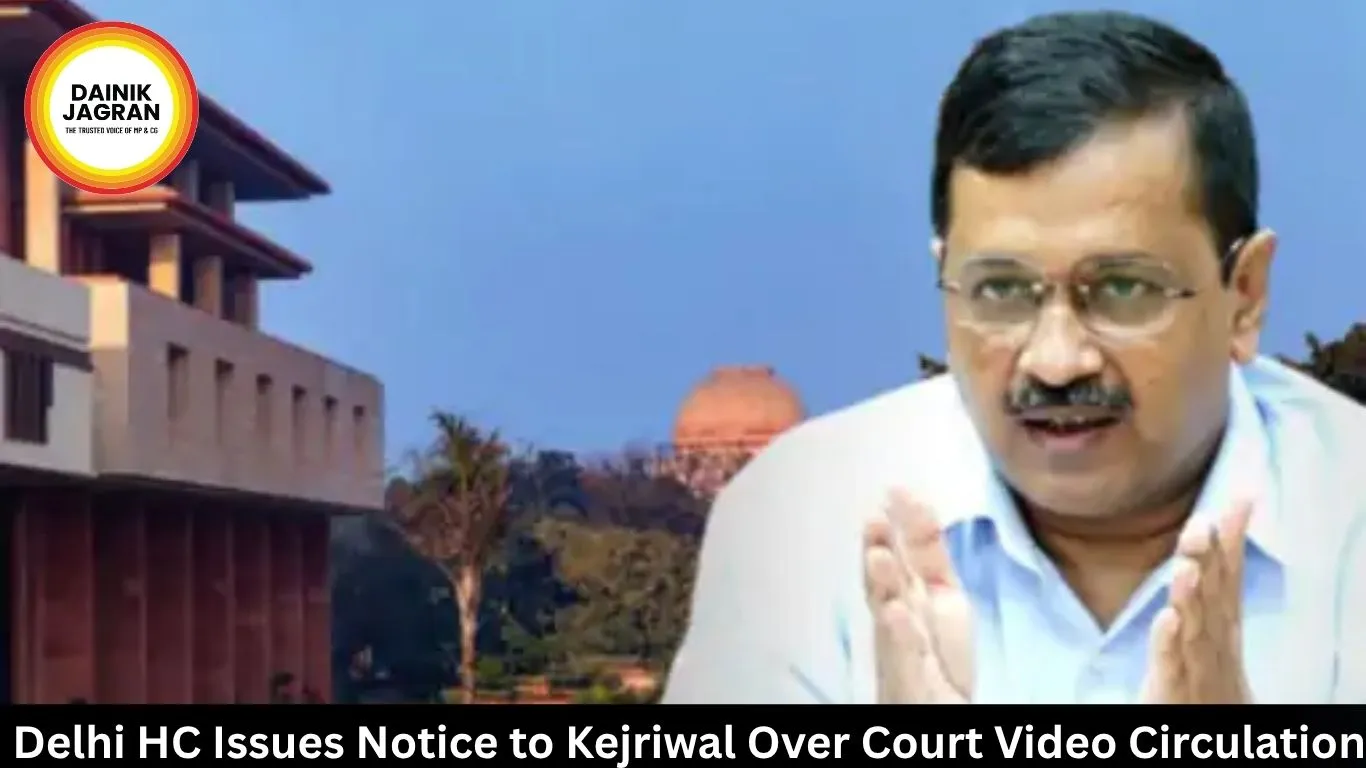
Delhi HC Issues Notice to Kejriwal Over Court Video Circulation

Digital Desk

Delhi HC Issues Notice to Kejriwal Over Court Video Circulation

Delhi High Court directs removal of unauthorized court hearing videos involving Arvind Kejriwal. Notice issued for contempt proceedings; next hearing July 6.


Delhi High Court Directs Removal of Unauthorized Court Hearing Videos

Justice Sharma recusal plea: HC issues notice against Kejriwal, Sisodia for contempt proceedings

The Delhi High Court on Thursday issued notice on a public interest litigation against former Chief Minister Arvind Kejriwal over the unauthorised recording and circulation of court proceedings on social media platforms. The bench comprising Justice V. Kameshwar Rao and Justice Manmeet Arora directed immediate removal of all related links and scheduled the next hearing for July 6.

Notice Against Multiple Respondents

Advocate Vaibhav Singh filed the petition challenging the alleged unauthorised recording of a court hearing held on April 13. According to the petition, the court proceeding was recorded without prior permission and subsequently circulated across social media platforms. Notices have been issued to former Chief Minister Kejriwal, former Deputy Chief Minister Manish Sisodia, journalist Ravish Kumar and others in connection with the matter.

The court also impleaded the Ministry of Information as a party to the proceedings, signalling the government's involvement in addressing such violations.

Video Recording Violated Court Rules

The petitioner alleged that the court hearing—which involved a plea by Kejriwal seeking the recusal of Justice Swarnkanta Sharma—was recorded and later edited in a distorted manner. The circulation of this edited footage on social media platforms, according to Singh, amounted to contempt of court and brought disrepute to judicial proceedings.

The Delhi High Court clarified that under its established rules, recording and uploading court proceedings is strictly prohibited unless prior authorisation has been obtained. The court referenced Rule 3(1)(b)(xi) of the Information Technology (Intermediary Guidelines and Digital Media Ethics Code) Rules, 2021, which mandates that digital platforms take appropriate measures to prevent illegal content circulation.

Google and Meta Comply Swiftly

During the hearing, the court was informed that Google and Meta had already removed the flagged links. Representatives of the tech platforms acknowledged receipt of official notices and confirmed prompt action. However, counsel Arvind P. Datar noted that while intermediaries had removed the objectionable content, automatically blocking such videos remains technically challenging.

The court directive now requires that if similar videos surface in future, platforms must remove them immediately upon notification and inform the Registrar General of the High Court about such instances.

Context: Kejriwal's Recusal Petition

The April 13 hearing centred on Kejriwal's plea seeking the recusal of Justice Sharma from hearing the CBI's appeal in the excise policy case. Kejriwal had alleged that Justice Sharma had participated in RSS events on four occasions and therefore should be recused from the matter.

This petition followed a trial court acquittal on February 27 in the excise policy case, where Kejriwal and 22 other accused were discharged. The CBI subsequently challenged this order, and Justice Sharma had issued notices and stayed certain aspects of the acquittal order.

Excise Policy Case Background

The Delhi government's 2021 excise policy, designed to increase revenue and improve liquor trade regulation, became the subject of investigation after allegations of irregularities emerged. The Lieutenant Governor ordered a CBI probe, with both the CBI and Enforcement Directorate alleging that private companies received undue benefits through irregular policy implementation.

Kejriwal was arrested during the 2024 Lok Sabha election campaign and released on Supreme Court bail after spending 156 days in custody. Sisodia remained in jail for 530 days in the case before obtaining bail.

Judicial Precedent and Future Safeguards

The Delhi High Court's intervention underscores growing concerns over misuse of court-related content for public discourse. The petitioner had argued that failure to take strict action could establish harmful precedents, potentially encouraging further unauthorised circulation of sensitive judicial proceedings.

The July 6 hearing will determine the extent of liability and appropriate remedial measures against those involved in recording and distributing the court hearing without authorisation.


--------

🚨 Beat the News Rush – Join Now!

Get breaking alerts, hot exclusives, and game-changing stories instantly on your phone. No delays, no fluff – just the edge you need. ⚡

Tap to join: 

🟢 WhatsApp Channel: Dainik Jagran MP CG

Crave more?

🅕 Facebook: Dainik Jagran MP CG English

🅧 Twitter (X): Dainik Jagran MP CG

🅘 Instagram: Dainik Jagran MP CG

Share the fire – keep your crew ahead! 🗞️🔥

english.dainikjagranmpcg.com
23 Apr 2026 By Abhishek Joshi

Delhi HC Issues Notice to Kejriwal Over Court Video Circulation

Digital Desk

Delhi High Court Directs Removal of Unauthorized Court Hearing Videos

Justice Sharma recusal plea: HC issues notice against Kejriwal, Sisodia for contempt proceedings

The Delhi High Court on Thursday issued notice on a public interest litigation against former Chief Minister Arvind Kejriwal over the unauthorised recording and circulation of court proceedings on social media platforms. The bench comprising Justice V. Kameshwar Rao and Justice Manmeet Arora directed immediate removal of all related links and scheduled the next hearing for July 6.

Notice Against Multiple Respondents

Advocate Vaibhav Singh filed the petition challenging the alleged unauthorised recording of a court hearing held on April 13. According to the petition, the court proceeding was recorded without prior permission and subsequently circulated across social media platforms. Notices have been issued to former Chief Minister Kejriwal, former Deputy Chief Minister Manish Sisodia, journalist Ravish Kumar and others in connection with the matter.

The court also impleaded the Ministry of Information as a party to the proceedings, signalling the government's involvement in addressing such violations.

Video Recording Violated Court Rules

The petitioner alleged that the court hearing—which involved a plea by Kejriwal seeking the recusal of Justice Swarnkanta Sharma—was recorded and later edited in a distorted manner. The circulation of this edited footage on social media platforms, according to Singh, amounted to contempt of court and brought disrepute to judicial proceedings.

The Delhi High Court clarified that under its established rules, recording and uploading court proceedings is strictly prohibited unless prior authorisation has been obtained. The court referenced Rule 3(1)(b)(xi) of the Information Technology (Intermediary Guidelines and Digital Media Ethics Code) Rules, 2021, which mandates that digital platforms take appropriate measures to prevent illegal content circulation.

Google and Meta Comply Swiftly

During the hearing, the court was informed that Google and Meta had already removed the flagged links. Representatives of the tech platforms acknowledged receipt of official notices and confirmed prompt action. However, counsel Arvind P. Datar noted that while intermediaries had removed the objectionable content, automatically blocking such videos remains technically challenging.

The court directive now requires that if similar videos surface in future, platforms must remove them immediately upon notification and inform the Registrar General of the High Court about such instances.

Context: Kejriwal's Recusal Petition

The April 13 hearing centred on Kejriwal's plea seeking the recusal of Justice Sharma from hearing the CBI's appeal in the excise policy case. Kejriwal had alleged that Justice Sharma had participated in RSS events on four occasions and therefore should be recused from the matter.

This petition followed a trial court acquittal on February 27 in the excise policy case, where Kejriwal and 22 other accused were discharged. The CBI subsequently challenged this order, and Justice Sharma had issued notices and stayed certain aspects of the acquittal order.

Excise Policy Case Background

The Delhi government's 2021 excise policy, designed to increase revenue and improve liquor trade regulation, became the subject of investigation after allegations of irregularities emerged. The Lieutenant Governor ordered a CBI probe, with both the CBI and Enforcement Directorate alleging that private companies received undue benefits through irregular policy implementation.

Kejriwal was arrested during the 2024 Lok Sabha election campaign and released on Supreme Court bail after spending 156 days in custody. Sisodia remained in jail for 530 days in the case before obtaining bail.

Judicial Precedent and Future Safeguards

The Delhi High Court's intervention underscores growing concerns over misuse of court-related content for public discourse. The petitioner had argued that failure to take strict action could establish harmful precedents, potentially encouraging further unauthorised circulation of sensitive judicial proceedings.

The July 6 hearing will determine the extent of liability and appropriate remedial measures against those involved in recording and distributing the court hearing without authorisation.


https://english.dainikjagranmpcg.com/national/delhi-hc-issues-notice-to-kejriwal-over-court-video-circulation/article-17294

Related Posts

Latest News


