


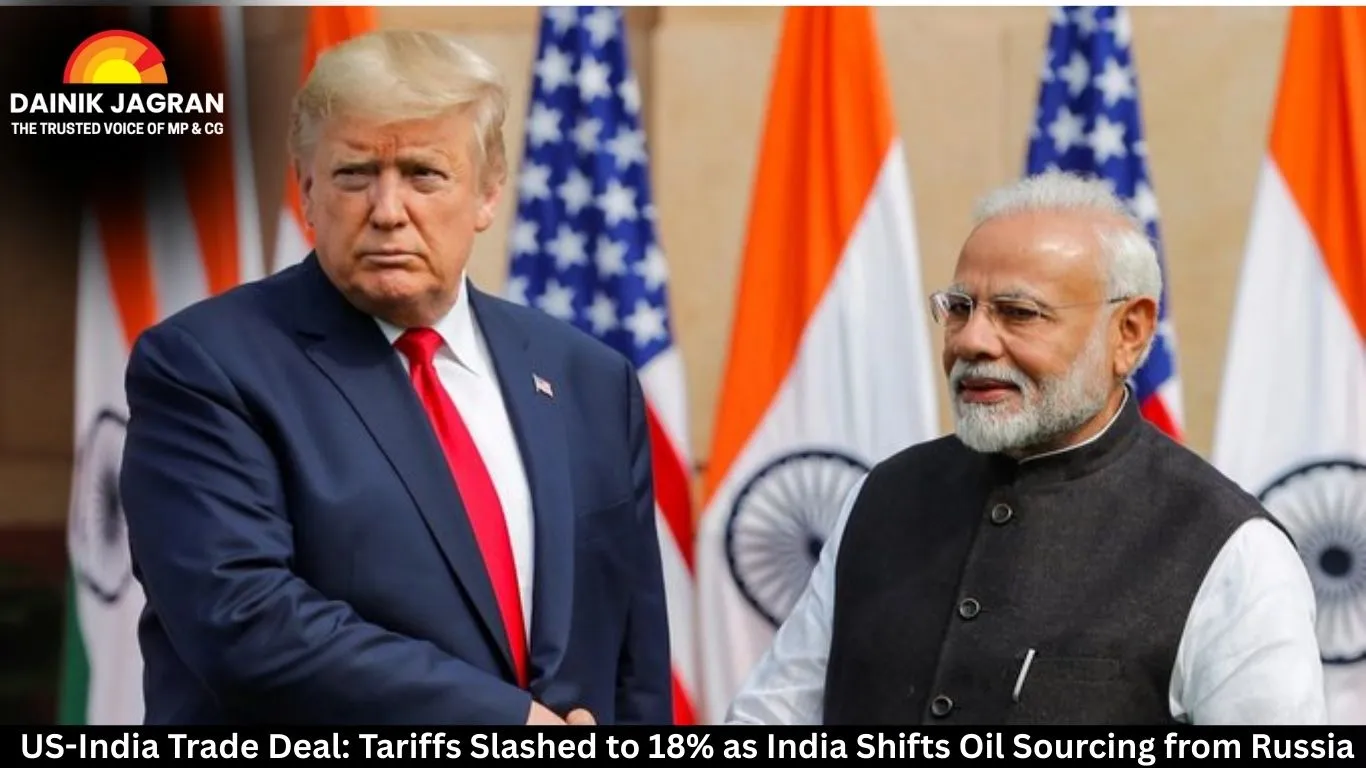
US-India Trade Deal: Tariffs Slashed to 18% as India Shifts Oil Sourcing from Russia
Digital Desk
In a significant boost to bilateral ties, US President Donald Trump announced a landmark US-India trade deal on Monday, reducing tariffs on Indian goods from 25% to 18%. This move comes amid escalating global tensions, particularly the Russia-Ukraine war, where energy sourcing plays a pivotal role. Prime Minister Narendra Modi expressed gratitude, signaling stronger economic cooperation between the world's two largest democracies.
Key Details of the Deal
The announcement followed a phone conversation between Trump and Modi, where discussions centered on trade, energy, and geopolitical issues. Trump shared details on Truth Social, stating India would cease oil purchases from Russia and increase imports from the US. He also mentioned the option for India to source oil from Venezuela, aiming to curb funding for Russia's war efforts.
Under the agreement, India commits to buying over $500 billion worth of US goods, including energy, technology, agriculture, and coal, aligning with Trump's "Buy American" policy. In return, the US lifts the additional 25% penalty tariff imposed on India for Russian oil imports, bringing the total down to 18%. Modi responded on X: "Thank you, President Trump, on behalf of the 1.4 billion people of India."
US Ambassador to India, Sergio Gor, confirmed the deal is nearing finalization, with technical papers to be signed soon. He highlighted that this positions India's tariffs among the lowest globally, reflecting the deep friendship between the leaders.
Why This Matters Now
This US-India trade deal is timely amid the ongoing Russia-Ukraine conflict, which has disrupted global energy markets. By shifting away from Russian oil, India— a major importer—helps isolate Russia's economy, potentially hastening peace efforts. Experts note this aligns with broader trends in international relations, where energy diplomacy influences alliances.
Simulated expert perspective from Dr. Elena Vasquez, a global trade analyst at the Brookings Institution: "This deal not only eases trade barriers but also strategically realigns supply chains. For India, it means diversified energy sources and access to advanced US tech, reducing dependency on volatile suppliers."
Implications and Practical Takeaways
For businesses, the tariff cut could lower costs for Indian exports like textiles, pharmaceuticals, and steel, boosting competitiveness in the US market. Indian consumers might see benefits from increased US imports, such as affordable energy and agricultural products.
Actionable insights:
- Exporters: Monitor tariff schedules for compliance and explore new US markets.
- Investors: Watch for opportunities in Indo-US joint ventures in tech and energy.
- Policymakers: This sets a precedent for similar deals, emphasizing mutual benefits over punitive measures.
Trump's pre-call posts on Truth Social, featuring India Gate and a magazine cover with Modi, underscore the personal rapport driving this pact. He even teased plans for an "Arc de Trump" in Washington, inspired by global landmarks.
The US-India trade deal marks a new chapter in economic partnership, with tariff reductions and oil shifts promising mutual growth. As Trump and Modi steer this alliance forward, it could reshape global trade dynamics, benefiting billions. Stay tuned for updates as the deal finalizes.

.jpg)




