Trump Peace Plan in Pieces: How the Middle East War Shattered the 'Deal of the Century'
Digital Desk
Donald Trump's 'Deal of the Century' peace plan lies in tatters as the Middle East war expands. The vision that once normalized Arab-Israeli relations has been overtaken by Iran conflict.
Trump Peace Plan in Pieces: How War in the Middle East Buried the 'Deal of the Century'
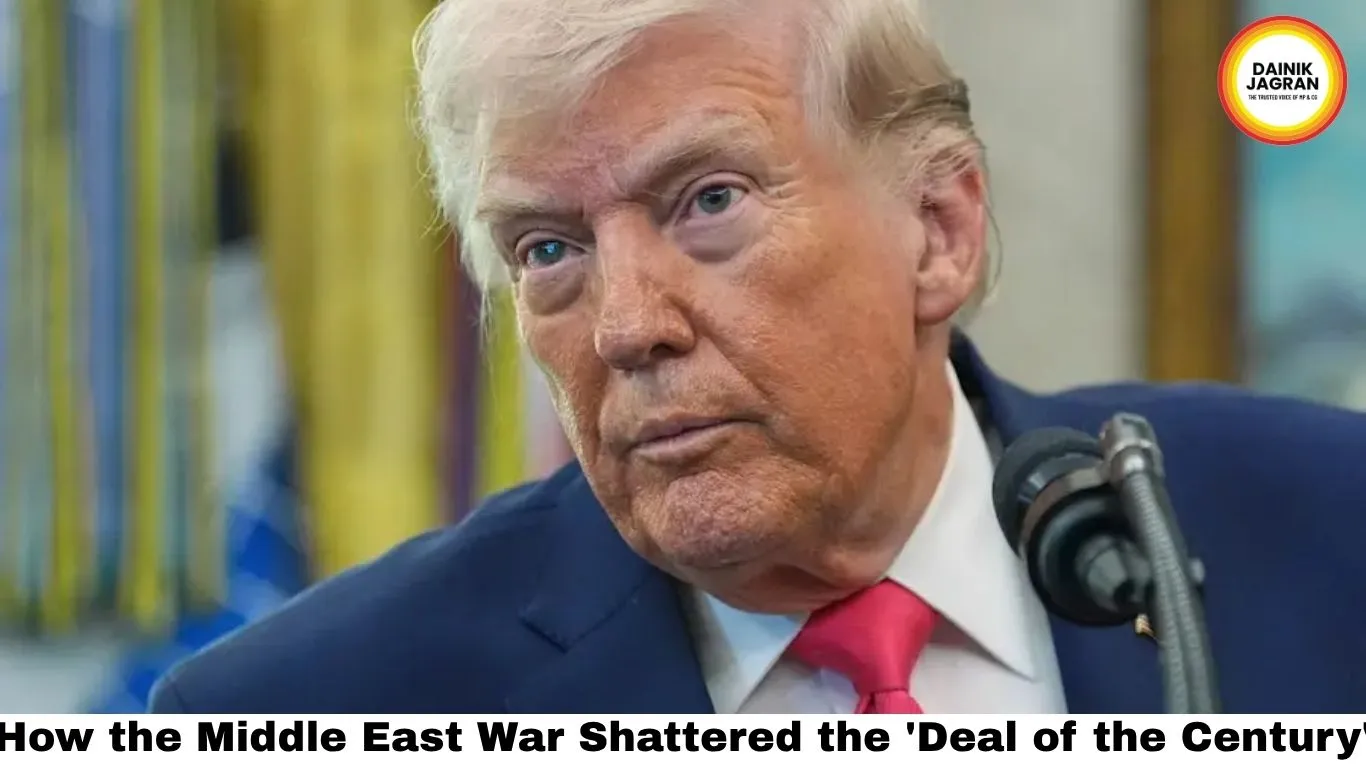
Just months ago, Donald Trump was touting his administration's Middle East vision as the crowning achievement of his foreign policy legacy. Today, that vision lies in pieces—shattered by the very conflict it was designed to prevent.
The so-called "Deal of the Century" —a peace plan that promised to resolve the Israeli-Palestinian conflict and usher in an era of Arab-Israeli normalization—has been overtaken by the brutal reality of a regional war that now threatens to engulf the entire Middle East.
When Trump returned to the White House in January 2025, he inherited a region on edge but still tethered to the fragile structures of the Abraham Accords. By March 2026, those structures have collapsed under the weight of a conflict that has drawn in Iran, Israel, the United States, and multiple Arab nations .
What Was the Trump Peace Plan?
To understand what has been lost, we need to look back at the blueprint Trump unveiled in January 2020 .
The "Peace to Prosperity" plan, as it was formally known, proposed:
-
A two-state solution with a demilitarized Palestinian state
-
Jerusalem as Israel's undivided capital, with a Palestinian capital in eastern Jerusalem's suburbs
-
Israeli sovereignty over Jewish settlements in the West Bank
-
A $50 billion economic investment package for Palestinians and neighboring states
Critics called it heavily biased toward Israel. Supporters called it a realistic departure from decades of failed negotiations .
But the plan's true legacy was meant to be normalization—not resolution. The Abraham Accords, brokered in 2020, saw the UAE, Bahrain, Morocco, and Sudan normalize relations with Israel without requiring a Palestinian state .
For Trump and his son-in-law Jared Kushner, the architect of the strategy, the calculation was simple: economic integration and regional alliances would gradually defuse tensions, making the Palestinian issue less central to Arab-Israeli relations .
How the War Unraveled Everything
The peace plan's unraveling began on February 4, 2026—a date that will likely be etched into Middle East history books.
That day, a joint US-Israeli airstrike killed Iranian Quds Force commander Esmail Qaani in Damascus . Iran's response was swift and devastating: coordinated drone and missile strikes against Israeli and US targets across the region .
The conflict escalated rapidly:
-
February 12: Iran effectively closes the Strait of Hormuz to all but friendly nations, choking global energy supplies
-
February 16: Houthi forces in Yemen launch long-range missiles at Israel, with one reportedly intercepted over the Negev Desert
-
March: Iranian Foreign Minister Abbas Araghchi declares the region "a war zone," with only five nations—India, China, Russia, Iraq, and Pakistan—permitted passage through the strait
The Abraham Accords, designed to create a "moderate axis" against Iran, have instead become a target. UAE and Bahrain, once eager to engage with Israel, now find themselves caught between their new alliance and their proximity to Iranian retaliation .
'The Deal Is Dead'
The grim assessment is coming from all sides.
John Bolton, Trump's former National Security Advisor and now a vocal critic of the administration's Iran policy, told Fox News earlier this month:
"The peace plan is effectively dead. The administration's entire Middle East strategy was predicated on the idea that you could isolate Iran through economic pressure and normalization. Instead, we've stumbled into a war that has undone all of that work" .
Even Kushner, who has largely retreated from public view since the conflict began, has reportedly acknowledged privately that the situation has spiraled beyond the framework he designed .
The Palestinian Authority, which rejected the Trump plan outright in 2020, has watched from the sidelines as the conflict has made their cause—once the central issue in Middle East diplomacy—a footnote to a much larger war .
Trump's 'Maximum Pressure' Gamble Backfires
At the heart of the collapse is Trump's revived "maximum pressure" campaign against Iran—a strategy that worked during his first term but has backfired spectacularly this time.
The president's decision to extend his ultimatum to strike Iranian power plants by 10 days in early March was seen by analysts as a sign of hesitation . Reports that Trump was considering sending more ground troops to the region have kept markets and allies on edge .
The administration's strategy, articulated by Secretary of State Marco Rubio, has been to present Iran with a binary choice: "Either we will strike or they will come to the table" .
Iran has chosen neither. Instead, it has opted to bleed the US and its allies through asymmetric warfare—closing the strait, arming proxies, and forcing a slow, grinding conflict that drains resources and willpower .
The Human and Economic Toll
The crumbling of the peace plan is not just a diplomatic failure—it has real-world consequences that are now being felt globally:
-
Oil prices have surged past $100 per barrel, with Brent crude trading at $107
-
The Indian rupee hit a record low past 94 per dollar
-
Global supply chains are disrupted, with fertilizer and food prices rising as planting season approaches
-
Hundreds of thousands have been displaced in border regions between Israel and Lebanon
UN Secretary-General Antonio Guterres delivered a stark warning on March 25:
"The prolonged closure of the Strait of Hormuz is choking the movement of oil, gas, and fertilizer at a critical moment in the global planting season. The best way to minimize those consequences is clear: End the war—immediately" .
What's Left of the Vision?
So what remains of Trump's Middle East peace legacy?
The Abraham Accords still technically exist on paper, but their spirit has been hollowed out by the conflict. Saudi Arabia, the ultimate prize that Trump desperately wanted to bring into the normalization fold, has frozen talks and adopted a more cautious posture .
The Palestinian issue—which the accords were meant to sideline—has re-emerged as a rallying cry across the Arab world, though no Arab government has shown willingness to sacrifice its own interests for it .
The economic investment plan, which promised billions in development, is now overshadowed by defense spending and war budgets .
The Road Ahead
As the conflict enters its third month, the administration appears to have no clear off-ramp. The "peace plan" that once represented Trump's vision for a stable, prosperous Middle East now sits in pieces—a monument to the limits of transactional diplomacy in a region defined by ancient grievances and emerging great-power rivalries .
For the millions living in the shadow of this war, the question is no longer whether the Deal of the Century will be implemented. It is whether any peace—of any kind—can be salvaged from the wreckage .

--------
๐จ Beat the News Rush โ Join Now!
Get breaking alerts, hot exclusives, and game-changing stories instantly on your phone. No delays, no fluff โ just the edge you need. โก
Tap to join:ย
๐ข WhatsApp Channel: https://whatsapp.com/channel/0029VbAeWYG72WTxso1CFr2g
Crave more?
๐ Facebook: English Dainik Jagran MP CG
๐ ง Twitter (X): Jagran MP CG
๐ Instagram: Dainik Jagran MP CG
Share the fire โ keep your crew ahead! ๐๏ธ๐ฅ
Trump Peace Plan in Pieces: How the Middle East War Shattered the 'Deal of the Century'
Digital Desk
Trump Peace Plan in Pieces: How War in the Middle East Buried the 'Deal of the Century'
Just months ago, Donald Trump was touting his administration's Middle East vision as the crowning achievement of his foreign policy legacy. Today, that vision lies in pieces—shattered by the very conflict it was designed to prevent.
The so-called "Deal of the Century" —a peace plan that promised to resolve the Israeli-Palestinian conflict and usher in an era of Arab-Israeli normalization—has been overtaken by the brutal reality of a regional war that now threatens to engulf the entire Middle East.
When Trump returned to the White House in January 2025, he inherited a region on edge but still tethered to the fragile structures of the Abraham Accords. By March 2026, those structures have collapsed under the weight of a conflict that has drawn in Iran, Israel, the United States, and multiple Arab nations .
What Was the Trump Peace Plan?
To understand what has been lost, we need to look back at the blueprint Trump unveiled in January 2020 .
The "Peace to Prosperity" plan, as it was formally known, proposed:
-
A two-state solution with a demilitarized Palestinian state
-
Jerusalem as Israel's undivided capital, with a Palestinian capital in eastern Jerusalem's suburbs
-
Israeli sovereignty over Jewish settlements in the West Bank
-
A $50 billion economic investment package for Palestinians and neighboring states
Critics called it heavily biased toward Israel. Supporters called it a realistic departure from decades of failed negotiations .
But the plan's true legacy was meant to be normalization—not resolution. The Abraham Accords, brokered in 2020, saw the UAE, Bahrain, Morocco, and Sudan normalize relations with Israel without requiring a Palestinian state .
For Trump and his son-in-law Jared Kushner, the architect of the strategy, the calculation was simple: economic integration and regional alliances would gradually defuse tensions, making the Palestinian issue less central to Arab-Israeli relations .
How the War Unraveled Everything
The peace plan's unraveling began on February 4, 2026—a date that will likely be etched into Middle East history books.
That day, a joint US-Israeli airstrike killed Iranian Quds Force commander Esmail Qaani in Damascus . Iran's response was swift and devastating: coordinated drone and missile strikes against Israeli and US targets across the region .
The conflict escalated rapidly:
-
February 12: Iran effectively closes the Strait of Hormuz to all but friendly nations, choking global energy supplies
-
February 16: Houthi forces in Yemen launch long-range missiles at Israel, with one reportedly intercepted over the Negev Desert
-
March: Iranian Foreign Minister Abbas Araghchi declares the region "a war zone," with only five nations—India, China, Russia, Iraq, and Pakistan—permitted passage through the strait
The Abraham Accords, designed to create a "moderate axis" against Iran, have instead become a target. UAE and Bahrain, once eager to engage with Israel, now find themselves caught between their new alliance and their proximity to Iranian retaliation .
'The Deal Is Dead'
The grim assessment is coming from all sides.
John Bolton, Trump's former National Security Advisor and now a vocal critic of the administration's Iran policy, told Fox News earlier this month:
"The peace plan is effectively dead. The administration's entire Middle East strategy was predicated on the idea that you could isolate Iran through economic pressure and normalization. Instead, we've stumbled into a war that has undone all of that work" .
Even Kushner, who has largely retreated from public view since the conflict began, has reportedly acknowledged privately that the situation has spiraled beyond the framework he designed .
The Palestinian Authority, which rejected the Trump plan outright in 2020, has watched from the sidelines as the conflict has made their cause—once the central issue in Middle East diplomacy—a footnote to a much larger war .
Trump's 'Maximum Pressure' Gamble Backfires
At the heart of the collapse is Trump's revived "maximum pressure" campaign against Iran—a strategy that worked during his first term but has backfired spectacularly this time.
The president's decision to extend his ultimatum to strike Iranian power plants by 10 days in early March was seen by analysts as a sign of hesitation . Reports that Trump was considering sending more ground troops to the region have kept markets and allies on edge .
The administration's strategy, articulated by Secretary of State Marco Rubio, has been to present Iran with a binary choice: "Either we will strike or they will come to the table" .
Iran has chosen neither. Instead, it has opted to bleed the US and its allies through asymmetric warfare—closing the strait, arming proxies, and forcing a slow, grinding conflict that drains resources and willpower .
The Human and Economic Toll
The crumbling of the peace plan is not just a diplomatic failure—it has real-world consequences that are now being felt globally:
-
Oil prices have surged past $100 per barrel, with Brent crude trading at $107
-
The Indian rupee hit a record low past 94 per dollar
-
Global supply chains are disrupted, with fertilizer and food prices rising as planting season approaches
-
Hundreds of thousands have been displaced in border regions between Israel and Lebanon
UN Secretary-General Antonio Guterres delivered a stark warning on March 25:
"The prolonged closure of the Strait of Hormuz is choking the movement of oil, gas, and fertilizer at a critical moment in the global planting season. The best way to minimize those consequences is clear: End the war—immediately" .
What's Left of the Vision?
So what remains of Trump's Middle East peace legacy?
The Abraham Accords still technically exist on paper, but their spirit has been hollowed out by the conflict. Saudi Arabia, the ultimate prize that Trump desperately wanted to bring into the normalization fold, has frozen talks and adopted a more cautious posture .
The Palestinian issue—which the accords were meant to sideline—has re-emerged as a rallying cry across the Arab world, though no Arab government has shown willingness to sacrifice its own interests for it .
The economic investment plan, which promised billions in development, is now overshadowed by defense spending and war budgets .
The Road Ahead
As the conflict enters its third month, the administration appears to have no clear off-ramp. The "peace plan" that once represented Trump's vision for a stable, prosperous Middle East now sits in pieces—a monument to the limits of transactional diplomacy in a region defined by ancient grievances and emerging great-power rivalries .
For the millions living in the shadow of this war, the question is no longer whether the Deal of the Century will be implemented. It is whether any peace—of any kind—can be salvaged from the wreckage .