


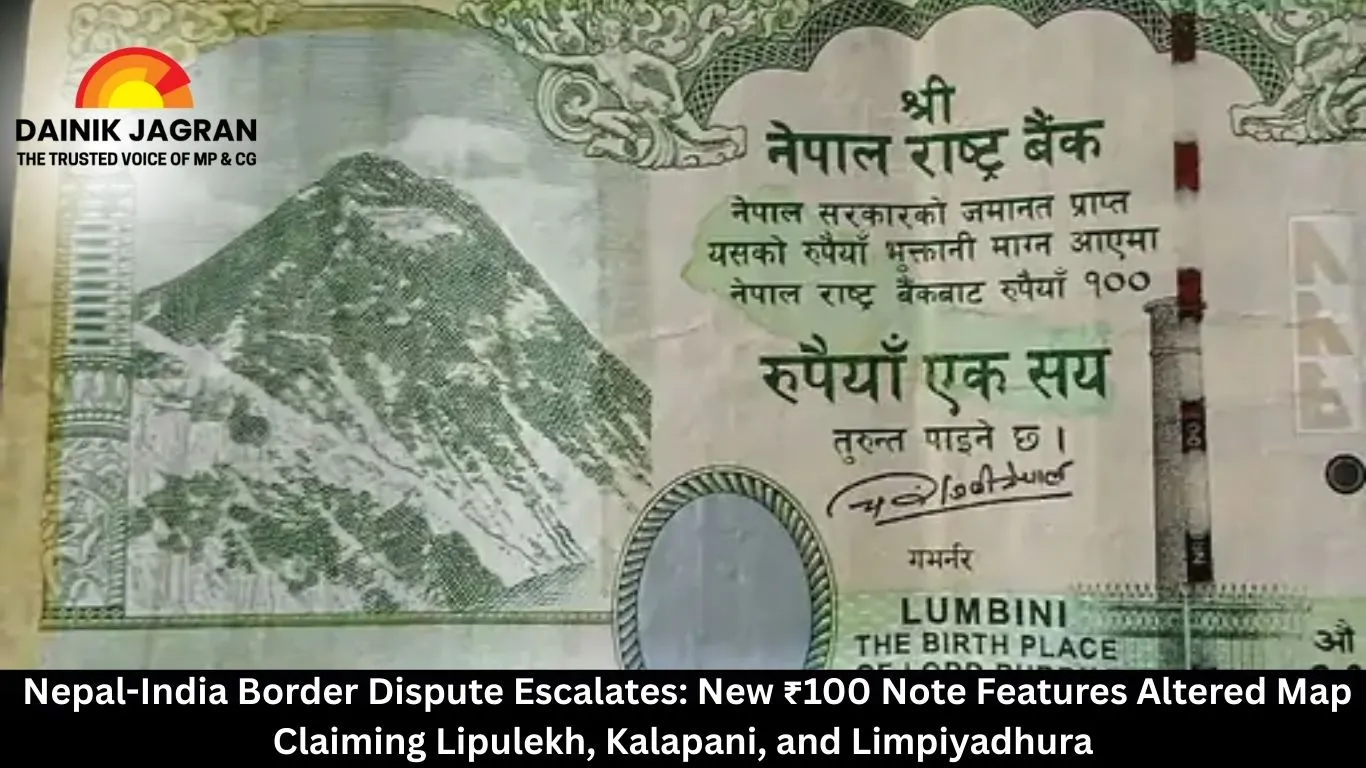
Nepal-India Border Dispute Escalates: New ₹100 Note Features Altered Map Claiming Lipulekh, Kalapani, and Limpiyadhura
Digital Desk
This development marks a fresh chapter in the Indo-Nepal territorial conflict, highlighting ongoing tensions over the 1,850 km Indo-Nepal border that stretches across states like Sikkim, West Bengal, Bihar, Uttar Pradesh, and Uttarakhand. As Nepal claims Indian territories on its currency, experts warn of potential strain on India-Nepal relations amid shared cultural, economic, and geopolitical interests.
Key Details of the Controversial ₹100 Note
The newly released Nepal Rastra Bank ₹100 note, signed by former Governor Maha Prasad Adhikari and dated 2081 BS (2024 AD), prominently displays the disputed map in light green at its center. Here's what makes this currency edition stand out:
- Exclusive Map Feature: The altered map appears only on the ₹100 denomination, absent from other notes like ₹10, ₹50, ₹500, and ₹1,000.
- Design Highlights: The obverse side showcases Mount Everest, while the reverse includes a watermark of Nepal's national flower (Gurrans), the Ashoka pillar from Lumbini, and a majestic horned rhinoceros.
- Symbolic Gesture: Nepal views this as an assertion of sovereignty, but India labels it a "unilateral action" that disregards historical facts and bilateral agreements.
India's Ministry of External Affairs (MEA) responded swiftly, stating: "Symbolic claims cannot alter reality. We urge Nepal to respect India's sovereignty and territorial integrity." The MEA further noted that these inclusions violate established pacts, calling for diplomatic dialogue to resolve the Kalapani-Lipulekh dispute.
Historical Background: Roots of the Nepal-India Border Dispute
The Nepal-India territorial claims trace back to the 1816 Treaty of Sugauli, signed after the Anglo-Nepalese War. This agreement defined the Kali (Mahakali) River as the natural boundary:
- India's Stance: Recognizes the eastern stream of the river as its origin, solidifying control over Kalapani, Lipulekh, and Limpiyadhura.
- Nepal's Position: Insists on the western stream, leading to overlapping claims and the inclusion of these areas in Nepal's 2020 constitutional map amendment.
Nepal first incorporated the revised map into its national framework in 2020, which was ratified by Parliament despite strong Indian opposition. New Delhi termed it a "fabricated, one-sided claim" that fails to change "ground realities." The 80-km Dharchula-Lipulekh road, inaugurated by India in 2020, further fueled protests from Kathmandu, viewed as an encroachment.
Strategic Significance of Lipulekh-Kalapani-Limpiyadhura
Beyond symbolism, these territories hold immense geopolitical importance in the India-Nepal-China tri-junction:
- Security Hotspot: The Kalapani-Lipulekh area serves as a critical vantage point for India to monitor Chinese military activity along the border.
- Indo-Tibetan Border Police (ITBP) Role: Deployed since 1962, the ITBP maintains a robust presence to ensure regional security.
- Pilgrimage Route: Lipulekh Pass is an essential pathway for Hindu and Buddhist pilgrims heading to Kailash-Mansarovar in Tibet.
- Economic and Cultural Ties: The region underscores the intertwined India-Nepal relations, with shared rivers, trade routes, and heritage sites.
This latest escalation via the new Nepal ₹100 note with map could complicate ongoing talks, especially as both nations navigate influences from regional powers like China.
Implications for India-Nepal Relations
As the Nepal claims 3 Indian territories gain visibility through everyday currency, the move underscores persistent historical and geopolitical issues. While economic interdependence—via open borders and remittances—binds the neighbors, unresolved disputes like this risk eroding trust.
Diplomats on both sides advocate for renewed boundary commissions to address the Treaty of Sugauli ambiguities. For now, the altered map on Nepal's ₹100 note symbolizes deeper frictions, reminding us that in South Asia, maps are more than lines on paper—they're battlegrounds for identity and sovereignty.



.jpg)




