


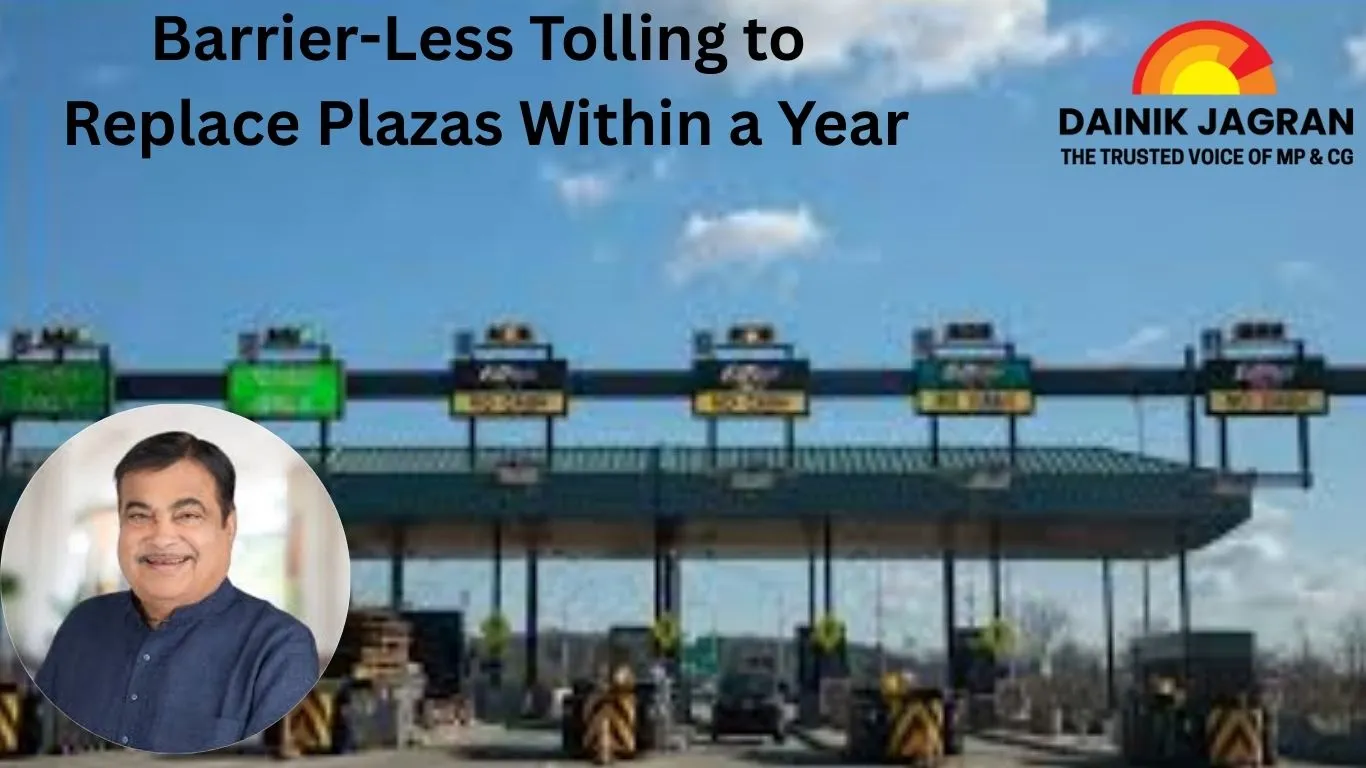
Barrier-Less Tolling to Replace Plazas Within a Year, Says Nitin Gadkari
Digital Desk
Gadkari informed Parliament that the pilot phase of the new system is already operational at 10 locations, and the ministry plans nationwide rollout in the coming year. He added that the country currently has nearly 4,500 active highway projects worth approximately ₹10 lakh crore.
New Tolling Method to Replace Physical Barriers
The upcoming system is designed to end manual payments and reduce congestion caused by queues at toll plazas. FASTag significantly sped up toll payments in recent years, but the next stage, Gadkari said, is a barrier-less, high-technology tolling system that allows vehicles to maintain movement without slowing down.
How the New System Works
The new framework is backed by the National Payments Corporation of India’s National Electronic Toll Collection (NETC) program, a unified digital tolling platform intended to streamline toll collection across all highways.
NETC relies on FASTag, which uses RFID technology to automatically deduct toll amounts as vehicles pass through a lane. Under the upgraded model, FASTag will be integrated with Automatic Number Plate Recognition (ANPR) cameras to authenticate vehicles and enable seamless toll deduction.
Gadkari said combining ANPR data with RFID will allow tolls to be collected in seconds without the need for gates or barriers. Vehicles without valid FASTags or those attempting to evade tolls may receive e-notices, and penalties could be imposed through the VAHAN database.
Toward a Fully Digital Highway System
Officials say the system will reduce traffic congestion, enhance enforcement, and ensure more accurate toll collection. The government expects that once fully implemented, the model will modernize India’s highway network and significantly cut travel delays across major routes.


.jpg)

.jpg)




