Mojtaba Khamenei's First Acts as Iran's Supreme Leader: Missile Strikes on USS Abraham Lincoln, Strait of Hormuz Blockade and a Vow to Avenge His Father — Full War Update March 13, 2026
Digital Desk
Mojtaba Khamenei elected Iran's new Supreme Leader after father's assassination. Iran claims missile hits on USS Abraham Lincoln. US denies. Strait of Hormuz blockade, oil at $100+. Full update.
The Son Inherits the War His Father Could Not Finish
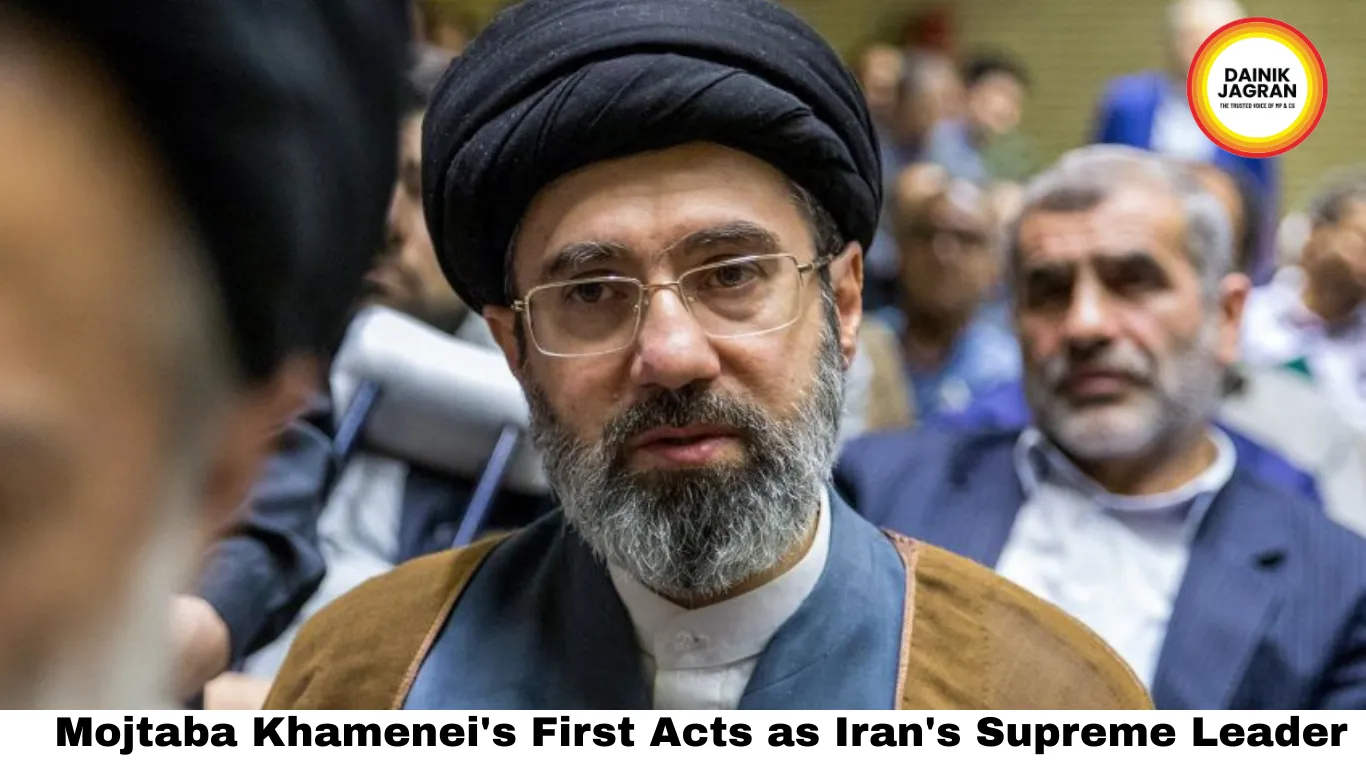
On February 28, 2026, a US-Israeli airstrike in Tehran killed Supreme Leader Ayatollah Ali Khamenei, several of his family members, and with them, the assumption that decapitating Iran's leadership would end the conflict. It did not. Within days, Mojtaba Khamenei — Khamenei's second son — was elected on March 8, 2026 to replace his father as Iran's new Supreme Leader, with the IRGC and Iran's top leaders including Mohammad Bagher Ghalibaf, Ali Larijani and Masoud Pezeshkian pledging their allegiance to him. Wikipedia
His first public acts have been anything but conciliatory. In his first statement as Supreme Leader, Mojtaba Khamenei called on Iranians to remain united, urged people to attend Quds Day events, and stressed that Iran would avenge those killed in the attacks — including his father. That language signals a leadership preparing its population for a conflict that may last considerably longer than anyone initially anticipated. News9live
The Aircraft Carrier Battle: Claims, Counter-Claims and What Is Verified
The most dramatic flashpoint of the past 24 hours has been the competing narratives around Iran's attacks on US aircraft carriers — the centrepiece of the Hindustan Times report.
Iran's Revolutionary Guards stated that the USS Abraham Lincoln was struck by four ballistic missiles, warning that "the land and sea will increasingly become the graveyard of the terrorist aggressors." Asianet Newsable
The US response was blunt. CENTCOM flatly denied the claim, stating: "The Lincoln was not hit. The missiles launched didn't even come close." It added that the Lincoln continues to launch aircraft in support of CENTCOM's campaign to eliminate threats from the Iranian regime. The Free Press Journal
Iran has repeatedly claimed it hit the Lincoln with ballistic missiles — something CENTCOM has called a "LIE" in a social media post. US video released to media continues to show F/A-18 and F-35 fighters taking off and landing on the Lincoln, suggesting the carrier remains fully operational. Amar Ujala
Iran's navy separately said it fired a coast-to-sea missile at the USS Abraham Lincoln in the Gulf region. The announcement followed a claim by Iran on Thursday that drones had struck the carrier — an assertion also quickly rejected by US officials who said there was no evidence the vessel was hit. Dainikjagranmpcg
The pattern is clear: Iran is conducting information warfare alongside its military campaign, claiming carrier strikes that the US denies and cannot independently verify either way given the fog of active conflict.
What Is Confirmed: The Scale of Operation Epic Fury
While the carrier strike claims remain disputed, the confirmed facts of the war paint a picture of extraordinary military intensity on both sides.
US Central Command Commander Admiral Brad Cooper confirmed that US forces have struck nearly 2,000 targets with more than 2,000 munitions, severely degrading Iran's air defences and destroying hundreds of Iranian ballistic missiles, launchers and drones. The US has also taken out more than 60 Iranian ships — including the last of four Soleimani-class warships, eliminating an entire class of Iranian naval vessels from the conflict. ThePrint
US forces sank an Iranian warship in the Indian Ocean using a single MK 48 torpedo from a fast-attack submarine — the first such action since World War II, confirmed by Defence Secretary Pete Hegseth and Joint Chiefs Chairman General Dan Caine. LatestLY
By March 5, Iran had fired over 500 ballistic and naval missiles and nearly 2,000 drones since February 28 — with approximately 40 per cent aimed at Israel and 60 per cent targeting US assets across the region. Wikipedia
Two US aircraft carrier strike groups remain in the region: USS Abraham Lincoln in the Arabian Sea and USS Gerald R. Ford in the Mediterranean off Israel's coast, supported by more than 150 aircraft and dozens of warships. Deccan Chronicle
The Wider War: Nine Countries, Tanker Attacks, Dubai Explosions
Iran has widened the map of the conflict, launching strikes across nine countries. Missiles and drones have hit US military presence and civilian infrastructure in all Gulf states including Bahrain, Kuwait, Qatar, Saudi Arabia, Oman and the United Arab Emirates. DNP INDIA
Iran's semi-official Tasnim news agency posted video showing an apparent missile strike on a US-owned tanker — the Safesea Vishnu, a crude oil tanker sailing under a Marshall Islands flag — in the far northern Gulf near the Iraqi coast. The vessel was seen engulfed in flames as people aboard the IRGC attack boat were heard celebrating. News9live
Explosions were also heard in downtown Dubai. The UAE government media office reported a "minor drone incident" in the al-Badaa neighbourhood — interception fire downed a drone and shrapnel hit the facade of a building on Sheikh Zayed Road, the 12-lane highway running through the heart of Dubai. Kuwait International Airport was also targeted by drones, resulting in material damage. News9live
The Strait of Hormuz: Global Energy in the Crosshairs
The conflict's most consequential economic dimension remains the Strait of Hormuz — and Iran's deliberate strategy of making it unusable.
Iran has restricted traffic through the Strait of Hormuz, driving Brent crude oil prices past $100 a barrel with wild swings ongoing, and prompting fears of a global energy crisis that is already being felt from India's hotel kitchens to European gas markets. DNP INDIA
Atlantic Council analyst Danny Citrinowitz told CBS News that Iran and its proxies can target ships through the waterway even without formally mining the strait — which explains why US warships have not yet entered the Strait of Hormuz or escorted ships through, even as President Trump claims the Iranian navy has been decimated. News9live
For India specifically, nearly 87 per cent of India's annual LPG imports pass through the Strait of Hormuz Wikipedia — which is precisely why hotel owners in Bhopal, Indore and Raipur are currently cooking on coal.
The Political Endgame: No Off-Ramp in Sight
Unlike the truce from 2025's 12-day war — which ended after Omani mediation — the assassination of Supreme Leader Khamenei has locked the US and Israel in a war of attrition with no clear off-ramp. The "decapitation" strategy that assumed Iran's government would collapse has instead produced a more radicalised successor who has the full loyalty of the IRGC. DNP INDIA
UN Secretary-General Antonio Guterres warned that the situation in the Middle East "could spiral beyond anyone's control," stating: "It is time to stop the fighting and get to serious diplomatic negotiations." Russian President Vladimir Putin separately urged an immediate end to hostilities in a call with Iranian President Pezeshkian. Dainikjagranmpcg
Trump, meanwhile, has demanded Iran's unconditional surrender — a position that, combined with Mojtaba Khamenei's vow of vengeance, leaves little visible space for the kind of mediated ceasefire that ended last year's shorter conflict.
What This Means for India
The Iran war is not an abstract geopolitical event for India. Its consequences are landing in daily life:
- LPG crisis: Commercial gas shortage hitting hotels, restaurants and wedding caterers across MP, Chhattisgarh, Maharashtra, Karnataka and Tamil Nadu
- Oil prices: Brent crude above $100 per barrel — fuel price increases are a matter of when, not if
- Shipping disruption: Indian exports and imports passing through the Arabian Sea face increased risk
- Diaspora: Large Indian communities in UAE, Kuwait, Bahrain and Saudi Arabia are living within range of Iranian drone and missile strikes
Bottom Line
Mojtaba Khamenei has inherited a war, escalated it, and shown no sign of seeking an exit. The US denies its carriers were hit and continues striking Iran's defence industrial base around the clock. The Strait of Hormuz remains effectively closed to normal tanker traffic. Oil is above $100. And the diplomatic path that ended 2025's 12-day war — Omani mediation, a defined scope of targets, room for negotiation — has been foreclosed by the assassination that started this one.
Day 13 of Operation Epic Fury. No ceasefire. No surrender. No off-ramp visible.
--------
🚨 Beat the News Rush – Join Now!
Get breaking alerts, hot exclusives, and game-changing stories instantly on your phone. No delays, no fluff – just the edge you need. ⚡
Tap to join:
🟢 WhatsApp Channel: Dainik Jagran MP CG
Crave more?
🅕 Facebook: Dainik Jagran MP CG English
🅧 Twitter (X): Dainik Jagran MP CG
🅘 Instagram: Dainik Jagran MP CG
Share the fire – keep your crew ahead! 🗞️🔥
Mojtaba Khamenei's First Acts as Iran's Supreme Leader: Missile Strikes on USS Abraham Lincoln, Strait of Hormuz Blockade and a Vow to Avenge His Father — Full War Update March 13, 2026
Digital Desk
The Son Inherits the War His Father Could Not Finish
On February 28, 2026, a US-Israeli airstrike in Tehran killed Supreme Leader Ayatollah Ali Khamenei, several of his family members, and with them, the assumption that decapitating Iran's leadership would end the conflict. It did not. Within days, Mojtaba Khamenei — Khamenei's second son — was elected on March 8, 2026 to replace his father as Iran's new Supreme Leader, with the IRGC and Iran's top leaders including Mohammad Bagher Ghalibaf, Ali Larijani and Masoud Pezeshkian pledging their allegiance to him. Wikipedia
His first public acts have been anything but conciliatory. In his first statement as Supreme Leader, Mojtaba Khamenei called on Iranians to remain united, urged people to attend Quds Day events, and stressed that Iran would avenge those killed in the attacks — including his father. That language signals a leadership preparing its population for a conflict that may last considerably longer than anyone initially anticipated. News9live
The Aircraft Carrier Battle: Claims, Counter-Claims and What Is Verified
The most dramatic flashpoint of the past 24 hours has been the competing narratives around Iran's attacks on US aircraft carriers — the centrepiece of the Hindustan Times report.
Iran's Revolutionary Guards stated that the USS Abraham Lincoln was struck by four ballistic missiles, warning that "the land and sea will increasingly become the graveyard of the terrorist aggressors." Asianet Newsable
The US response was blunt. CENTCOM flatly denied the claim, stating: "The Lincoln was not hit. The missiles launched didn't even come close." It added that the Lincoln continues to launch aircraft in support of CENTCOM's campaign to eliminate threats from the Iranian regime. The Free Press Journal
Iran has repeatedly claimed it hit the Lincoln with ballistic missiles — something CENTCOM has called a "LIE" in a social media post. US video released to media continues to show F/A-18 and F-35 fighters taking off and landing on the Lincoln, suggesting the carrier remains fully operational. Amar Ujala
Iran's navy separately said it fired a coast-to-sea missile at the USS Abraham Lincoln in the Gulf region. The announcement followed a claim by Iran on Thursday that drones had struck the carrier — an assertion also quickly rejected by US officials who said there was no evidence the vessel was hit. Dainikjagranmpcg
The pattern is clear: Iran is conducting information warfare alongside its military campaign, claiming carrier strikes that the US denies and cannot independently verify either way given the fog of active conflict.
What Is Confirmed: The Scale of Operation Epic Fury
While the carrier strike claims remain disputed, the confirmed facts of the war paint a picture of extraordinary military intensity on both sides.
US Central Command Commander Admiral Brad Cooper confirmed that US forces have struck nearly 2,000 targets with more than 2,000 munitions, severely degrading Iran's air defences and destroying hundreds of Iranian ballistic missiles, launchers and drones. The US has also taken out more than 60 Iranian ships — including the last of four Soleimani-class warships, eliminating an entire class of Iranian naval vessels from the conflict. ThePrint
US forces sank an Iranian warship in the Indian Ocean using a single MK 48 torpedo from a fast-attack submarine — the first such action since World War II, confirmed by Defence Secretary Pete Hegseth and Joint Chiefs Chairman General Dan Caine. LatestLY
By March 5, Iran had fired over 500 ballistic and naval missiles and nearly 2,000 drones since February 28 — with approximately 40 per cent aimed at Israel and 60 per cent targeting US assets across the region. Wikipedia
Two US aircraft carrier strike groups remain in the region: USS Abraham Lincoln in the Arabian Sea and USS Gerald R. Ford in the Mediterranean off Israel's coast, supported by more than 150 aircraft and dozens of warships. Deccan Chronicle
The Wider War: Nine Countries, Tanker Attacks, Dubai Explosions
Iran has widened the map of the conflict, launching strikes across nine countries. Missiles and drones have hit US military presence and civilian infrastructure in all Gulf states including Bahrain, Kuwait, Qatar, Saudi Arabia, Oman and the United Arab Emirates. DNP INDIA
Iran's semi-official Tasnim news agency posted video showing an apparent missile strike on a US-owned tanker — the Safesea Vishnu, a crude oil tanker sailing under a Marshall Islands flag — in the far northern Gulf near the Iraqi coast. The vessel was seen engulfed in flames as people aboard the IRGC attack boat were heard celebrating. News9live
Explosions were also heard in downtown Dubai. The UAE government media office reported a "minor drone incident" in the al-Badaa neighbourhood — interception fire downed a drone and shrapnel hit the facade of a building on Sheikh Zayed Road, the 12-lane highway running through the heart of Dubai. Kuwait International Airport was also targeted by drones, resulting in material damage. News9live
The Strait of Hormuz: Global Energy in the Crosshairs
The conflict's most consequential economic dimension remains the Strait of Hormuz — and Iran's deliberate strategy of making it unusable.
Iran has restricted traffic through the Strait of Hormuz, driving Brent crude oil prices past $100 a barrel with wild swings ongoing, and prompting fears of a global energy crisis that is already being felt from India's hotel kitchens to European gas markets. DNP INDIA
Atlantic Council analyst Danny Citrinowitz told CBS News that Iran and its proxies can target ships through the waterway even without formally mining the strait — which explains why US warships have not yet entered the Strait of Hormuz or escorted ships through, even as President Trump claims the Iranian navy has been decimated. News9live
For India specifically, nearly 87 per cent of India's annual LPG imports pass through the Strait of Hormuz Wikipedia — which is precisely why hotel owners in Bhopal, Indore and Raipur are currently cooking on coal.
The Political Endgame: No Off-Ramp in Sight
Unlike the truce from 2025's 12-day war — which ended after Omani mediation — the assassination of Supreme Leader Khamenei has locked the US and Israel in a war of attrition with no clear off-ramp. The "decapitation" strategy that assumed Iran's government would collapse has instead produced a more radicalised successor who has the full loyalty of the IRGC. DNP INDIA
UN Secretary-General Antonio Guterres warned that the situation in the Middle East "could spiral beyond anyone's control," stating: "It is time to stop the fighting and get to serious diplomatic negotiations." Russian President Vladimir Putin separately urged an immediate end to hostilities in a call with Iranian President Pezeshkian. Dainikjagranmpcg
Trump, meanwhile, has demanded Iran's unconditional surrender — a position that, combined with Mojtaba Khamenei's vow of vengeance, leaves little visible space for the kind of mediated ceasefire that ended last year's shorter conflict.
What This Means for India
The Iran war is not an abstract geopolitical event for India. Its consequences are landing in daily life:
- LPG crisis: Commercial gas shortage hitting hotels, restaurants and wedding caterers across MP, Chhattisgarh, Maharashtra, Karnataka and Tamil Nadu
- Oil prices: Brent crude above $100 per barrel — fuel price increases are a matter of when, not if
- Shipping disruption: Indian exports and imports passing through the Arabian Sea face increased risk
- Diaspora: Large Indian communities in UAE, Kuwait, Bahrain and Saudi Arabia are living within range of Iranian drone and missile strikes
Bottom Line
Mojtaba Khamenei has inherited a war, escalated it, and shown no sign of seeking an exit. The US denies its carriers were hit and continues striking Iran's defence industrial base around the clock. The Strait of Hormuz remains effectively closed to normal tanker traffic. Oil is above $100. And the diplomatic path that ended 2025's 12-day war — Omani mediation, a defined scope of targets, room for negotiation — has been foreclosed by the assassination that started this one.
Day 13 of Operation Epic Fury. No ceasefire. No surrender. No off-ramp visible.