Trump Claims Iran Wants Settlement as Khamenei Funeral Begins Amid Tight Security
Digital Desk
Donald Trump says Iran is eager to resume negotiations with the US as Tehran begins seven-day funeral ceremonies for former Supreme Leader Ali Khamenei under unprecedented security.
Trump Says Iran Wants to Resume Talks as Khamenei Funeral Begins Under Tight Security
As Iran commenced week-long funeral ceremonies for former Supreme Leader Ayatollah Ali Khamenei, US President Donald Trump claimed that Tehran is eager to return to negotiations with Washington following weeks of heightened military tensions.
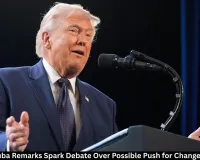
Speaking during an event marking the launch of the United States' 250th anniversary celebrations, Trump said Iran was "dying to settle" and suggested that the United States had deliberately eased diplomatic pressure to allow the funeral proceedings to take place.
"We gave them a week off for a funeral because we're nice," Trump remarked, adding that Iran now wants to reach an agreement with the United States.
However, Iranian authorities have not publicly confirmed any renewed negotiations, and there has been no official response to Trump's latest comments.
Funeral Begins Amid Massive Security Arrangements
The funeral ceremonies for Ali Khamenei officially began on Saturday morning at Tehran's Imam Khomeini Grand Mosalla, where tens of thousands of mourners gathered hours before the gates opened.
Iranian state television broadcast images showing Khamenei's casket alongside those of several family members reportedly killed during the conflict. Large crowds carrying Iranian flags and red banners associated with calls for revenge filled the religious complex and surrounding streets.
Authorities have launched one of the country's largest security and logistical operations in recent years.
Among the measures announced:
-
More than 2,500 ambulances and emergency teams deployed.
-
Hundreds of drones and helicopters assigned for security monitoring.
-
Public transport operating free for mourners.
-
Airports temporarily closed during key funeral events.
-
Millions of loaves of bread prepared for visitors attending ceremonies.
The funeral procession is expected to travel through several Iranian cities before Khamenei is buried in Mashhad on July 9, fulfilling his reported final wish to rest near the Imam Reza Shrine.
Mojtaba Khamenei Unlikely to Appear Publicly
Security concerns are expected to keep Iran's newly appointed Supreme Leader, Mojtaba Khamenei, away from public funeral events.
Mohammad Eslami, a research fellow at the University of Tehran, told Al Jazeera that Israeli security threats make any public appearance by Mojtaba highly risky.
According to Eslami, there are concerns that Israel could attempt actions designed to derail any emerging diplomatic understanding between Tehran and Washington, making public appearances by senior Iranian leadership particularly sensitive.
Iranian authorities have not officially confirmed Mojtaba Khamenei's funeral schedule.
Diplomatic Tensions Continue
Even as funeral ceremonies dominate headlines, diplomatic tensions remain high.
Israel has rejected a report published by The New York Times claiming that the United States had warned Israeli officials against targeting Iranian negotiators. Israeli Prime Minister Benjamin Netanyahu's office dismissed the report as "fake."
Meanwhile, Pakistan Army Chief General Asim Munir travelled to Tehran to attend the funeral and held talks with Iranian Foreign Minister Abbas Araghchi. Officials have not disclosed details of their discussions.
Qatar has also indicated that future rounds of US-Iran negotiations may resume after the funeral concludes, although no timetable has been officially announced.
Strait of Hormuz Slowly Returning to Normal
Maritime traffic through the Strait of Hormuz is gradually recovering after recent disruptions caused by regional hostilities.
Shipping analytics firm Kpler reported that vessel movements remain below normal but have stabilized within expected operating levels. Analysts nevertheless describe the recovery as fragile, warning that geopolitical uncertainty continues to affect commercial shipping decisions.
A Nation in Mourning
The funeral marks the end of more than four decades of Ali Khamenei's leadership, during which he shaped Iran's military, political and religious institutions. Across Tehran, mourning ceremonies continue alongside heavy security deployments as officials prepare for several days of public tributes.
Whether Trump's remarks signal a genuine opening for renewed diplomacy or remain political rhetoric will likely become clearer after Iran's mourning period concludes and both governments indicate their next diplomatic steps.

--------
🚨 Beat the News Rush – Join Now!
Get breaking alerts, hot exclusives, and game-changing stories instantly on your phone. No delays, no fluff – just the edge you need. ⚡
Tap to join:
🟢 WhatsApp Channel: Dainik Jagran MP CG
Crave more?
🅕 Facebook: Dainik Jagran MP CG English
🅧 Twitter (X): Dainik Jagran MP CG
🅘 Instagram: Dainik Jagran MP CG
Share the fire – keep your crew ahead! 🗞️🔥
Trump Claims Iran Wants Settlement as Khamenei Funeral Begins Amid Tight Security
Digital Desk
Trump Says Iran Wants to Resume Talks as Khamenei Funeral Begins Under Tight Security
As Iran commenced week-long funeral ceremonies for former Supreme Leader Ayatollah Ali Khamenei, US President Donald Trump claimed that Tehran is eager to return to negotiations with Washington following weeks of heightened military tensions.
Speaking during an event marking the launch of the United States' 250th anniversary celebrations, Trump said Iran was "dying to settle" and suggested that the United States had deliberately eased diplomatic pressure to allow the funeral proceedings to take place.
"We gave them a week off for a funeral because we're nice," Trump remarked, adding that Iran now wants to reach an agreement with the United States.
However, Iranian authorities have not publicly confirmed any renewed negotiations, and there has been no official response to Trump's latest comments.
Funeral Begins Amid Massive Security Arrangements
The funeral ceremonies for Ali Khamenei officially began on Saturday morning at Tehran's Imam Khomeini Grand Mosalla, where tens of thousands of mourners gathered hours before the gates opened.
Iranian state television broadcast images showing Khamenei's casket alongside those of several family members reportedly killed during the conflict. Large crowds carrying Iranian flags and red banners associated with calls for revenge filled the religious complex and surrounding streets.
Authorities have launched one of the country's largest security and logistical operations in recent years.
Among the measures announced:
-
More than 2,500 ambulances and emergency teams deployed.
-
Hundreds of drones and helicopters assigned for security monitoring.
-
Public transport operating free for mourners.
-
Airports temporarily closed during key funeral events.
-
Millions of loaves of bread prepared for visitors attending ceremonies.
The funeral procession is expected to travel through several Iranian cities before Khamenei is buried in Mashhad on July 9, fulfilling his reported final wish to rest near the Imam Reza Shrine.
Mojtaba Khamenei Unlikely to Appear Publicly
Security concerns are expected to keep Iran's newly appointed Supreme Leader, Mojtaba Khamenei, away from public funeral events.
Mohammad Eslami, a research fellow at the University of Tehran, told Al Jazeera that Israeli security threats make any public appearance by Mojtaba highly risky.
According to Eslami, there are concerns that Israel could attempt actions designed to derail any emerging diplomatic understanding between Tehran and Washington, making public appearances by senior Iranian leadership particularly sensitive.
Iranian authorities have not officially confirmed Mojtaba Khamenei's funeral schedule.
Diplomatic Tensions Continue
Even as funeral ceremonies dominate headlines, diplomatic tensions remain high.
Israel has rejected a report published by The New York Times claiming that the United States had warned Israeli officials against targeting Iranian negotiators. Israeli Prime Minister Benjamin Netanyahu's office dismissed the report as "fake."
Meanwhile, Pakistan Army Chief General Asim Munir travelled to Tehran to attend the funeral and held talks with Iranian Foreign Minister Abbas Araghchi. Officials have not disclosed details of their discussions.
Qatar has also indicated that future rounds of US-Iran negotiations may resume after the funeral concludes, although no timetable has been officially announced.
Strait of Hormuz Slowly Returning to Normal
Maritime traffic through the Strait of Hormuz is gradually recovering after recent disruptions caused by regional hostilities.
Shipping analytics firm Kpler reported that vessel movements remain below normal but have stabilized within expected operating levels. Analysts nevertheless describe the recovery as fragile, warning that geopolitical uncertainty continues to affect commercial shipping decisions.
A Nation in Mourning
The funeral marks the end of more than four decades of Ali Khamenei's leadership, during which he shaped Iran's military, political and religious institutions. Across Tehran, mourning ceremonies continue alongside heavy security deployments as officials prepare for several days of public tributes.
Whether Trump's remarks signal a genuine opening for renewed diplomacy or remain political rhetoric will likely become clearer after Iran's mourning period concludes and both governments indicate their next diplomatic steps.