Vance defends secrecy over emerging Iran peace deal

Digital Desk

Vance defends secrecy over emerging Iran peace deal

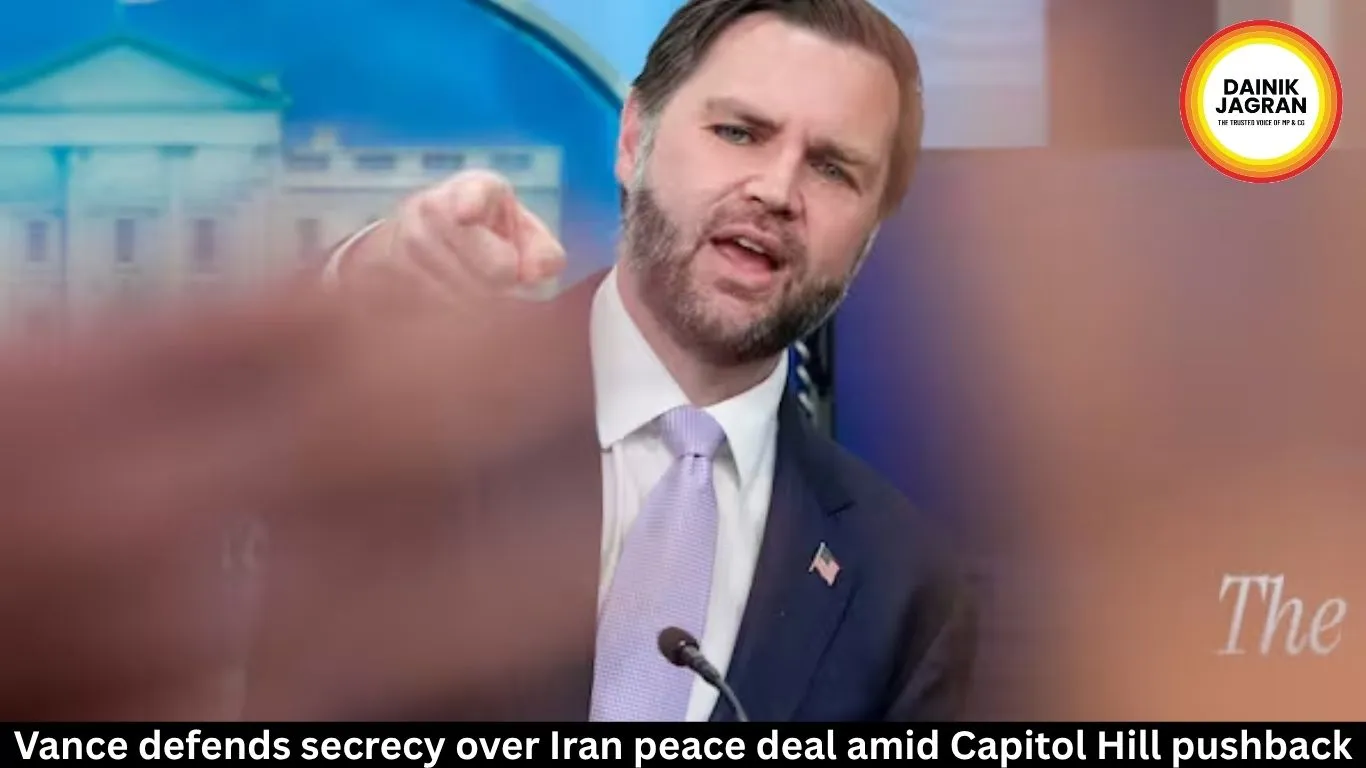
US Vice President JD Vance says mediators from Qatar and Pakistan urged Washington to delay releasing the Iran peace deal memorandum, citing regional diplomatic sensitivities.


US Vice President JD Vance says mediators from Qatar and Pakistan asked Washington to delay publishing the Iran peace memorandum, citing “diplomatic sensitivities” around the emerging Iran peace deal framework.

US defends delayed disclosure

US Vice President JD Vance has defended the Biden–Trump administration’s decision to delay the public release of the memorandum of understanding with Iran, saying key mediators in West Asia requested that the peace framework be “sequenced” carefully before it is fully disclosed. According to Vance, the emerging Iran peace deal text is being kept under wraps temporarily at the insistence of Qatar and Pakistan, which are acting as intermediaries in the talks between Washington and Tehran.

Appearing on a US talk show on Tuesday, Vance acknowledged mounting frustration in Washington over the secrecy around the agreement, which is being projected as a broad framework to halt hostilities and de-escalate a prolonged conflict in West Asia. He maintained that the MoU would be made public “at the latest” by Friday, but insisted that the timing had to account for regional political realities linked to the Iran peace deal.

‘Delicate diplomatic things’

Vance said the administration was responding to specific concerns raised by regional partners closely involved in the back-channel process. “There are some delicate diplomatic things going on where the Iranians, and not just the Iranians, but some of our mediators, the Pakistanis and the Qataris, have asked us to sequence this in the right way,” he said, as per media reports.

The Vice President admitted he did not fully grasp every reason behind the demand for operational secrecy, but stressed that Washington needed to be “responsive” to the political environment in Arab and Muslim-majority countries. He framed the delay as a tactical choice intended to protect fragile diplomacy around the Iran peace deal rather than to hide terms from the American public.

Capitol Hill friction grows

The decision to hold back the full text has sharpened tensions in Congress, where both Republicans and Democrats are demanding clarity on the scope and implications of the planned arrangement with Tehran. Foreign policy hawks have raised the alarm that the Iran peace deal could resemble the 2015 nuclear accord, which critics say eased sanctions on Iran without locking in permanent safeguards on its nuclear programme.

Those concerns surfaced on the Senate floor on Tuesday, when a resolution by Democratic Senator Raphael Warnock to curb military action against Iran without explicit congressional approval was narrowly defeated 47–48. Following the vote, Senate Minority Leader Chuck Schumer called for an immediate closed-door briefing for top congressional leaders, accusing the administration of announcing an Iran peace deal without sharing any meaningful detail.

Leaked 12-point framework

Even as the official document remains under wraps, regional media have reported on what they describe as a 12-point framework setting out reciprocal steps by the United States, Iran and allied groups. Israel’s Channel 12 has claimed that the draft MoU includes commitments on security, nuclear activity, maritime traffic and sanctions relief, all packaged as part of an interim Iran peace deal to halt fighting and stabilise the region.

According to these reports, the parties and their regional allies, including armed groups based in Lebanon, would move to an immediate ceasefire. Iran would reaffirm that it will not pursue nuclear weapons and would freeze its uranium enrichment levels while negotiations on a broader, longer-term arrangement continue.

Maritime security and sanctions relief

Maritime security in and around the Strait of Hormuz is reportedly a central plank of the proposed deal. The United States is said to be prepared to lift its naval blockade in return for a 60-day guarantee of safe, uninterrupted commercial shipping through the strategic waterway, a critical route for global energy supplies.

In parallel, the framework reportedly provides for the release of frozen Iranian assets and temporary sanctions waivers to enable limited Iranian oil exports. Those measures, framed as part of the Iran peace deal package, are being described by critics as excessive leverage for Tehran, even as supporters argue they are essential to secure de-escalation and bring Iran to the table for a wider settlement.

Long-term regional exit plan

Beyond the initial ceasefire phase, the leaked blueprint points to a more ambitious reset of US–Iran ties and the broader security architecture in West Asia. If a final agreement is sealed, the US would reportedly withdraw its remaining military forces from the region within about a month, while backing the creation of a reconstruction fund worth around 300 billion dollars for Iran.

Such long-term provisions, if confirmed, would mark a major strategic shift under the Iran peace deal framework, with direct implications for US force posture, regional alliances and energy markets. However, none of these elements have yet been officially acknowledged by Washington or Tehran, and remain based on media leaks from regional outlets.

Vance rejects ‘giveaway’ charge

Vance has pushed back against suggestions that the emerging Iran peace deal is a one-sided concession that hands Tehran substantial economic relief for limited commitments. He argued that critics were focusing only on the potential benefits for Iran while ignoring the constraints, monitoring and policy changes that would be written into the framework.

The Vice President reiterated that the administration intends to publish the text within days, after what he described as a brief window to manage “sensitivities” flagged by mediators and regional governments. Once the MoU is released, congressional scrutiny and domestic debate over the Iran peace deal are expected to intensify, with lawmakers likely to press for more oversight of both the process and the implementation.


--------

🚨 Beat the News Rush – Join Now!

Get breaking alerts, hot exclusives, and game-changing stories instantly on your phone. No delays, no fluff – just the edge you need. ⚡

Tap to join: 

🟢 WhatsApp Channel: Dainik Jagran MP CG

Crave more?

🅕 Facebook: Dainik Jagran MP CG English

🅧 Twitter (X): Dainik Jagran MP CG

🅘 Instagram: Dainik Jagran MP CG

Share the fire – keep your crew ahead! 🗞️🔥

english.dainikjagranmpcg.com
17 Jun 2026 By Abhishek Joshi

Vance defends secrecy over emerging Iran peace deal

Digital Desk

US Vice President JD Vance says mediators from Qatar and Pakistan asked Washington to delay publishing the Iran peace memorandum, citing “diplomatic sensitivities” around the emerging Iran peace deal framework.

US defends delayed disclosure

US Vice President JD Vance has defended the Biden–Trump administration’s decision to delay the public release of the memorandum of understanding with Iran, saying key mediators in West Asia requested that the peace framework be “sequenced” carefully before it is fully disclosed. According to Vance, the emerging Iran peace deal text is being kept under wraps temporarily at the insistence of Qatar and Pakistan, which are acting as intermediaries in the talks between Washington and Tehran.

Appearing on a US talk show on Tuesday, Vance acknowledged mounting frustration in Washington over the secrecy around the agreement, which is being projected as a broad framework to halt hostilities and de-escalate a prolonged conflict in West Asia. He maintained that the MoU would be made public “at the latest” by Friday, but insisted that the timing had to account for regional political realities linked to the Iran peace deal.

‘Delicate diplomatic things’

Vance said the administration was responding to specific concerns raised by regional partners closely involved in the back-channel process. “There are some delicate diplomatic things going on where the Iranians, and not just the Iranians, but some of our mediators, the Pakistanis and the Qataris, have asked us to sequence this in the right way,” he said, as per media reports.

The Vice President admitted he did not fully grasp every reason behind the demand for operational secrecy, but stressed that Washington needed to be “responsive” to the political environment in Arab and Muslim-majority countries. He framed the delay as a tactical choice intended to protect fragile diplomacy around the Iran peace deal rather than to hide terms from the American public.

Capitol Hill friction grows

The decision to hold back the full text has sharpened tensions in Congress, where both Republicans and Democrats are demanding clarity on the scope and implications of the planned arrangement with Tehran. Foreign policy hawks have raised the alarm that the Iran peace deal could resemble the 2015 nuclear accord, which critics say eased sanctions on Iran without locking in permanent safeguards on its nuclear programme.

Those concerns surfaced on the Senate floor on Tuesday, when a resolution by Democratic Senator Raphael Warnock to curb military action against Iran without explicit congressional approval was narrowly defeated 47–48. Following the vote, Senate Minority Leader Chuck Schumer called for an immediate closed-door briefing for top congressional leaders, accusing the administration of announcing an Iran peace deal without sharing any meaningful detail.

Leaked 12-point framework

Even as the official document remains under wraps, regional media have reported on what they describe as a 12-point framework setting out reciprocal steps by the United States, Iran and allied groups. Israel’s Channel 12 has claimed that the draft MoU includes commitments on security, nuclear activity, maritime traffic and sanctions relief, all packaged as part of an interim Iran peace deal to halt fighting and stabilise the region.

According to these reports, the parties and their regional allies, including armed groups based in Lebanon, would move to an immediate ceasefire. Iran would reaffirm that it will not pursue nuclear weapons and would freeze its uranium enrichment levels while negotiations on a broader, longer-term arrangement continue.

Maritime security and sanctions relief

Maritime security in and around the Strait of Hormuz is reportedly a central plank of the proposed deal. The United States is said to be prepared to lift its naval blockade in return for a 60-day guarantee of safe, uninterrupted commercial shipping through the strategic waterway, a critical route for global energy supplies.

In parallel, the framework reportedly provides for the release of frozen Iranian assets and temporary sanctions waivers to enable limited Iranian oil exports. Those measures, framed as part of the Iran peace deal package, are being described by critics as excessive leverage for Tehran, even as supporters argue they are essential to secure de-escalation and bring Iran to the table for a wider settlement.

Long-term regional exit plan

Beyond the initial ceasefire phase, the leaked blueprint points to a more ambitious reset of US–Iran ties and the broader security architecture in West Asia. If a final agreement is sealed, the US would reportedly withdraw its remaining military forces from the region within about a month, while backing the creation of a reconstruction fund worth around 300 billion dollars for Iran.

Such long-term provisions, if confirmed, would mark a major strategic shift under the Iran peace deal framework, with direct implications for US force posture, regional alliances and energy markets. However, none of these elements have yet been officially acknowledged by Washington or Tehran, and remain based on media leaks from regional outlets.

Vance rejects ‘giveaway’ charge

Vance has pushed back against suggestions that the emerging Iran peace deal is a one-sided concession that hands Tehran substantial economic relief for limited commitments. He argued that critics were focusing only on the potential benefits for Iran while ignoring the constraints, monitoring and policy changes that would be written into the framework.

The Vice President reiterated that the administration intends to publish the text within days, after what he described as a brief window to manage “sensitivities” flagged by mediators and regional governments. Once the MoU is released, congressional scrutiny and domestic debate over the Iran peace deal are expected to intensify, with lawmakers likely to press for more oversight of both the process and the implementation.


https://english.dainikjagranmpcg.com/special-news/6a3239bbc3dea/article-20269

Latest News