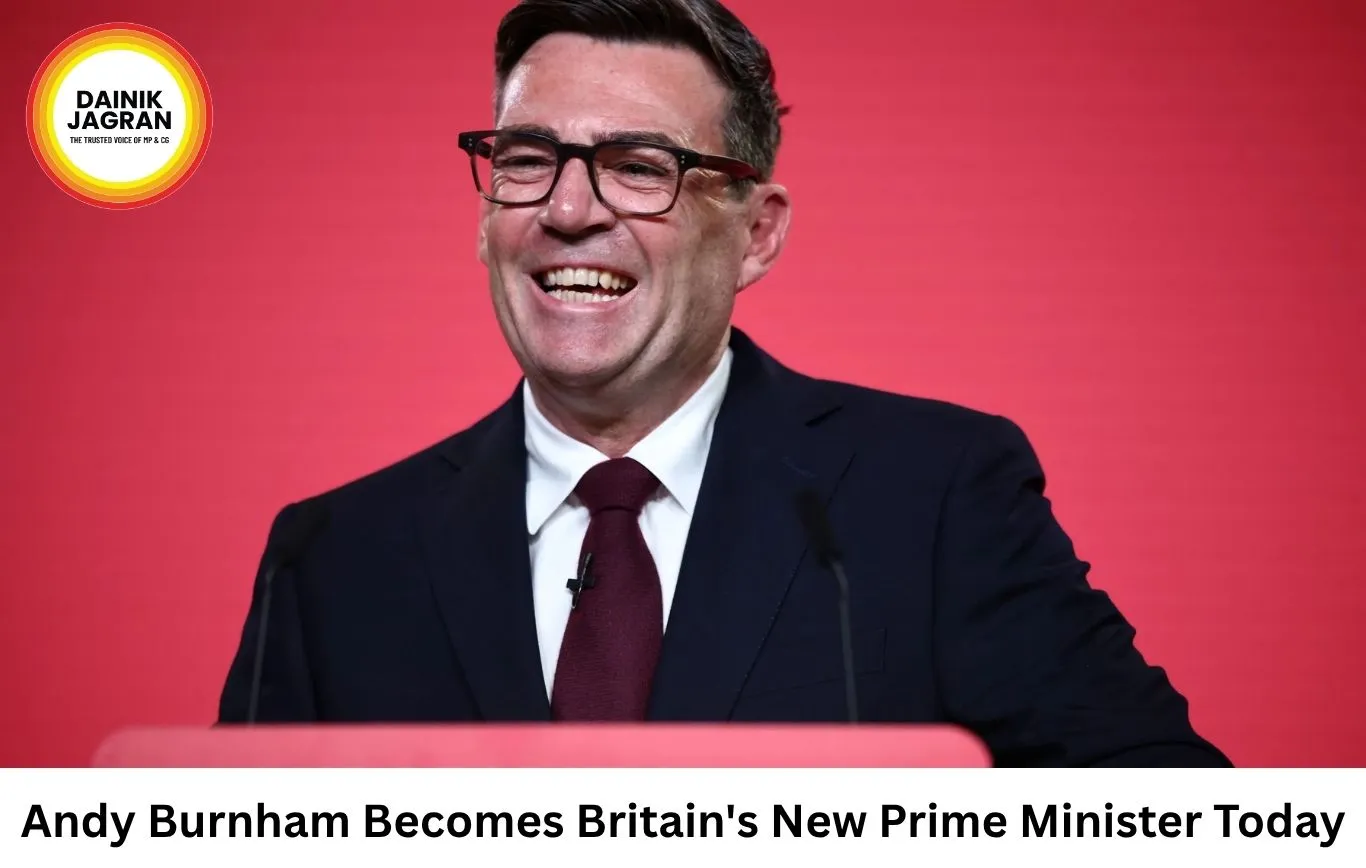
Andy Burnham Becomes UK Prime Minister Amid Political Instability and Leadership Turnover
Digital Desk
Britain welcomes its fifth prime minister in four years as Andy Burnham takes office, promising a fresh leadership style while facing economic pressures, public expectations, and a fragmented political landscape.
The United Kingdom entered another significant chapter in its political history on Monday as Andy Burnham assumed office as the country's new Prime Minister, becoming the fifth British leader in just four years. His appointment reflects a period of extraordinary political change that has seen successive governments replaced amid shifting public opinion, economic challenges, and evolving national priorities.
Burnham succeeds Sir Keir Starmer, whose tenure comes to an end after serving as prime minister for nearly two years. The leadership transition marks another moment of change for British politics, where frequent changes at the top have become an unusual but defining feature of recent years.
Since the summer of 2022, the United Kingdom has witnessed a rapid succession of prime ministers. Following the departure of Boris Johnson, the country was led by Liz Truss, then Rishi Sunak, followed by Sir Keir Starmer, and now Andy Burnham. Such frequent leadership changes are rare in modern British politics and have highlighted the political volatility that has characterized the post-pandemic and post-Brexit period.
Burnham is expected to acknowledge this period of political instability in his first address as prime minister. According to reports, he intends to recognize the challenges created by repeated changes in national leadership while emphasizing the importance of restoring stability and public confidence in government.
The new prime minister takes office at a time when many British households continue to face economic pressures, including concerns over the cost of living, energy prices, public services, and long-term economic growth. Public opinion has also become increasingly fragmented, making governance more challenging for successive administrations.
Political analysts suggest that dissatisfaction with governments over recent years has contributed to frequent leadership changes. Burnham now faces the difficult task of reversing that trend while demonstrating that his administration can provide consistency and effective decision-making.
Before entering Downing Street, Burnham served as the Mayor of Greater Manchester, where he developed a leadership style centered on direct engagement with local communities. Allies indicate that he hopes to bring elements of that approach into national government.
Reports suggest Burnham may depart from certain traditional practices associated with the office of prime minister. For example, his first speech outside 10 Downing Street may reportedly be delivered without the customary lectern, symbolizing a more informal and accessible style of leadership. While official confirmation of these arrangements has not been announced, they have attracted attention as possible indications of how the new administration intends to present itself.
Supporters also say Burnham is interested in holding regular public question-and-answer sessions with citizens across the country. The proposed initiative, described by some allies as "People's Question Time," would aim to encourage greater public interaction between the government and voters.
Before Burnham formally takes office, Sir Keir Starmer is expected to deliver a farewell statement before traveling to Buckingham Palace to tender his resignation to King Charles III, following constitutional convention. During his final address, Starmer is expected to highlight achievements his government believes it delivered during its time in office.
Members of the outgoing administration have pointed to progress in reducing immigration levels, lowering National Health Service waiting lists in England, introducing measures aimed at reducing child poverty, and implementing restrictions on social media use by teenagers among the government's notable policy initiatives.
Following the formal transfer of power, attention will quickly shift to the composition of Burnham's first Cabinet. Political observers are closely watching appointments to major ministerial positions, including Chancellor of the Exchequer, Home Secretary, and Foreign Secretary.
Several senior Labour figures, including Angela Rayner, Ed Miliband, Wes Streeting, Shabana Mahmood, and Lucy Powell, are among those widely expected to receive significant responsibilities in the new administration. Their appointments will likely offer early indications of Burnham's governing priorities and internal party strategy.
Reports also suggest the government may establish a Cabinet-level position dedicated to artificial intelligence, reflecting the growing importance of emerging technologies in public policy, economic development, and national competitiveness.
The incoming government is expected to prioritize issues such as inflation, household finances, energy costs, economic growth, and improvements in public services. Burnham's administration will also face expectations to strengthen public confidence in government after several years of political instability.
Observers will additionally be watching how power is distributed within the Prime Minister's Office. Questions remain regarding the future role of Burnham's former Greater Manchester office and the extent to which regional experience may influence decision-making at the national level.
Although leadership transitions have become increasingly frequent in recent years, Burnham's arrival at Downing Street represents another significant moment in British politics. His administration now begins the challenge of providing stable leadership while addressing the economic, political, and social issues facing the United Kingdom. The decisions made during the first days of his premiership are expected to shape both the direction of his government and the country's political landscape in the years ahead.
--------
🚨 Beat the News Rush – Join Now!
Get breaking alerts, hot exclusives, and game-changing stories instantly on your phone. No delays, no fluff – just the edge you need. ⚡
Tap to join:
🟢 WhatsApp Channel: Dainik Jagran MP CG
Crave more?
🅕 Facebook: Dainik Jagran MP CG English
🅧 Twitter (X): Dainik Jagran MP CG
🅘 Instagram: Dainik Jagran MP CG
Share the fire – keep your crew ahead! 🗞️🔥
Andy Burnham Becomes UK Prime Minister Amid Political Instability and Leadership Turnover
Digital Desk
The United Kingdom entered another significant chapter in its political history on Monday as Andy Burnham assumed office as the country's new Prime Minister, becoming the fifth British leader in just four years. His appointment reflects a period of extraordinary political change that has seen successive governments replaced amid shifting public opinion, economic challenges, and evolving national priorities.
Burnham succeeds Sir Keir Starmer, whose tenure comes to an end after serving as prime minister for nearly two years. The leadership transition marks another moment of change for British politics, where frequent changes at the top have become an unusual but defining feature of recent years.
Since the summer of 2022, the United Kingdom has witnessed a rapid succession of prime ministers. Following the departure of Boris Johnson, the country was led by Liz Truss, then Rishi Sunak, followed by Sir Keir Starmer, and now Andy Burnham. Such frequent leadership changes are rare in modern British politics and have highlighted the political volatility that has characterized the post-pandemic and post-Brexit period.
Burnham is expected to acknowledge this period of political instability in his first address as prime minister. According to reports, he intends to recognize the challenges created by repeated changes in national leadership while emphasizing the importance of restoring stability and public confidence in government.
The new prime minister takes office at a time when many British households continue to face economic pressures, including concerns over the cost of living, energy prices, public services, and long-term economic growth. Public opinion has also become increasingly fragmented, making governance more challenging for successive administrations.
Political analysts suggest that dissatisfaction with governments over recent years has contributed to frequent leadership changes. Burnham now faces the difficult task of reversing that trend while demonstrating that his administration can provide consistency and effective decision-making.
Before entering Downing Street, Burnham served as the Mayor of Greater Manchester, where he developed a leadership style centered on direct engagement with local communities. Allies indicate that he hopes to bring elements of that approach into national government.
Reports suggest Burnham may depart from certain traditional practices associated with the office of prime minister. For example, his first speech outside 10 Downing Street may reportedly be delivered without the customary lectern, symbolizing a more informal and accessible style of leadership. While official confirmation of these arrangements has not been announced, they have attracted attention as possible indications of how the new administration intends to present itself.
Supporters also say Burnham is interested in holding regular public question-and-answer sessions with citizens across the country. The proposed initiative, described by some allies as "People's Question Time," would aim to encourage greater public interaction between the government and voters.
Before Burnham formally takes office, Sir Keir Starmer is expected to deliver a farewell statement before traveling to Buckingham Palace to tender his resignation to King Charles III, following constitutional convention. During his final address, Starmer is expected to highlight achievements his government believes it delivered during its time in office.
Members of the outgoing administration have pointed to progress in reducing immigration levels, lowering National Health Service waiting lists in England, introducing measures aimed at reducing child poverty, and implementing restrictions on social media use by teenagers among the government's notable policy initiatives.
Following the formal transfer of power, attention will quickly shift to the composition of Burnham's first Cabinet. Political observers are closely watching appointments to major ministerial positions, including Chancellor of the Exchequer, Home Secretary, and Foreign Secretary.
Several senior Labour figures, including Angela Rayner, Ed Miliband, Wes Streeting, Shabana Mahmood, and Lucy Powell, are among those widely expected to receive significant responsibilities in the new administration. Their appointments will likely offer early indications of Burnham's governing priorities and internal party strategy.
Reports also suggest the government may establish a Cabinet-level position dedicated to artificial intelligence, reflecting the growing importance of emerging technologies in public policy, economic development, and national competitiveness.
The incoming government is expected to prioritize issues such as inflation, household finances, energy costs, economic growth, and improvements in public services. Burnham's administration will also face expectations to strengthen public confidence in government after several years of political instability.
Observers will additionally be watching how power is distributed within the Prime Minister's Office. Questions remain regarding the future role of Burnham's former Greater Manchester office and the extent to which regional experience may influence decision-making at the national level.
Although leadership transitions have become increasingly frequent in recent years, Burnham's arrival at Downing Street represents another significant moment in British politics. His administration now begins the challenge of providing stable leadership while addressing the economic, political, and social issues facing the United Kingdom. The decisions made during the first days of his premiership are expected to shape both the direction of his government and the country's political landscape in the years ahead.