


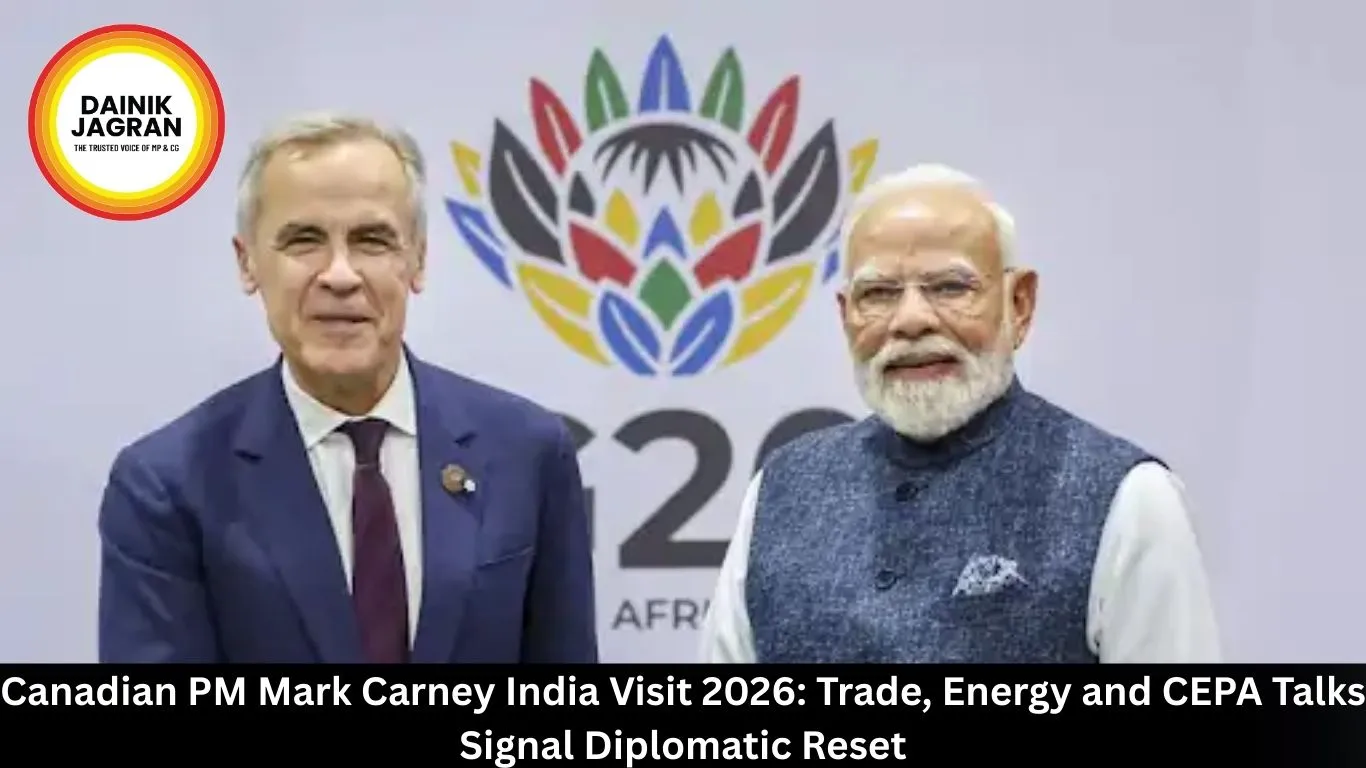
Canadian PM Mark Carney India Visit 2026: Trade, Energy and CEPA Talks Signal Diplomatic Reset
Digital Desk
Canadian PM Mark Carney India Visit 2026: Trade, Energy and CEPA Talks Signal Diplomatic Reset
Canadian PM Mark Carney India Visit 2026 has officially begun, marking a significant diplomatic moment between Ottawa and New Delhi. Mark Carney arrived in Mumbai on February 27 for a four-day visit aimed at strengthening trade, energy and strategic ties with Narendra Modi.
This is Carney’s first official visit to India since assuming office in March 2025 and comes after a period of strained India-Canada trade relations. The visit is being closely watched by global markets, investors and the Indian diaspora in Canada.
CEPA Negotiations Back on Track
One of the biggest highlights of the Canadian PM Mark Carney India Visit 2026 is the formal relaunch of long-pending CEPA negotiations. The Comprehensive Economic Partnership Agreement (CEPA), stalled amid diplomatic tensions, is now back on the agenda.
Carney will reach New Delhi on March 1 and hold bilateral talks with PM Modi on March 2.
Key trade targets:
Conclude CEPA within 12 months
Increase bilateral trade to $50–70 billion by 2030
Expand market access for goods and services
Currently, annual bilateral trade stands at over $21 billion. More than 600 Canadian companies operate in India, while Canadian pension funds have invested nearly $100 billion in Indian infrastructure, logistics and real estate.
Experts believe restarting CEPA negotiations could:
Lower tariffs
Boost technology exchange
Create new job opportunities in both countries
Energy Cooperation and Critical Minerals in Focus
Energy cooperation is expected to dominate discussions during the Canadian PM Mark Carney India Visit 2026.
Talks are underway for a uranium supply agreement worth approximately 2.8 billion Canadian dollars over 10 years to support India’s nuclear energy expansion.
Both sides are exploring collaboration in:
Liquefied Natural Gas (LNG)
Heavy crude oil
Clean energy transition
Critical minerals for renewable technologies
India imported $761.5 million worth of Canadian energy exports in 2024, while Canada imported $206 million worth of energy products from India.
With India pushing green energy targets and Canada looking to diversify beyond US markets, this partnership holds strong strategic value.
Diplomatic Reset After Trudeau-Era Tensions
Relations had deteriorated sharply under former Prime Minister Justin Trudeau following allegations related to Khalistani extremist Hardeep Singh Nijjar in 2023. Diplomatic expulsions, visa suspensions and halted trade talks followed.
However, officials now signal a softer stance. A senior Canadian official recently said that if Ottawa truly believed India was interfering in its democracy, the Prime Minister would not be visiting.
Carney has acknowledged past political differences but emphasized rebuilding trust and positioning Canada as a reliable partner in India’s fast-growing economy.
Immigration and Diaspora Dynamics
Immigration remains a sensitive yet important pillar of India-Canada trade relations.
1.6 million people of Indian origin live in Canada
2,831 Indian nationals were deported in the first 10 months of 2025
6,515 Indians are currently under deportation proceedings
Despite enforcement measures, Canada remains one of the world’s largest immigrant-receiving nations.
Experts say smoother diplomatic ties could:
Improve visa processing
Strengthen education partnerships
Boost student mobility
Why This Visit Matters Now
At a time of global supply chain shifts and geopolitical realignments, the Canadian PM Mark Carney India Visit 2026 could redefine economic cooperation between two major democracies.
With trade diversification, clean energy security and technology collaboration at stake, this visit signals more than diplomacy — it signals strategic recalibration.
If CEPA talks progress as planned, 2026 could mark the beginning of a new chapter in India-Canada relations — one driven by pragmatic trade goals rather than political tensions.



.jpg)




