


Defence Minister Says Army Not in Charge of Government, Reaffirms Civilian Authority
Digital Desk
Addressing long-standing concerns about military influence in national governance, Asif acknowledged that Pakistan’s history includes periods of direct army rule. However, he insisted that such circumstances “do not exist today,” stating that the armed forces currently support rather than direct the civilian administration.
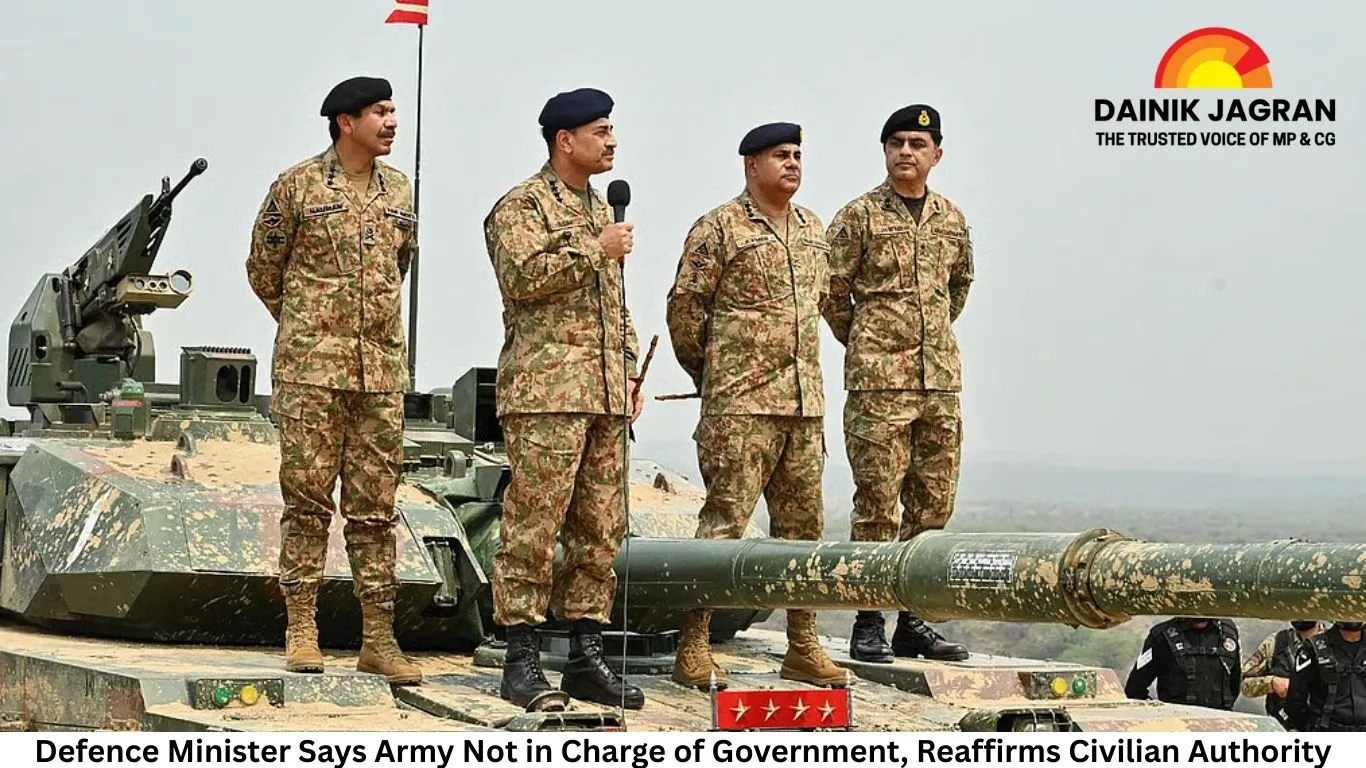
The minister’s comments follow renewed international scrutiny of civil-military relations in Pakistan after Munir’s recent elevation to Field Marshal and his appointment to expanded command responsibilities. Analysts have debated whether these developments signal a consolidation of military authority or reflect structural reforms within Pakistan’s security framework.
During the interview, Asif also accused India and Afghanistan of waging what he described as a “proxy war” against Pakistan, alleging alignment between New Delhi and Kabul regarding militant attacks. He warned that Islamabad could consider cross-border action if security guarantees are not forthcoming, adding that the risk of conflict with India “has not yet ended.”
Referring to a recent suicide bombing at a mosque in Islamabad that killed dozens, Asif blamed militant groups operating from Afghan territory and said authorities there were not serious about preventing terrorism. The attack was claimed by Islamic State. He described Pakistan as facing multiple simultaneous challenges, including terrorism, regional tensions and economic strain.
On foreign policy, Asif ruled out diplomatic normalisation with Israel unless Palestinian rights are secured. He added that Pakistan could consider participation in a peacekeeping mission in Gaza if conditions were appropriate and the mandate acceptable, noting the country’s past role in missions organised by the United Nations.
His latest remarks contrast with earlier interviews, including one with Arab News, in which he described Pakistan’s governance structure as a “hybrid model” involving both civilian leaders and the military. Observers say the shift in tone reflects an effort to reassure international partners about democratic stability while acknowledging the army’s institutional influence.
The statement is likely to fuel further debate about Pakistan’s political balance of power as the country navigates security pressures, diplomatic tensions and domestic reforms.
.jpg)




