

According to the files, the parcels were arranged by Aziza Al-Ahmadi, a UAE-based businesswoman, in coordination with Abdullah Al-Mari from Saudi Arabia. Email records indicate the shipments took place between February and March 2017 and were delivered to Epstein’s Palm Beach property. The documents do not explain the nature of the relationship between Epstein and Al-Ahmadi, nor the purpose behind sending the items.
The emails describe the items as fragments of the Kiswah, the black silk cloth embroidered with Quranic verses in gold and silver that covers the Kaaba. One piece was said to have come from inside the Kaaba, another from the outer covering previously used during pilgrimage, and the third from unused material. The Kiswah is replaced annually during the Hajj season and holds immense religious significance for Muslims worldwide.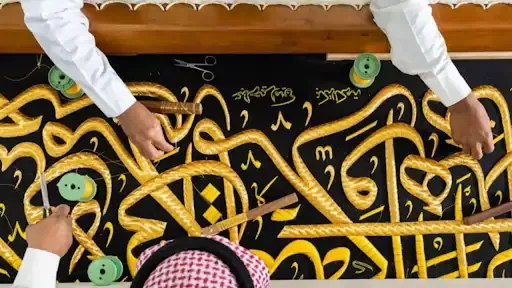
Shipping records cited in the files show the consignment was flown from Saudi Arabia to the United States via British Airways. The correspondence suggested the items be declared as “artwork” to ease customs clearance. The delivery was completed in March 2017, nearly a decade after Epstein’s first conviction and while he was registered as a sex offender.
In one email included in the documents, Al-Ahmadi explained the religious value of the cloth, writing that it had been touched by millions of Muslims during pilgrimage, carrying their prayers, tears and hopes. The files do not clarify why such a message was shared with Epstein or what he intended to do with the items.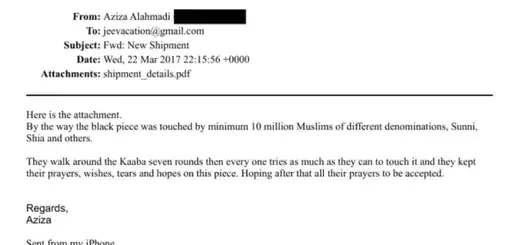
The revelations emerged as part of a massive data release by the US Department of Justice on January 30, comprising millions of pages, videos and photographs connected to the Epstein case. The release has renewed scrutiny of Epstein’s global network and the individuals who interacted with him even after his criminal record was established.
Saudi authorities have not publicly commented on the claims, and it remains unclear whether any rules governing the handling or transfer of Kiswah fragments were violated. Traditionally, pieces of the Kiswah are distributed under strict official supervision to institutions or dignitaries, not private collectors.
The disclosure adds another controversial layer to the Epstein case, which continues to generate fresh questions years after his death in custody in 2019 while awaiting trial on federal sex trafficking charges.


Epstein Files Allege Sacred Kaaba Cloth Was Sent to Florida Home in 2017
Digital Desk
According to the files, the parcels were arranged by Aziza Al-Ahmadi, a UAE-based businesswoman, in coordination with Abdullah Al-Mari from Saudi Arabia. Email records indicate the shipments took place between February and March 2017 and were delivered to Epstein’s Palm Beach property. The documents do not explain the nature of the relationship between Epstein and Al-Ahmadi, nor the purpose behind sending the items.
The emails describe the items as fragments of the Kiswah, the black silk cloth embroidered with Quranic verses in gold and silver that covers the Kaaba. One piece was said to have come from inside the Kaaba, another from the outer covering previously used during pilgrimage, and the third from unused material. The Kiswah is replaced annually during the Hajj season and holds immense religious significance for Muslims worldwide.
Shipping records cited in the files show the consignment was flown from Saudi Arabia to the United States via British Airways. The correspondence suggested the items be declared as “artwork” to ease customs clearance. The delivery was completed in March 2017, nearly a decade after Epstein’s first conviction and while he was registered as a sex offender.
In one email included in the documents, Al-Ahmadi explained the religious value of the cloth, writing that it had been touched by millions of Muslims during pilgrimage, carrying their prayers, tears and hopes. The files do not clarify why such a message was shared with Epstein or what he intended to do with the items.
The revelations emerged as part of a massive data release by the US Department of Justice on January 30, comprising millions of pages, videos and photographs connected to the Epstein case. The release has renewed scrutiny of Epstein’s global network and the individuals who interacted with him even after his criminal record was established.
Saudi authorities have not publicly commented on the claims, and it remains unclear whether any rules governing the handling or transfer of Kiswah fragments were violated. Traditionally, pieces of the Kiswah are distributed under strict official supervision to institutions or dignitaries, not private collectors.
The disclosure adds another controversial layer to the Epstein case, which continues to generate fresh questions years after his death in custody in 2019 while awaiting trial on federal sex trafficking charges.
.jpg)




