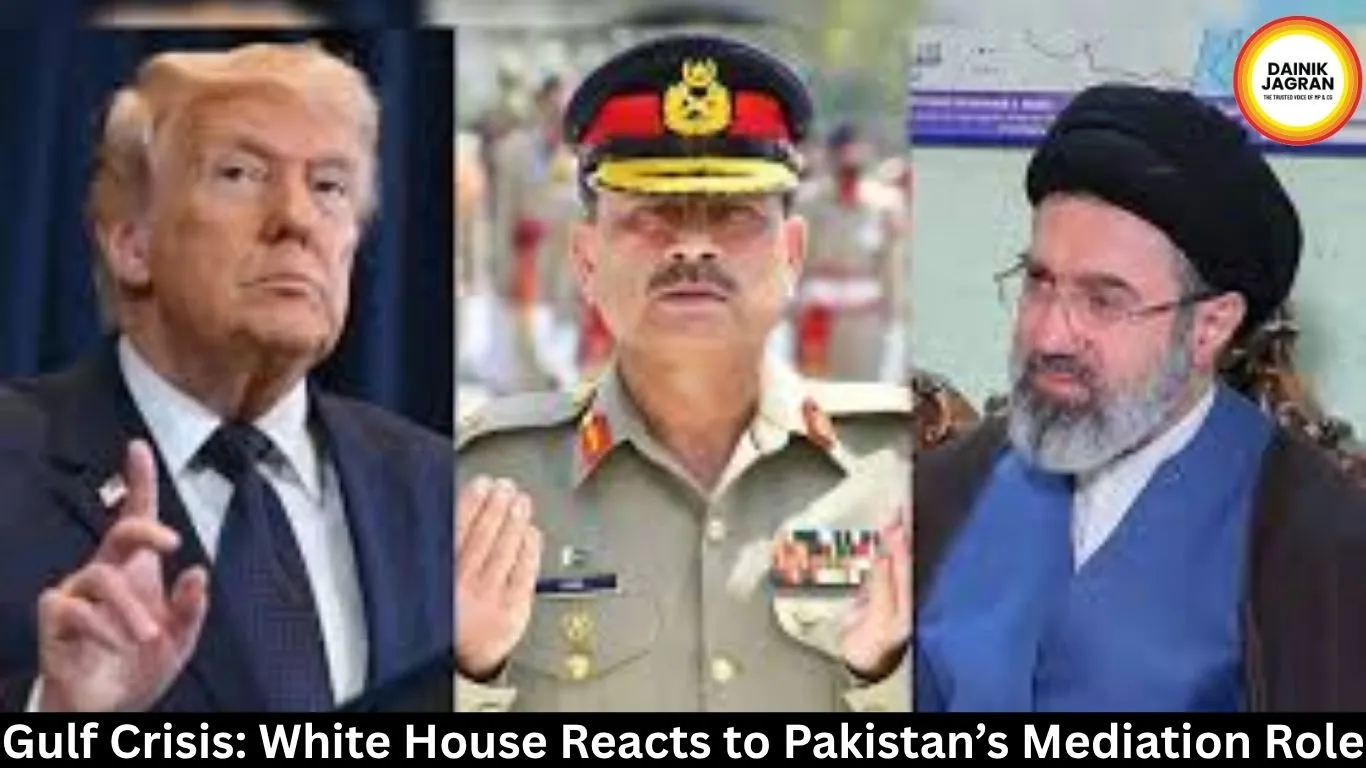
Gulf Crisis: White House Reacts to Pakistan’s Mediation Role

Digital Desk

Gulf Crisis: White House Reacts to Pakistan’s Mediation Role

 Back-channel diplomacy intensifies as Pakistan, Turkiye, and Egypt push for US-Iran de-escalation. Read the latest on the White House’s stance and India’s outlook.


Gulf Crisis: Back-Channel Diplomacy Intensifies as White House Responds to Mediation Reports

Regional powers including Pakistan and Turkiye push for de-escalation between Washington and Tehran amid rising energy security concerns.

The Gulf crisis has entered a critical phase as back-channel diplomatic efforts intensify to prevent a full-scale regional conflagration. With the conflict entering its fourth week, Pakistan, Egypt, and Turkiye have emerged as key intermediaries attempting to broker a ceasefire between the United States and Iran.

The White House, however, has maintained a cautious stance regarding these developments. While reports suggested high-level meetings between US officials and Iranian representatives in Islamabad, the Biden-Trump transition framework continues to keep formal confirmations under wraps.

White House Maintains Strategic Silence

During a press briefing on March 23, Press Secretary Karoline Leavitt addressed the speculation surrounding potential talks in the Pakistani capital. She emphasized that the United States would not "negotiate through the press" given the sensitive nature of the discussions.

While the administration has not confirmed if Vice President JD Vance or special envoy Steve Witkoff are headed to Islamabad, officials noted that the situation remains fluid. The statement comes as President Trump indicated a desire for a "complete restoration" of hostilities via social media.

Pakistan Positions as Lead Mediator

Islamabad is leveraging its unique position as a non-base-hosting US ally with a significant Shi'ite population to facilitate dialogue. Reports indicate that Pakistan’s Army Chief, General Asim Munir, and Prime Minister Shehbaz Sharif have been in active contact with both Washington and Tehran.

Pakistan has formally offered its capital as a neutral venue for diplomatic engagement. A recent readout from the Prime Minister’s Office confirmed that Pakistan remains committed to playing a "constructive role" in regional stability.

Regional Players Join Peace Push

Turkiye and Egypt are also ramping up their diplomatic machinery to prevent a global economic shock. Turkish officials have been relaying messages between Steve Witkoff and Iranian counterparts, focusing on a temporary humanitarian ceasefire.

Simultaneously, Egypt’s Foreign Ministry has engaged in a flurry of calls with Qatar and Iran. These collective efforts aim to secure the Strait of Hormuz, a vital artery for global energy through which one-fifth of the world's oil flows.

Global Energy Markets Under Strain

The urgency for diplomacy is driven by the severe impact on global geoeconomics. With Iran selectively blocking transit through the Strait of Hormuz, Brent crude prices have surged past the $100 per barrel mark.

Market analysts warn that if back-channel talks fail to yield a concrete de-escalation, oil prices could realistically test the $150 per barrel threshold. This spike has already begun to disrupt global supply chains and heighten inflation concerns across Asia.

Impact and Outlook for India

For New Delhi, the crisis presents a complex diplomatic tightrope. While US Ambassador Sergio Gor confirmed that President Trump and Prime Minister Modi discussed the importance of keeping trade routes open, India faces pressure to balance its Western partnerships with its interests in the Global South.

Experts suggest that India’s role as a leader of developing nations necessitates a more proactive stance. Leveraging the BRICS platform could be a potential avenue for New Delhi to enhance its stature while advocating for regional sovereignty and maritime security.

Uncertain Path to De-escalation

Despite the diplomatic flurry, Iran has officially denied engaging in direct talks with the US, labeling such reports as "fake news" intended to manipulate markets. The chasm between Tehran's public rhetoric and the reported back-channel activity remains wide.

The coming 48 hours are viewed as a "make-or-break" period for regional stability. As the international community watches Islamabad and Ankara, the success of these secret parleys will determine if the Gulf moves toward a truce or further escalation. This remains a significant Public Interest Story for the global economy.


 

english.dainikjagranmpcg.com
25 Mar 2026 By Abhishek Joshi

Gulf Crisis: White House Reacts to Pakistan’s Mediation Role

Digital Desk

Gulf Crisis: Back-Channel Diplomacy Intensifies as White House Responds to Mediation Reports

Regional powers including Pakistan and Turkiye push for de-escalation between Washington and Tehran amid rising energy security concerns.

The Gulf crisis has entered a critical phase as back-channel diplomatic efforts intensify to prevent a full-scale regional conflagration. With the conflict entering its fourth week, Pakistan, Egypt, and Turkiye have emerged as key intermediaries attempting to broker a ceasefire between the United States and Iran.

The White House, however, has maintained a cautious stance regarding these developments. While reports suggested high-level meetings between US officials and Iranian representatives in Islamabad, the Biden-Trump transition framework continues to keep formal confirmations under wraps.

White House Maintains Strategic Silence

During a press briefing on March 23, Press Secretary Karoline Leavitt addressed the speculation surrounding potential talks in the Pakistani capital. She emphasized that the United States would not "negotiate through the press" given the sensitive nature of the discussions.

While the administration has not confirmed if Vice President JD Vance or special envoy Steve Witkoff are headed to Islamabad, officials noted that the situation remains fluid. The statement comes as President Trump indicated a desire for a "complete restoration" of hostilities via social media.

Pakistan Positions as Lead Mediator

Islamabad is leveraging its unique position as a non-base-hosting US ally with a significant Shi'ite population to facilitate dialogue. Reports indicate that Pakistan’s Army Chief, General Asim Munir, and Prime Minister Shehbaz Sharif have been in active contact with both Washington and Tehran.

Pakistan has formally offered its capital as a neutral venue for diplomatic engagement. A recent readout from the Prime Minister’s Office confirmed that Pakistan remains committed to playing a "constructive role" in regional stability.

Regional Players Join Peace Push

Turkiye and Egypt are also ramping up their diplomatic machinery to prevent a global economic shock. Turkish officials have been relaying messages between Steve Witkoff and Iranian counterparts, focusing on a temporary humanitarian ceasefire.

Simultaneously, Egypt’s Foreign Ministry has engaged in a flurry of calls with Qatar and Iran. These collective efforts aim to secure the Strait of Hormuz, a vital artery for global energy through which one-fifth of the world's oil flows.

Global Energy Markets Under Strain

The urgency for diplomacy is driven by the severe impact on global geoeconomics. With Iran selectively blocking transit through the Strait of Hormuz, Brent crude prices have surged past the $100 per barrel mark.

Market analysts warn that if back-channel talks fail to yield a concrete de-escalation, oil prices could realistically test the $150 per barrel threshold. This spike has already begun to disrupt global supply chains and heighten inflation concerns across Asia.

Impact and Outlook for India

For New Delhi, the crisis presents a complex diplomatic tightrope. While US Ambassador Sergio Gor confirmed that President Trump and Prime Minister Modi discussed the importance of keeping trade routes open, India faces pressure to balance its Western partnerships with its interests in the Global South.

Experts suggest that India’s role as a leader of developing nations necessitates a more proactive stance. Leveraging the BRICS platform could be a potential avenue for New Delhi to enhance its stature while advocating for regional sovereignty and maritime security.

Uncertain Path to De-escalation

Despite the diplomatic flurry, Iran has officially denied engaging in direct talks with the US, labeling such reports as "fake news" intended to manipulate markets. The chasm between Tehran's public rhetoric and the reported back-channel activity remains wide.

The coming 48 hours are viewed as a "make-or-break" period for regional stability. As the international community watches Islamabad and Ankara, the success of these secret parleys will determine if the Gulf moves toward a truce or further escalation. This remains a significant Public Interest Story for the global economy.
 

https://english.dainikjagranmpcg.com/international/gulf-crisis-white-house-reacts-to-pakistan%E2%80%99s-mediation-role/article-15952

Advertisement

Latest News