Iran Attacks US Base in Jordan, Trump Vows Forceful Response as Middle East Conflict Reignites
Digital desk
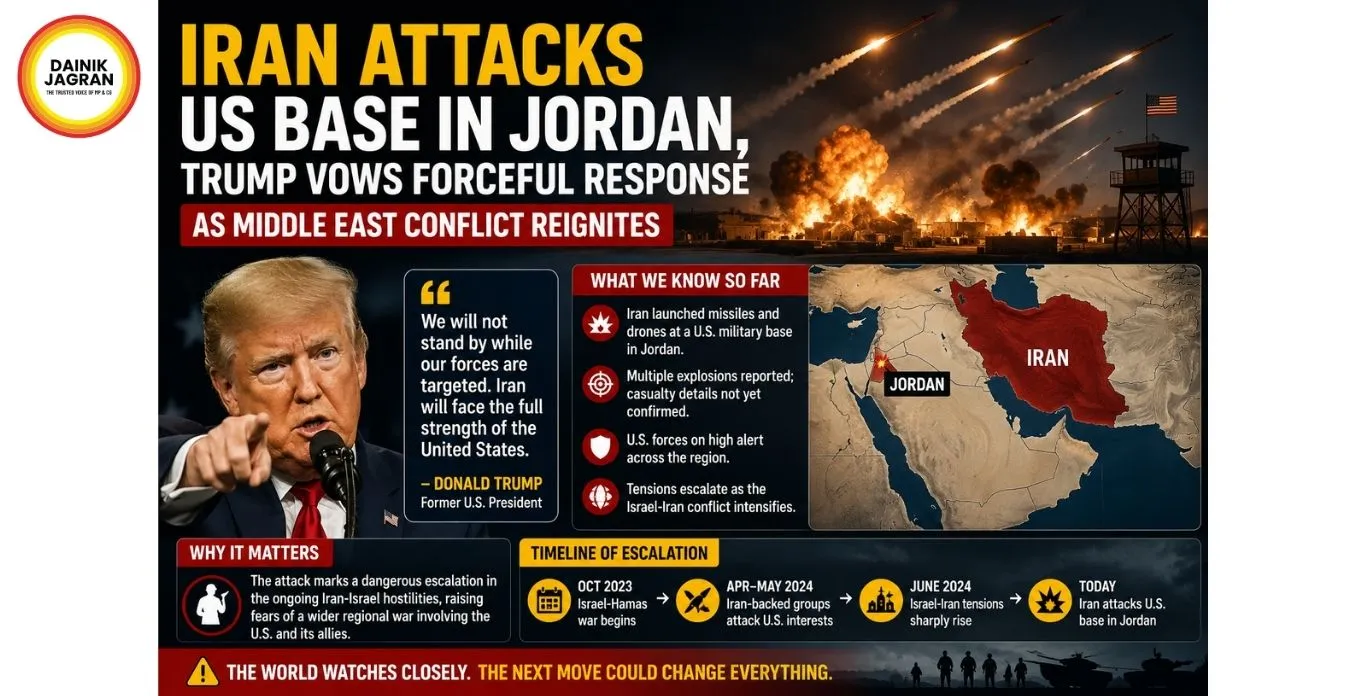
A fragile pause in the US-Iran conflict collapsed this week, after Iran launched a surprise missile attack on a US base in Jordan, prompting President Donald Trump to threaten sweeping retaliation and triggering a fresh wave of strikes across the region.
US Central Command said Iran fired a series of ballistic missiles at a US base in Jordan late Tuesday, in what it described as a "surprise attack." All the missiles were intercepted, according to CENTCOM, and Jordan's military said its own air defences separately shot down five missiles launched from Iran. Iran's Islamic Revolutionary Guard Corps said its air force had targeted the Muwaffaq Salti Air Base and a CENTCOM facility in Jordan, and separately confirmed it had struck vessels in the Strait of Hormuz. In a statement carried by Iranian state media, the IRGC said its "resistance" would continue as long as it viewed American actions against Iran's interests as continuing.
Trump responded with unusually blunt language in a Fox News interview Wednesday, vowing the US would hit Iran "hard" and that "they're going to get a beating," using considerably harsher, profanity-laced language in describing the intended response. He said US forces had only minutes to shoot down the incoming Iranian missiles targeting Jordan.
Hours after the Jordan attack, US and Saudi forces launched joint airstrikes on pro-Iran militia targets in eastern Iraq, killing at least 20 members of Iraq's Popular Mobilisation Forces and wounding 32 others, according to the group itself. CENTCOM and Saudi Arabia said the strikes targeted Iran-backed militias responsible for recent attacks on US troops and Saudi energy infrastructure, adding that the operation had been coordinated with the Iraqi government. Trump described the pro-Iranian militia groups as a "cancer on the world."
The exchange marks the most serious flare-up since Trump abruptly suspended a 13-day US bombing campaign against Iran the previous Friday, citing what he called "good talks" underway with Tehran. That pause had briefly halted hostilities, with Iran also appearing to stand down its own strikes over the weekend — a lull that lasted only a few days before Tuesday night's attack reignited the conflict.
Despite the renewed fighting, Trump indicated he still intends to let US negotiators continue talks with Iran, even though the latest strikes have disrupted some diplomatic engagement, with Iran reportedly taking a defiant tone in discussing the negotiations. Israel, which struck Iran alongside the US in an earlier, larger wave of combat operations this year, is not a party to the current round of talks and has not participated in this latest exchange.
With both sides now trading strikes again after barely a week of calm, the coming days are likely to determine whether this marks a temporary escalation or a full collapse of the ceasefire framework that had briefly held.

Recommended For You
--------
๐จ Beat the News Rush โ Join Now!
Get breaking alerts, hot exclusives, and game-changing stories instantly on your phone. No delays, no fluff โ just the edge you need. โก
Tap to join:ย
๐ข WhatsApp Channel: Dainik Jagran MP CG
Crave more?
๐ Facebook: Dainik Jagran MP CG English
๐ ง Twitter (X): Dainik Jagran MP CG
๐ Instagram: Dainik Jagran MP CG
Share the fire โ keep your crew ahead! ๐๏ธ๐ฅ
Iran Attacks US Base in Jordan, Trump Vows Forceful Response as Middle East Conflict Reignites
Digital desk
US Central Command said Iran fired a series of ballistic missiles at a US base in Jordan late Tuesday, in what it described as a "surprise attack." All the missiles were intercepted, according to CENTCOM, and Jordan's military said its own air defences separately shot down five missiles launched from Iran. Iran's Islamic Revolutionary Guard Corps said its air force had targeted the Muwaffaq Salti Air Base and a CENTCOM facility in Jordan, and separately confirmed it had struck vessels in the Strait of Hormuz. In a statement carried by Iranian state media, the IRGC said its "resistance" would continue as long as it viewed American actions against Iran's interests as continuing.
Trump responded with unusually blunt language in a Fox News interview Wednesday, vowing the US would hit Iran "hard" and that "they're going to get a beating," using considerably harsher, profanity-laced language in describing the intended response. He said US forces had only minutes to shoot down the incoming Iranian missiles targeting Jordan.
Hours after the Jordan attack, US and Saudi forces launched joint airstrikes on pro-Iran militia targets in eastern Iraq, killing at least 20 members of Iraq's Popular Mobilisation Forces and wounding 32 others, according to the group itself. CENTCOM and Saudi Arabia said the strikes targeted Iran-backed militias responsible for recent attacks on US troops and Saudi energy infrastructure, adding that the operation had been coordinated with the Iraqi government. Trump described the pro-Iranian militia groups as a "cancer on the world."
The exchange marks the most serious flare-up since Trump abruptly suspended a 13-day US bombing campaign against Iran the previous Friday, citing what he called "good talks" underway with Tehran. That pause had briefly halted hostilities, with Iran also appearing to stand down its own strikes over the weekend — a lull that lasted only a few days before Tuesday night's attack reignited the conflict.
Despite the renewed fighting, Trump indicated he still intends to let US negotiators continue talks with Iran, even though the latest strikes have disrupted some diplomatic engagement, with Iran reportedly taking a defiant tone in discussing the negotiations. Israel, which struck Iran alongside the US in an earlier, larger wave of combat operations this year, is not a party to the current round of talks and has not participated in this latest exchange.
With both sides now trading strikes again after barely a week of calm, the coming days are likely to determine whether this marks a temporary escalation or a full collapse of the ceasefire framework that had briefly held.