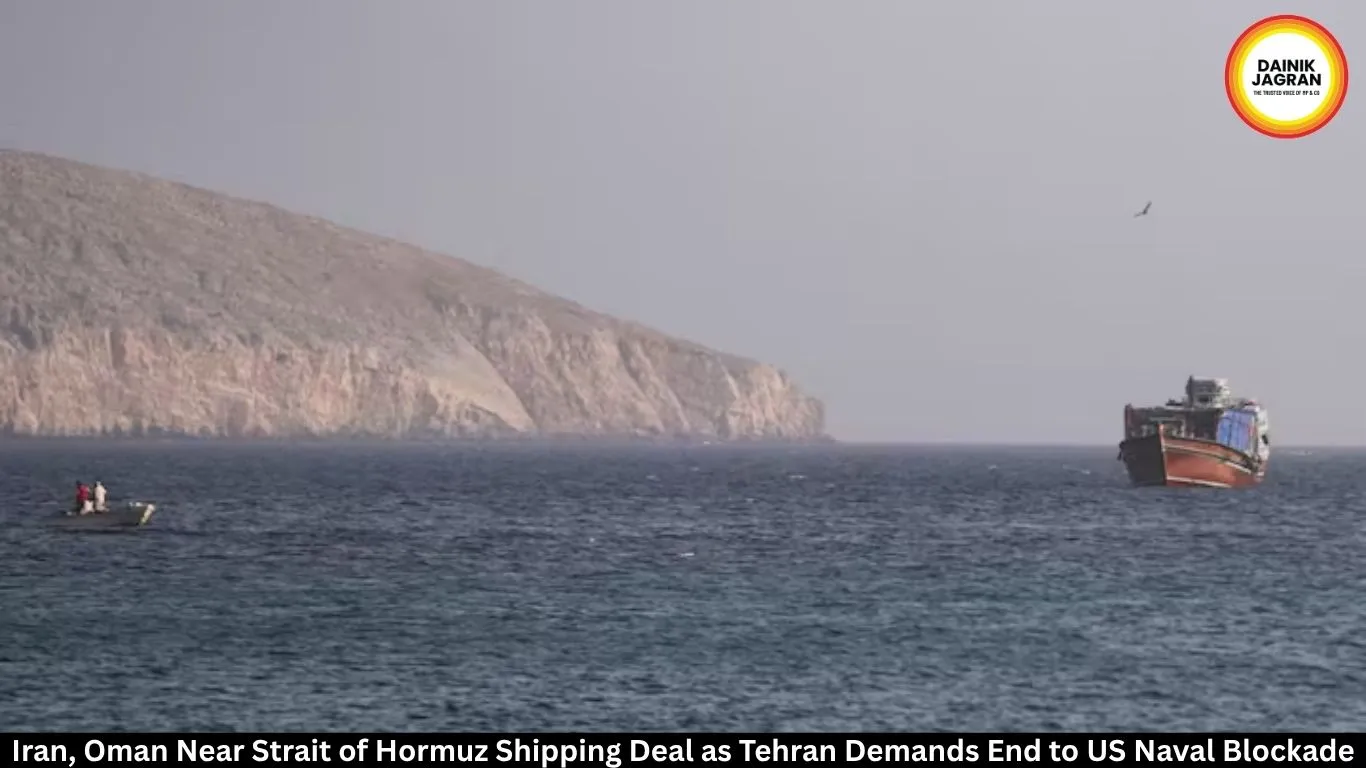
Iran, Oman Close to Strait of Hormuz Shipping Deal as Tehran Demands US End Naval Blockade

Digital desk

Iran, Oman Close to Strait of Hormuz Shipping Deal as Tehran Demands US End Naval Blockade

Iran says it is close to finalising a Strait of Hormuz agreement with Oman but insists the US must end its naval blockade. Shipping traffic remains low amid ongoing regional tensions.

Iran has said it is in the final stages of reaching an agreement with Oman to reopen and regulate shipping through the strategically vital Strait of Hormuz, even as fighting and diplomatic tensions continue across West Asia.

According to the Iranian Foreign Ministry, both countries have agreed on the geographical coordinates of a proposed maritime transit route, with a joint statement currently undergoing final review. However, Tehran has maintained that the agreement can only be implemented if the United States ends what it describes as a naval blockade and refrains from actions that could undermine the arrangement.

Foreign Ministry spokesperson Esmaeil Baqaei said Iran and Oman had resolved the technical aspects of the proposed route and were working towards finalising the broader framework governing navigation through the waterway.

Also Read... US Considers Fresh Strikes on Iran as Trump Signals Stronger Military Action

Tehran Links Deal to US Actions

While expressing optimism over the negotiations with Muscat, Baqaei stressed that regional security concerns remain unresolved.

Also Read... Trump Cancels Iran Strikes, Announces Fresh Talks: What Led to the Major US Policy Reversal?

He argued that continued US military deployments and naval operations in the Gulf continue to pose risks to safe navigation and warned that external interference could delay implementation of the agreement.

Also Read... Iran War Boosts Oil Giants' Profits to Billion as Hormuz Talks Progress

Iran has consistently maintained that restoring normal maritime traffic requires broader security guarantees beyond the bilateral understanding with Oman.

Hormuz Traffic Drops Sharply

The diplomatic developments come as commercial shipping through the Strait of Hormuz continues to decline amid heightened regional tensions.

Recent shipping data showed that only two vessels transited the strategic waterway on Wednesday, compared with eight ships the previous day.

Industry observers attribute the sharp decline to growing security concerns following repeated attacks on commercial vessels by Yemen's Houthi movement and fears of further military escalation in the Gulf.

Several shipping companies have also begun rerouting cargo away from the Red Sea and Suez Canal, opting for the much longer voyage around the Cape of Good Hope in southern Africa.

Global Shipowners Warn Against Transit Toll

The world's largest shipping companies have urged the United Nations to oppose any permanent transit charges or restrictions in the Strait of Hormuz.

In a letter addressed to UN Secretary-General António Guterres, shipowners warned that introducing a permanent toll mechanism would disrupt global trade, increase transportation costs and fuel inflation worldwide.

The industry also cautioned that restricting internationally recognised navigation rights could create a dangerous precedent for other strategic maritime chokepoints.

US Continues Diplomatic Engagement

Despite continuing military tensions, US President Donald Trump reiterated that Washington remains engaged in direct talks with Tehran and prefers a negotiated settlement over further conflict.

Trump said diplomacy remains the preferred path but warned that the United States retains all options should negotiations fail.

Vice President JD Vance also acknowledged that discussions with Iran are likely to be complex and time-consuming but expressed confidence that any eventual agreement would strengthen US security interests while helping stabilise global energy markets.

Regional Violence Continues

While negotiations over shipping routes advance, violence across the region has shown little sign of easing.

Yemen's Houthi movement claimed responsibility for fresh missile attacks targeting two Saudi oil tankers—one near the Red Sea port of Yanbu and another in the Gulf of Aden—as part of its ongoing maritime campaign.

Meanwhile, Israel carried out fresh air strikes in southern Lebanon, saying the operations were launched in response to an explosion in Majdal Selem that killed two Israeli soldiers.

Energy Markets Remain Volatile

The uncertainty surrounding the Strait of Hormuz—through which roughly one-fifth of the world's seaborne oil passes—continues to influence global commodity markets.

Although optimism surrounding a possible Iran-Oman agreement has raised hopes of improved maritime access, traders remain cautious as broader geopolitical tensions and military activity continue across West Asia.

Analysts say any sustained reopening of the waterway could ease pressure on oil supply chains, but lasting stability will depend on wider diplomatic progress between Iran, the United States and regional stakeholders.


 

--------

๐Ÿšจ Beat the News Rush โ€“ Join Now!

Get breaking alerts, hot exclusives, and game-changing stories instantly on your phone. No delays, no fluff โ€“ just the edge you need. โšก

Tap to join:ย 

๐ŸŸข WhatsApp Channel: Dainik Jagran MP CG

Crave more?

๐Ÿ…• Facebook: Dainik Jagran MP CG English

๐Ÿ…ง Twitter (X): Dainik Jagran MP CG

๐Ÿ…˜ Instagram: Dainik Jagran MP CG

Share the fire โ€“ keep your crew ahead! ๐Ÿ—ž๏ธ๐Ÿ”ฅ

english.dainikjagranmpcg.com
06 Aug 2026 By Abhishek Joshi

Iran, Oman Close to Strait of Hormuz Shipping Deal as Tehran Demands US End Naval Blockade

Digital desk

Iran has said it is in the final stages of reaching an agreement with Oman to reopen and regulate shipping through the strategically vital Strait of Hormuz, even as fighting and diplomatic tensions continue across West Asia.

According to the Iranian Foreign Ministry, both countries have agreed on the geographical coordinates of a proposed maritime transit route, with a joint statement currently undergoing final review. However, Tehran has maintained that the agreement can only be implemented if the United States ends what it describes as a naval blockade and refrains from actions that could undermine the arrangement.

Foreign Ministry spokesperson Esmaeil Baqaei said Iran and Oman had resolved the technical aspects of the proposed route and were working towards finalising the broader framework governing navigation through the waterway.

Tehran Links Deal to US Actions

While expressing optimism over the negotiations with Muscat, Baqaei stressed that regional security concerns remain unresolved.

He argued that continued US military deployments and naval operations in the Gulf continue to pose risks to safe navigation and warned that external interference could delay implementation of the agreement.

Iran has consistently maintained that restoring normal maritime traffic requires broader security guarantees beyond the bilateral understanding with Oman.

Hormuz Traffic Drops Sharply

The diplomatic developments come as commercial shipping through the Strait of Hormuz continues to decline amid heightened regional tensions.

Recent shipping data showed that only two vessels transited the strategic waterway on Wednesday, compared with eight ships the previous day.

Industry observers attribute the sharp decline to growing security concerns following repeated attacks on commercial vessels by Yemen's Houthi movement and fears of further military escalation in the Gulf.

Several shipping companies have also begun rerouting cargo away from the Red Sea and Suez Canal, opting for the much longer voyage around the Cape of Good Hope in southern Africa.

Global Shipowners Warn Against Transit Toll

The world's largest shipping companies have urged the United Nations to oppose any permanent transit charges or restrictions in the Strait of Hormuz.

In a letter addressed to UN Secretary-General António Guterres, shipowners warned that introducing a permanent toll mechanism would disrupt global trade, increase transportation costs and fuel inflation worldwide.

The industry also cautioned that restricting internationally recognised navigation rights could create a dangerous precedent for other strategic maritime chokepoints.

US Continues Diplomatic Engagement

Despite continuing military tensions, US President Donald Trump reiterated that Washington remains engaged in direct talks with Tehran and prefers a negotiated settlement over further conflict.

Trump said diplomacy remains the preferred path but warned that the United States retains all options should negotiations fail.

Vice President JD Vance also acknowledged that discussions with Iran are likely to be complex and time-consuming but expressed confidence that any eventual agreement would strengthen US security interests while helping stabilise global energy markets.

Regional Violence Continues

While negotiations over shipping routes advance, violence across the region has shown little sign of easing.

Yemen's Houthi movement claimed responsibility for fresh missile attacks targeting two Saudi oil tankers—one near the Red Sea port of Yanbu and another in the Gulf of Aden—as part of its ongoing maritime campaign.

Meanwhile, Israel carried out fresh air strikes in southern Lebanon, saying the operations were launched in response to an explosion in Majdal Selem that killed two Israeli soldiers.

Energy Markets Remain Volatile

The uncertainty surrounding the Strait of Hormuz—through which roughly one-fifth of the world's seaborne oil passes—continues to influence global commodity markets.

Although optimism surrounding a possible Iran-Oman agreement has raised hopes of improved maritime access, traders remain cautious as broader geopolitical tensions and military activity continue across West Asia.

Analysts say any sustained reopening of the waterway could ease pressure on oil supply chains, but lasting stability will depend on wider diplomatic progress between Iran, the United States and regional stakeholders.

 

https://english.dainikjagranmpcg.com/international/iran-oman-close-to-strait-of-hormuz-shipping-deal-as/article-25049

Trending News